 Whalesbook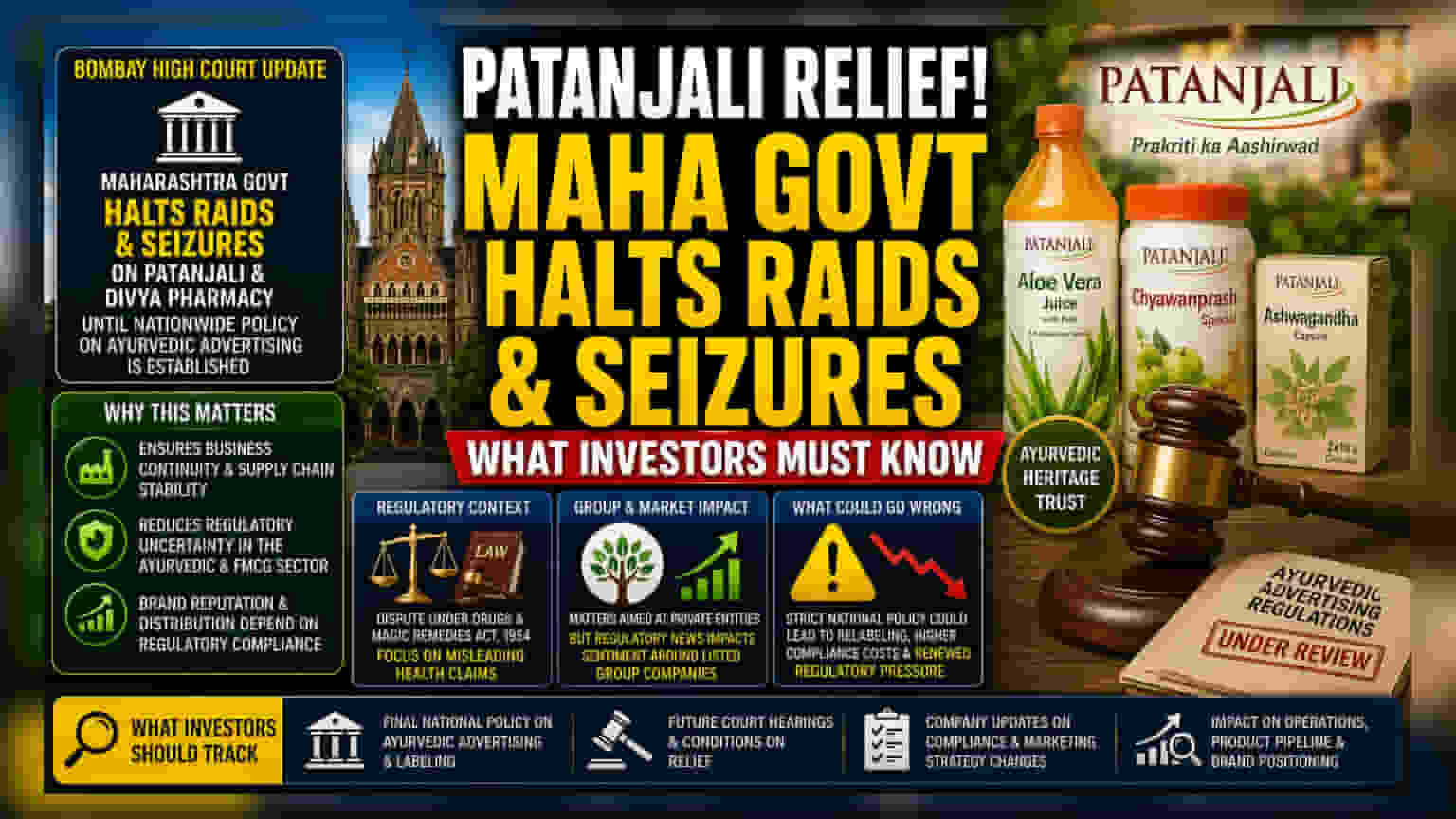


The Maharashtra government has assured the Bombay High Court it will pause raids on Patanjali and Divya Pharmacy products regarding label claims. This temporary halt will remain in place until a uniform national policy on Ayurvedic advertising is finalized. While this provides immediate relief to the manufacturer, regulatory uncertainty remains a key factor for the group’s compliance standing. Investors should monitor how future policy updates could impact the company's marketing and product distribution strategies.
What Happened
The Maharashtra government has informed the Bombay High Court that it will temporarily stop raids and seizures targeting the products of Patanjali Ayurved Ltd. and its manufacturing unit, Divya Pharmacy. This decision follows a series of petitions filed by the companies challenging the actions taken by the State Food and Drug Administration (FDA). The FDA had previously initiated scrutiny over allegations of misleading labels on certain Ayurvedic products. The state authorities have indicated that they will refrain from further coercive actions until the Union government establishes a consistent, nationwide policy regarding the advertising and labeling of Ayurvedic medicines.
Why This Matters For Investors
For investors, this development highlights the regulatory environment surrounding the Ayurvedic and FMCG sector. The group's business model relies heavily on consistent distribution and market presence. When regulatory bodies initiate seizures or raids, it can create operational disruptions, uncertainty in supply chains, and potential reputational pressure. While the current legal development offers temporary respite, the underlying issue regarding compliance with advertising standards and product labeling remains a point of focus for regulators. Any shifts in national policy regarding how Ayurvedic products are marketed could require adjustments in the company's product packaging and promotional strategies, which are central to its consumer-facing business.
The Regulatory Context
The core of the legal dispute involves the Drugs and Magic Remedies (Objectionable Advertisements) Act, 1954. This legislation strictly regulates advertisements that suggest cures for specific diseases. Companies in the Ayurvedic space are frequently subject to scrutiny under this act to ensure that public health claims made on packaging are scientifically substantiated and aligned with legal standards. The petition argues that the labeling in question simply indicates the intended use of the products, which the company claims is a long-standing industry practice. However, the FDA’s stance is that false or exaggerated claims regarding serious health conditions pose a risk to public health. The court's role in balancing these perspectives, pending a national policy, is crucial.
Group Context and Market Impact
It is important for investors to distinguish between the various entities within the Patanjali group. The legal actions are currently directed at the manufacturing and operating arms, such as Patanjali Ayurved and Divya Pharmacy, which are largely private entities. However, news concerning the group often impacts sentiment around publicly listed companies like Patanjali Foods Ltd. Investors typically monitor such developments because negative regulatory headlines can affect the broader brand image of the group, which may indirectly influence investor perception of listed group entities. Stable operations and positive regulatory compliance are essential for maintaining the brand equity that drives consumer demand.
What Could Go Wrong
The primary risk for the business is the ongoing nature of regulatory scrutiny. If the upcoming national policy on advertising turns out to be strict, the company may face higher compliance costs or be required to re-label significant portions of its product portfolio. This could potentially affect the speed at which products reach the market or necessitate a change in marketing expenditures. Furthermore, if the court proceedings do not result in a favorable long-term resolution, the risk of renewed regulatory pressure or intensified scrutiny from state agencies remains a possibility.
What Investors Should Track
Investors should look for updates regarding the finalized national policy on Ayurvedic product advertising, as this will set the standards for the entire industry. Future court hearings will also be significant in determining the scope of the current relief and whether any conditions are imposed on the company. Additionally, monitoring the company’s management commentary on compliance adjustments and any changes to their marketing strategy will be useful to understand how the business is adapting to a changing regulatory landscape.