

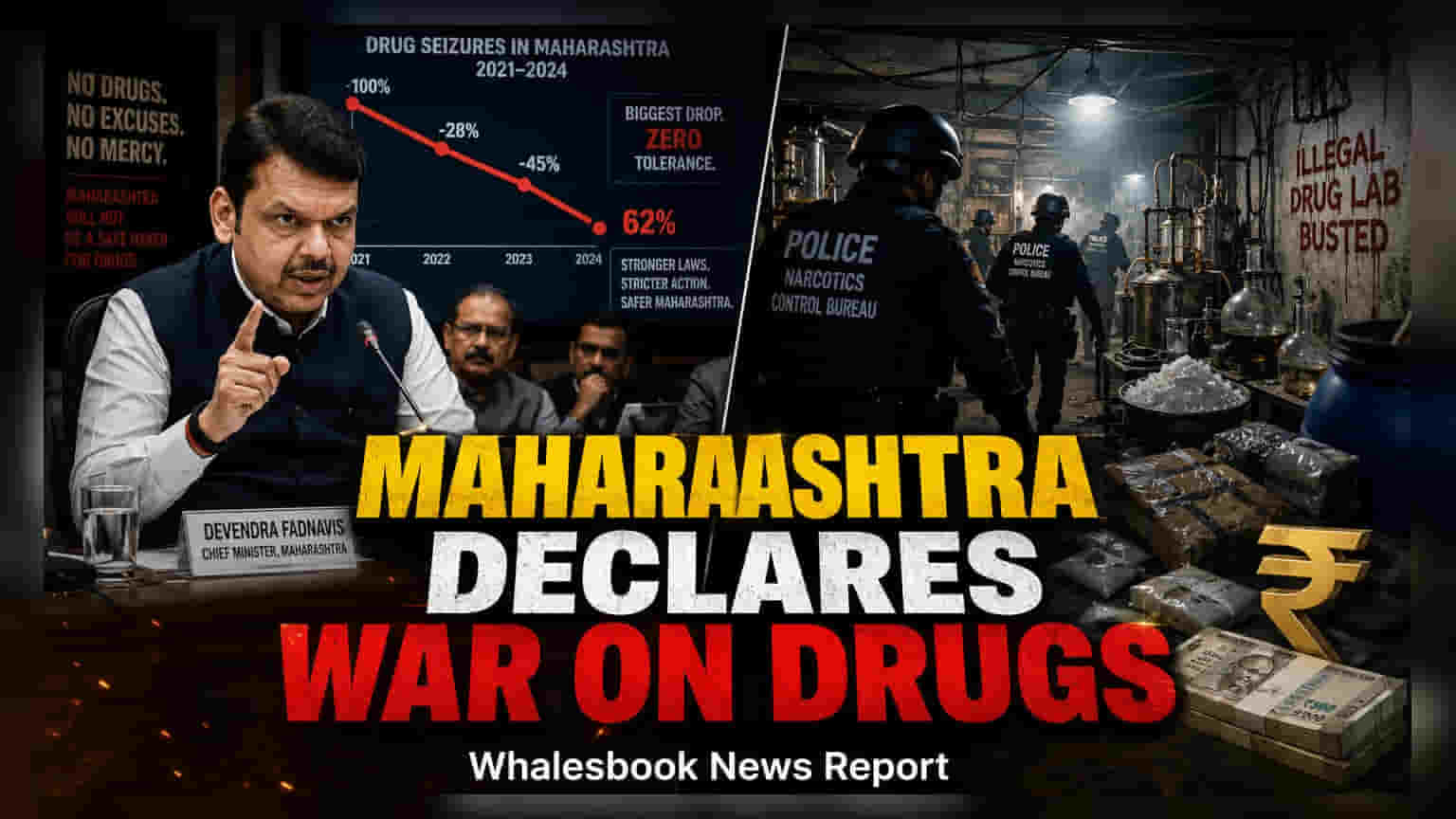
Maharashtra Chief Minister Devendra Fadnavis has initiated a massive state-wide campaign to dismantle narcotics networks following the registration of 17,611 drug-related cases between 2021 and 2025. The plan includes fast-track courts, enhanced law enforcement incentives, and new school awareness programs. This move aims to secure public health and strengthen regulatory oversight by targeting both local distribution and international supply chains.
Maharashtra Chief Minister Devendra Fadnavis has announced an aggressive, multi-departmental strategy to eliminate the illegal narcotics trade across the state. This comprehensive plan follows a government review confirming that authorities registered 17,611 cases under the Narcotic Drugs and Psychotropic Substances (NDPS) Act between 2021 and 2025. The state’s focus is to disrupt the entire value chain, ranging from local street-level peddlers to complex supply networks involving synthetic and natural drugs.
Scale of Seizures and Enforcement
Recent data underscores the severity of the challenge the state is addressing. Over the past five years, law enforcement agencies seized 5.7 tonnes of mephedrone with an estimated value of Rs 6,550 crore. Other significant recoveries during this timeframe included 134 kg of heroin valued at Rs 484.75 crore and 109.7 tonnes of ganja worth Rs 186.44 crore. Authorities also recovered smaller, yet high-value, quantities of cocaine and charas. This enforcement effort led to 15,994 arrests, a figure that includes 72 foreign nationals, highlighting the international complexity of the supply networks.
Institutional Changes and Legal Focus
To ensure higher conviction rates, the state government plans to establish fast-track courts dedicated to NDPS Act violations. Government prosecutors will undergo specialized training to handle these complex cases more effectively. Beyond law enforcement, the government is integrating drug abuse awareness into the school curriculum for students in Classes VII to X. The Public Health and Medical Education departments, in collaboration with the Brihanmumbai Municipal Corporation, are setting up a network of de-addiction centers across the state, including dedicated bed allocations in government hospitals.
Operational Incentives and Next Steps
To sustain this momentum, the government has introduced a new incentive structure. Police personnel who demonstrate excellence in narcotics investigations will be eligible for a 3% advance increment in their basic pay. Additionally, the government has authorized air travel for investigating officers when necessary for high-stakes operations. Citizens who provide credible information that leads to major drug seizures will also be eligible for rewards. Investors and observers should monitor the effectiveness of these fast-track courts and the speed of inter-departmental coordination as the state seeks to reduce the long-term public health and social costs associated with the drug trade.