

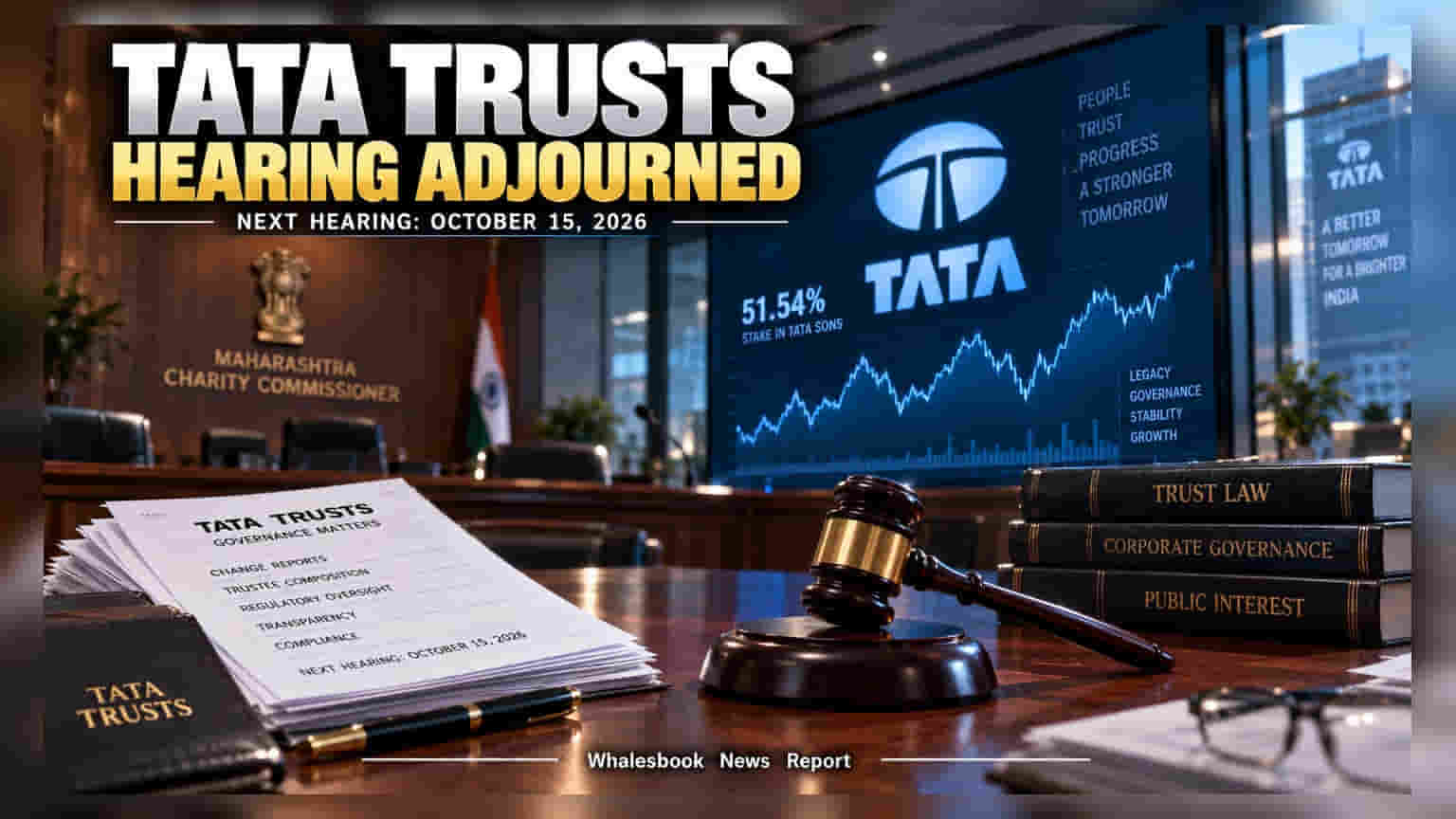
The Maharashtra Charity Commissioner has pushed the hearing regarding governance objections against Tata Trusts to October 15, 2026. This delay allows the trusts to respond to legal challenges from former trustee Mehli Mistry. The case is significant for investors because ongoing board meeting restrictions at the Sir Ratan Tata Trust are creating hurdles for Tata Sons' leadership succession and corporate approvals.
The Maharashtra Charity Commissioner has postponed the ongoing hearing regarding governance objections filed against Tata Trusts to October 15, 2026. The adjournment was granted to allow the trusts additional time to file a formal response to legal challenges raised by former trustee Mehli Mistry. Legal representatives for the trusts requested the delay citing recent administrative changes, including the departure of trustee Vijay Singh from the Sir Ratan Tata Trust on August 14.
At the core of the dispute are the 'change reports'—legal documents used to formalize changes in trustee composition—filed following Mistry’s exit from the Sir Ratan Tata Trust, the Sir Dorabji Tata Trust, and the Bai Hirabai Jamsetji Tata Navsari Charitable Institution. Mistry has challenged these filings while raising broader allegations regarding transparency, trustee remuneration, and the board’s compliance with institutional bylaws. The dispute also touches upon the roles of current leadership, with allegations concerning potential conflicts of interest among certain board members.
While this is a legal matter between the trusts and a former trustee, the proceedings carry implications for the broader Tata Group. The two primary trusts, the Sir Ratan Tata Trust and the Sir Dorabji Tata Trust, collectively control approximately 51.54% of Tata Sons, the group's principal holding company. With the wider network of Tata Trusts commanding roughly 66% of Tata Sons, any regulatory oversight impacts the governance of the entire conglomerate.
Currently, the Sir Ratan Tata Trust is facing regulatory restrictions that have prevented it from convening board meetings. This has created a practical governance deadlock, complicating critical group-level decisions. Specifically, the inability to hold these meetings has impacted the timeline for the Tata Sons chairman succession process and approvals usually handled during the Annual General Meeting.
To provide a balanced perspective, it is important to note that the regulatory environment has not been entirely restrictive for the trusts. On September 2, 2026, the Charity Commissioner dismissed a separate, long-standing complaint regarding a 1989 share transfer within Tata Sons. This dismissal offered some relief to the trusts, which had consistently defended the legitimacy of that transaction.
For investors and market observers, the key monitorable remains the October 15 hearing. The primary interest lies in whether the Charity Commissioner will provide any clarity or relief regarding the board meeting restrictions. Resolving the current governance deadlock is considered essential for stabilizing the decision-making process at the holding company level, particularly as the group navigates its leadership transition.