 Whalesbook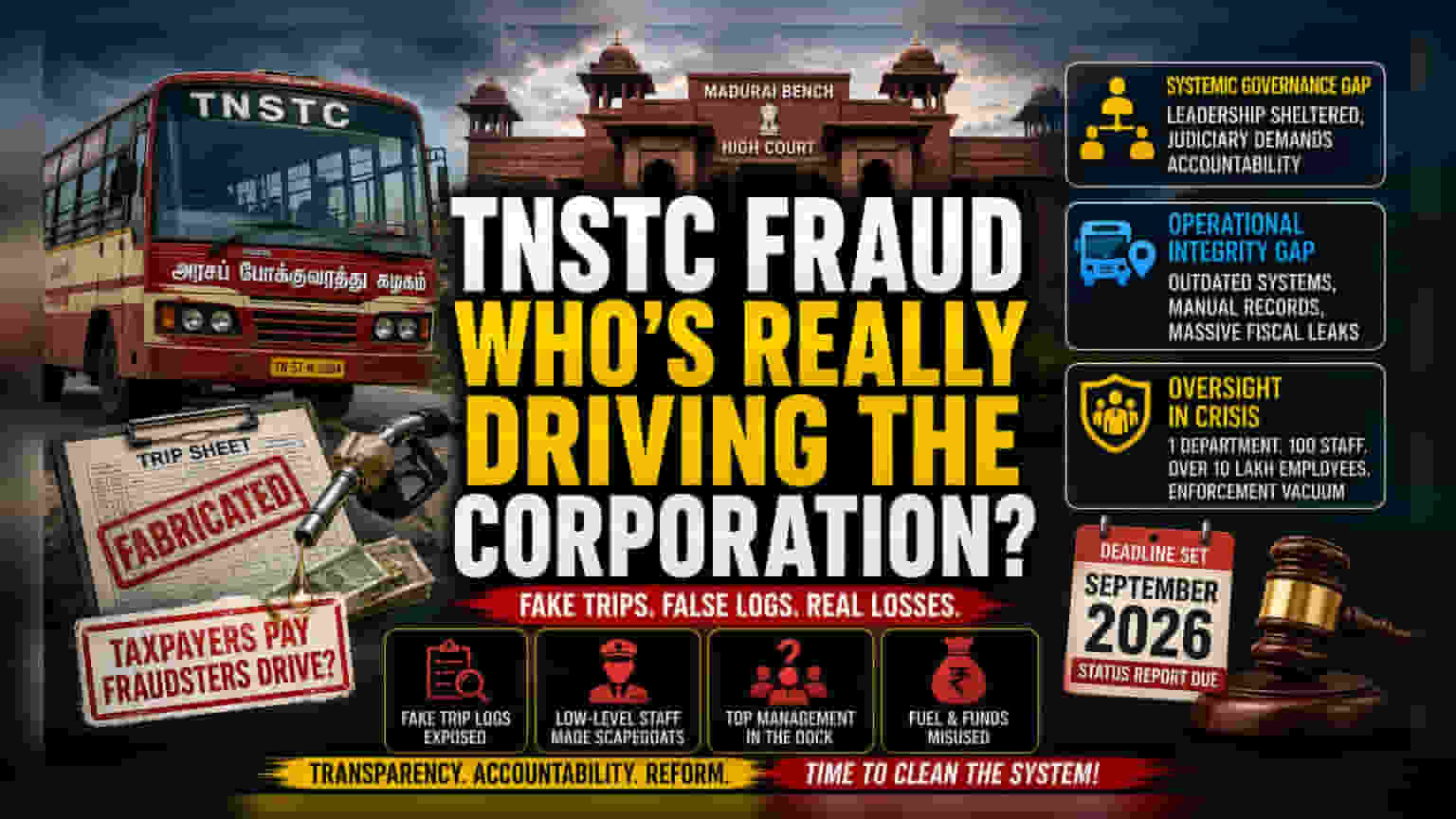


Systemic Governance Gaps
The directive from the Madurai Bench concerning the Tamil Nadu State Transport Corporation extends far beyond the specific instance of fabricated trip logs for a single bus. It highlights a critical breakdown in internal oversight, where administrative entities ostensibly policed their own irregularities. By confining disciplinary repercussions to lower-level staff, the corporation effectively attempted to insulate the upper management structure from the broader implications of these audit discrepancies. The judicial intervention signals a shift toward holding high-level leadership responsible for institutionalized reporting fraud.
The Operational Integrity Gap
When evaluating state-run transport logistics, the efficiency of resource allocation—specifically fuel and labor costs—is paramount. The incident involving Bus TN-57-N-2084 serves as a symptom of a larger, persistent failure in real-time digital monitoring and fleet verification. While modern transit systems often utilize GPS and automated fare collection to prevent such anomalies, the reliance on manual ticket sets suggests an outdated infrastructure that remains vulnerable to human manipulation. This discrepancy between reported operations and actual road presence forces a questioning of the fiscal burden borne by taxpayers to maintain a fleet that exists only on paper.
Structural Risks and Oversight
The court’s assessment of the State Vigilance Department unveils a significant administrative liability. A department overseeing over one million government employees with a staff of only one hundred operates under a severe capacity constraint. This numerical deficiency effectively creates an enforcement vacuum, transforming the watchdog into a reactive, rather than proactive, entity. For stakeholders observing public sector fiscal discipline, this implies that systemic fraud may go undetected until external judicial pressure forces a review. The tendency to route complaints back to the parent department ensures that minor offenses are punished while structural issues remain unaddressed.
Future Trajectory
The mandate for a status report by September 2026 establishes a firm timeline for accountability. If the subsequent investigation confirms top-down complicity rather than isolated rogue employee behavior, it may trigger a wider reorganization of the transport department’s internal audit protocols. Continued scrutiny will likely focus on whether the current leadership can justify the existing procurement and payroll processes, or if further intervention is required to modernize the corporation’s transparency frameworks to prevent reoccurrences of fuel fund misappropriation.