

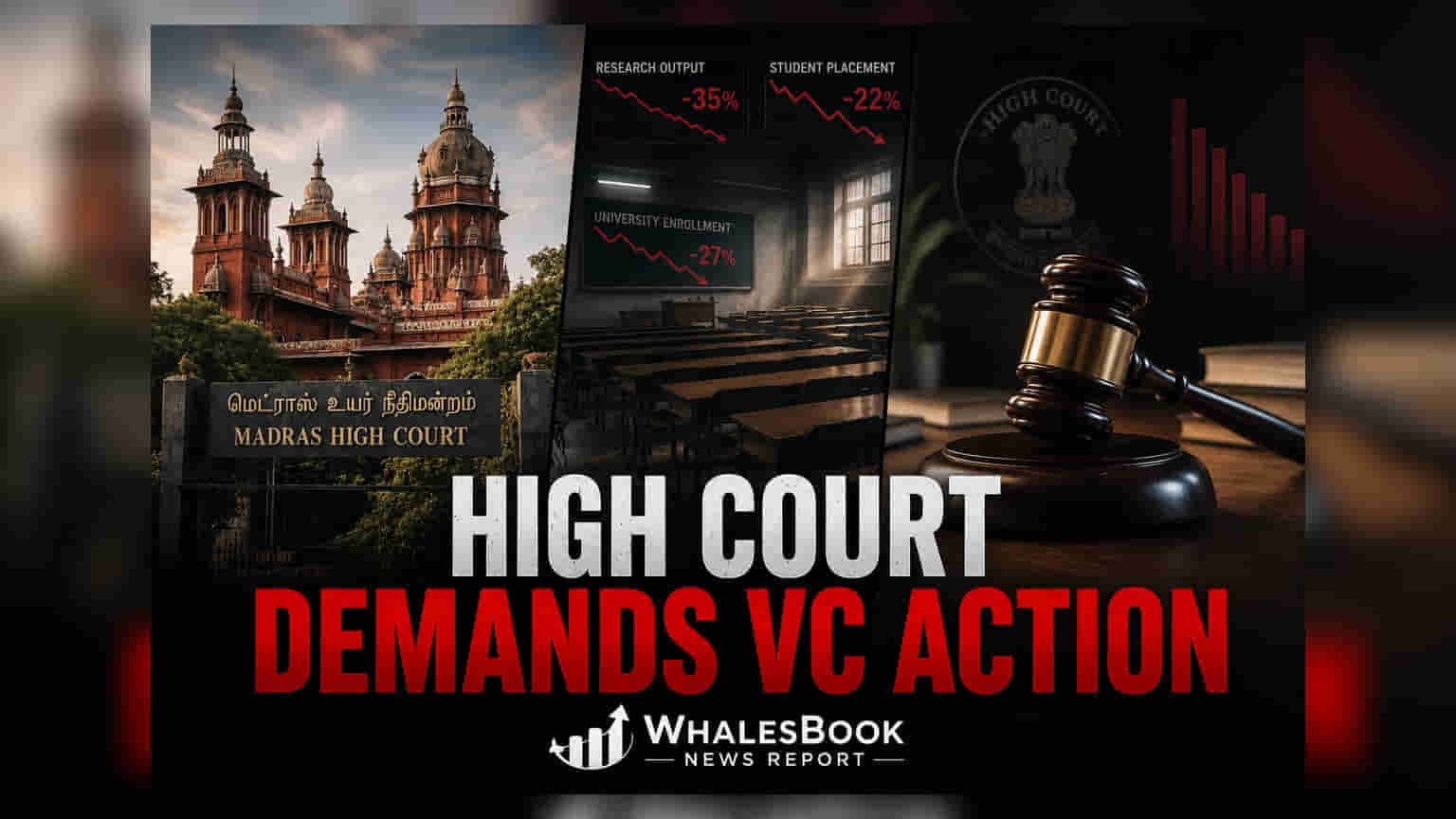
The Madras High Court has issued notices to the UGC and the Tamil Nadu government regarding prolonged leadership vacancies in state universities. The court is examining whether a Supreme Court-led mediation process, similar to the one used in West Bengal, could resolve the current impasse.
The Madras High Court on Wednesday intervened in the ongoing leadership crisis across several state-run universities in Tamil Nadu. A division bench, consisting of Chief Justice SA Dharmadikari and Justice Arul Murugan, has officially sought explanations from the University Grants Commission (UGC) and the state government concerning the long-standing vacancies for Vice Chancellor positions.
Impact on Higher Education Governance
The court observed that the lack of regular leadership creates significant uncertainty within the state's higher education sector. The legal challenge, initiated by petitioner P Bhaskar, argues that these vacancies disrupt the orderly functioning of academic institutions. The petition demands that the state adhere strictly to the University Grants Commission Act and the 2018 regulations governing university appointments. According to the petition, the delay stems from a recurring lack of consensus between the state government and the Governor regarding the formation of search-cum-selection committees.
Comparing State-Level Impasses
During the proceedings, the petitioner drew parallels to a similar dispute in West Bengal, where the Supreme Court of India had to step in to break a deadlock between the state administration and the Governor's office. In that case, the Supreme Court appointed a committee led by former Chief Justice of India UU Lalit to oversee the selection process. The Madras High Court is now evaluating if a comparable high-powered panel could be a viable path forward for Tamil Nadu to ensure that academic administration is not hampered by political or procedural stalemates.
Regulatory Oversight and Accountability
Legal counsel for the petitioner challenged the stance of the UGC, suggesting that the regulatory body has maintained a passive role despite having the legal power of superintendence. The court acknowledged the request for a central or independent panel to expedite the appointments but maintained that it must allow all respondents, including the UGC and state authorities, to file their detailed replies before issuing final directions.
Upcoming Legal Proceedings
The court has scheduled the next hearing for July 29, 2026. This session is expected to clarify the government’s position on the appointment process and how it intends to resolve the leadership void. For observers and stakeholders in the education sector, the upcoming responses from the UGC and the state government will be the primary monitorable, as they will indicate whether the state is willing to adopt a court-mandated selection framework or if the current deadlock will persist.