

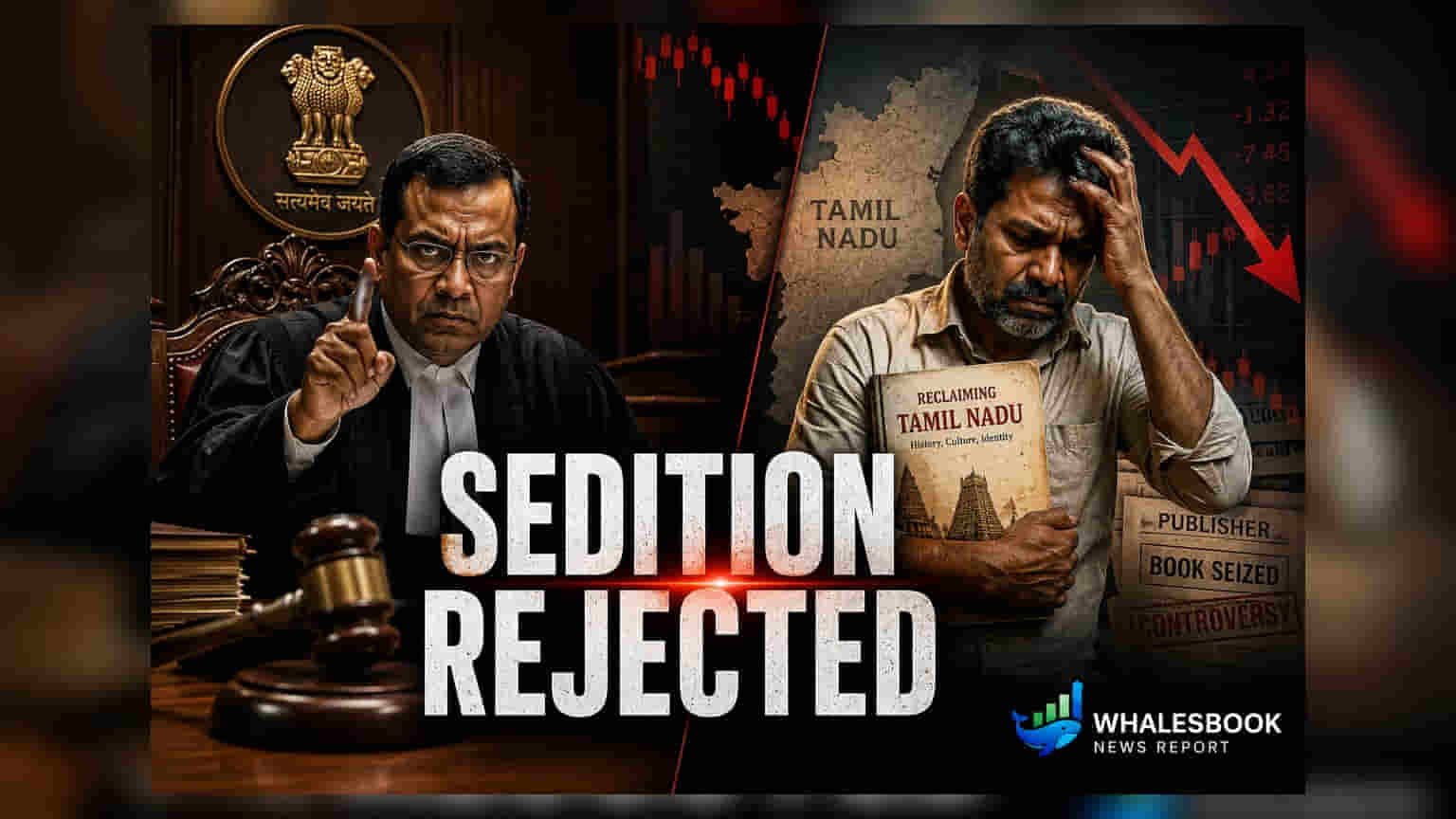
The Madras High Court has quashed sedition charges against two publishers, ruling that advocating for a separate Tamil Nadu does not amount to sedition. The court noted that such statements are better viewed as expressions of mental health issues rather than threats to national unity or government stability.
What Happened
The Madras High Court recently quashed a long-standing sedition case against two publishers, Keera @ Moorthi and Thamil Bala. The case originated from a 2014 book that documented historical calls for a separate Tamil Nadu, originally made by an individual named Tamizharasan in 1967. The prosecution had argued that the book's contents, including references to secessionist strategies, violated Section 124A of the Indian Penal Code, which deals with sedition and the incitement of hatred against the government.
The Court’s Reasoning
Justice D. Bharatha Chakravarthy, who presided over the matter, emphasized the need to interpret legal provisions within the context of the current social environment. The court observed that while secessionist rhetoric might have been perceived as a significant threat to national unity in 1967, the social and political climate of India has evolved substantially since then. The judge noted that expressing a desire for a separate state today is unlikely to incite actual hatred or disaffection against the established government.
Viewing Statements as Mental Health Issues
A notable aspect of the court's observation was its stance on the nature of such rhetoric in contemporary times. The court remarked that individuals making statements advocating for the secession of a state would be viewed more as persons dealing with mental health issues, rather than as serious threats capable of inciting violence or destabilizing the nation. This perspective shifts the legal focus away from criminalizing such speech as sedition.
Historical Documentation vs. Incitement
The court further clarified that the book in question served as a record of historical events rather than a modern-day call to action. Because the content was largely archival, documenting a specific call for secession from decades past, the court found no evidence that the publishers intended to incite hatred or violence. Consequently, the charges were dismissed, reinforcing the judicial view that historical documentation does not automatically constitute a criminal offense under sedition laws.
Why This Matters Legally
This ruling provides clarity on how courts may approach freedom of speech and expression concerning sensitive political topics. By emphasizing the "current social milieu," the judgment highlights that the interpretation of sedition laws is not static. It suggests that the judiciary is moving toward a more contextual understanding of political dissent, distinguishing between historical record-keeping and actual attempts to undermine the sovereignty of the country.