

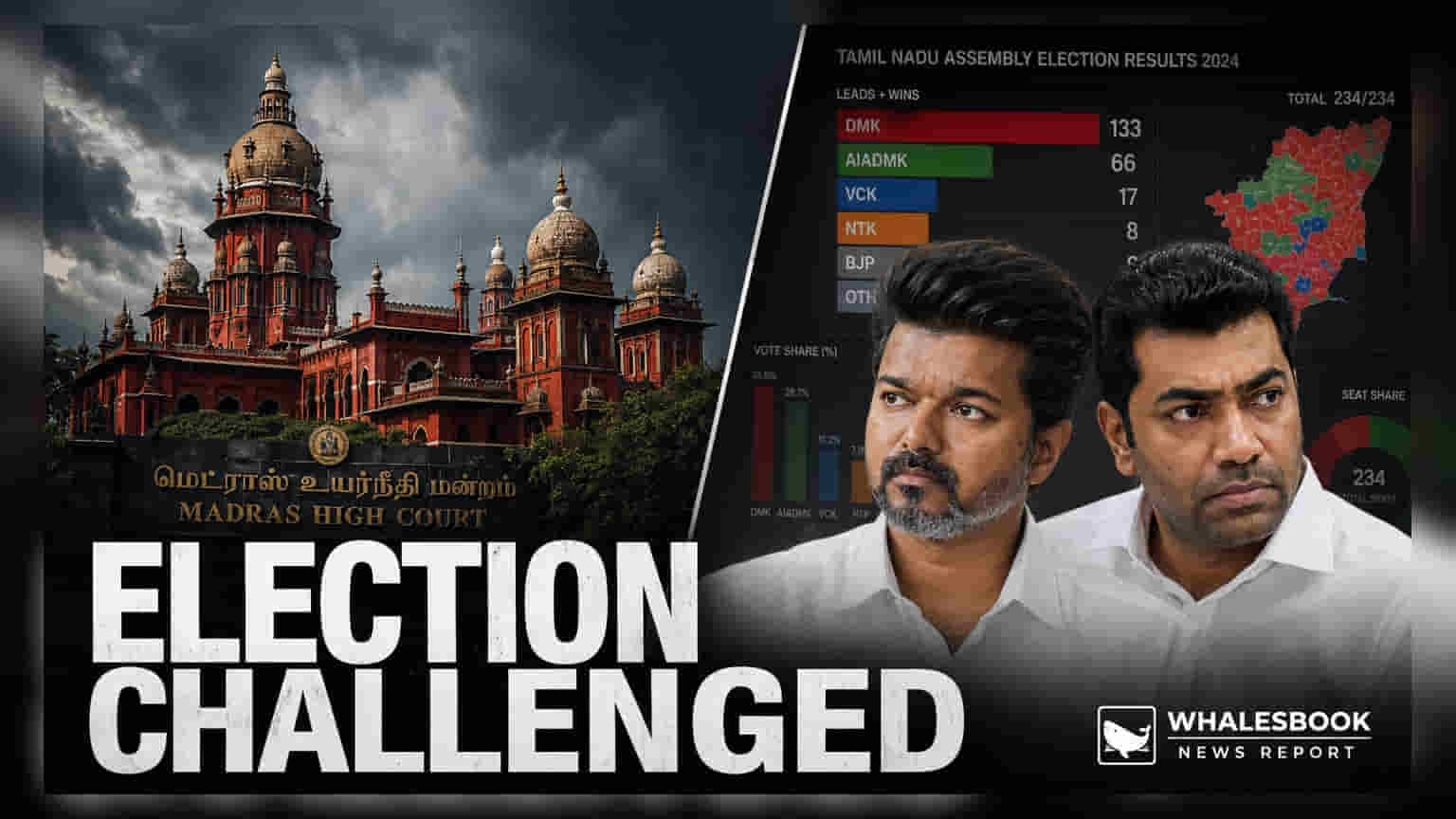
The Madras High Court has issued notices to Tamil Nadu Chief Minister C Joseph Vijay and Minister Aadhav Arjuna regarding election petitions. The court is reviewing allegations of corrupt practices in their 2026 Assembly election victories. These legal challenges involve the results from the Perambur, Tiruchirappalli East, and Villivakkam constituencies.
The Madras High Court on Tuesday initiated legal proceedings concerning the 2026 Assembly election results for key members of the ruling Tamilaga Vettri Kazhagam. Justice V Lakshminarayanan issued formal notices to Tamil Nadu Chief Minister C Joseph Vijay and Minister Aadhav Arjuna in response to multiple petitions filed by losing candidates.
Challenges to Election Results
The petitions primarily challenge the electoral victories of Chief Minister Vijay in the Perambur and Tiruchirappalli East constituencies, as well as the win of Minister Aadhav Arjuna in the Villivakkam seat. In Perambur, records show Chief Minister Vijay won by a margin of 53,715 votes, while in Tiruchirappalli East, his victory margin stood at 27,416 votes. Minister Arjuna secured the Villivakkam constituency with a margin of 17,302 votes.
Court Focus on Legal Formalities
During the hearing, the court noted procedural deficiencies in several of the filed petitions. Specifically, the judge highlighted issues regarding required affidavits and Form 25, which is a necessary document for substantiating allegations of corrupt practices under the Representation of the People Act, 1951. The court has granted the petitioners one week to address and rectify these technical defects. To ensure the proceedings move forward efficiently, the judge also authorized the service of private notices to the respondents alongside standard judicial notification methods.
Context of the Legal Review
These petitions represent a significant legal hurdle for the leadership of the Tamilaga Vettri Kazhagam. The judicial review of these wins involves scrutiny under the Representation of the People Act, which governs the conduct of elections and mandates strict adherence to procedural fairness. Because the petitions involve the state's top executive leadership, the outcome of these proceedings will be closely followed for their implications on the stability and legitimacy of the current administration. The next steps will depend on the petitioners' success in correcting the procedural flaws noted by the court, after which the formal trial of the election petitions can proceed.