 Whalesbook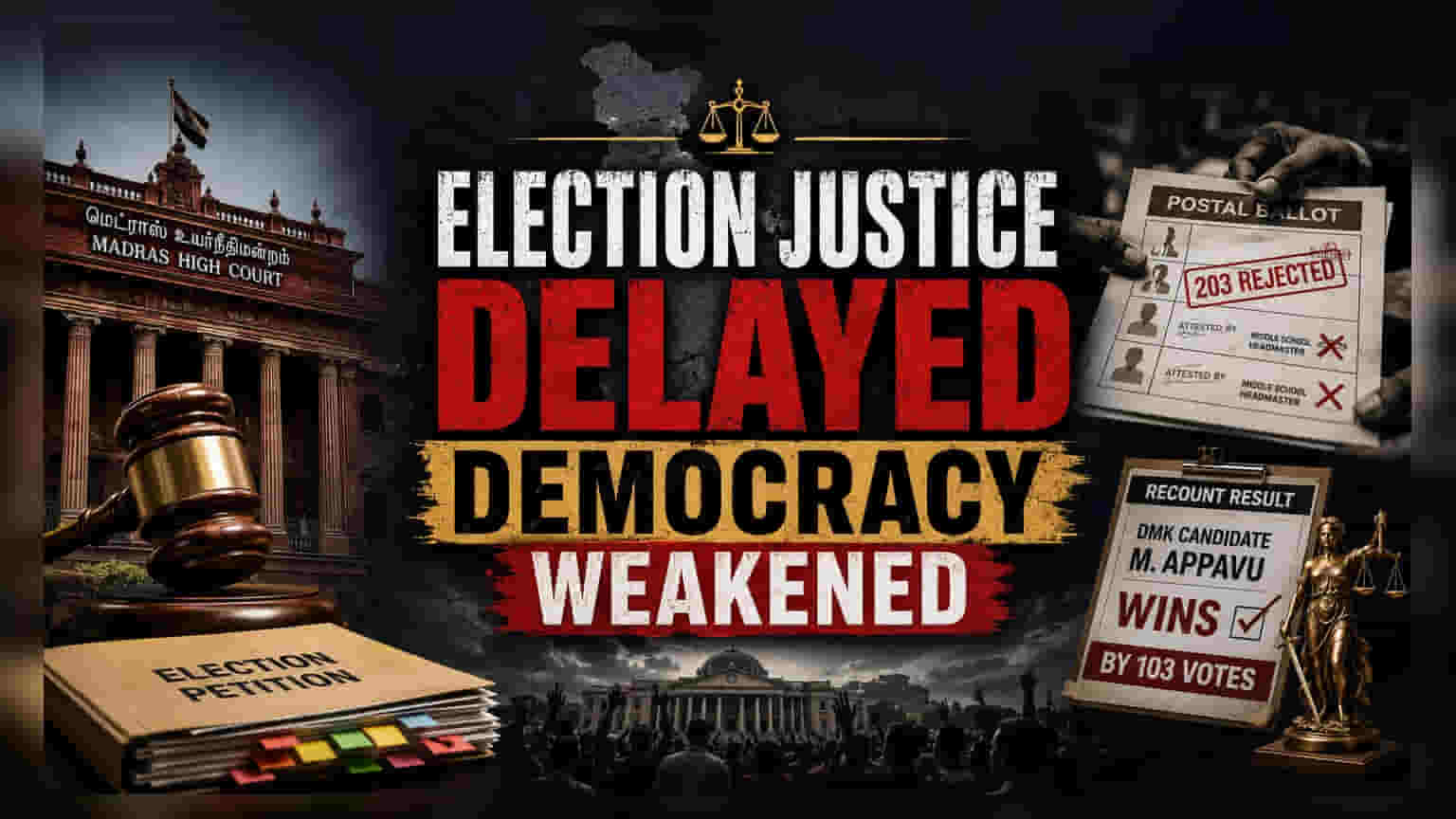


The Institutional Erosion of Electoral Integrity
The recent commentary from the Madras High Court regarding the six-year delay in the Radhapuram Assembly election dispute serves as a sharp indictment of the current state of judicial efficiency. By characterizing the lag as a fundamental contradiction of democratic norms, the court has highlighted a systemic vulnerability in the adjudication of election petitions. When the legislative term expires long before the legal challenge is resolved, the resulting verdict—while legally significant—often feels disconnected from the political reality it seeks to address.
Dissecting the Ballot Disqualification
At the heart of this dispute was the rejection of 203 postal ballots, which were initially discarded because the attesting authorities were middle school headmasters. The High Court determined these educators held the necessary status of gazetted officers, rendering the rejection of their attestations erroneous. A subsequent recount revealed that the DMK candidate, M. Appavu, secured a decisive majority of these contested votes, effectively shifting the electoral outcome by 103 votes. This discrepancy illustrates how minor administrative errors in ballot processing can fundamentally alter the democratic representation of a constituency, provided the judicial process functions with enough speed to rectify the count before the term concludes.
The Forensic Bear Case: Structural Judicial Risk
From a governance perspective, the delay in this matter points to a troubling trend of judicial abdication. By failing to resolve the gazetted status of the attestors in a timely manner, the Supreme Court allowed a procedural ambiguity to persist until the term of the legislative assembly had already elapsed. This creates a dangerous precedent where the cost of litigating an election often outweighs the utility of the result itself. The risk here is two-fold: citizens may lose faith in the efficacy of the ballot box, and political actors may view the court system as a tool for obstruction rather than adjudication. Without a mandate for expedited processing in cases involving democratic mandates, the legal system remains susceptible to being weaponized via attrition, ensuring that even if a challenger eventually wins, they are deprived of the actual time in office required to serve their electorate.
Future Outlook on Electoral Litigation
The court’s directive to amend official records to reflect M. Appavu as the legitimate representative for the 2016-2021 period, despite the expiration of that term, reinforces the principle that constitutional duties must be fulfilled regardless of the passage of time. This ruling sets a firm expectation that future election petitions require prioritization to avoid the irrelevance that plagued the Radhapuram case. Whether this will drive a broader legislative push for time-bound resolution of electoral disputes remains to be seen, as the current judicial bottleneck continues to cast a shadow over democratic accountability.