

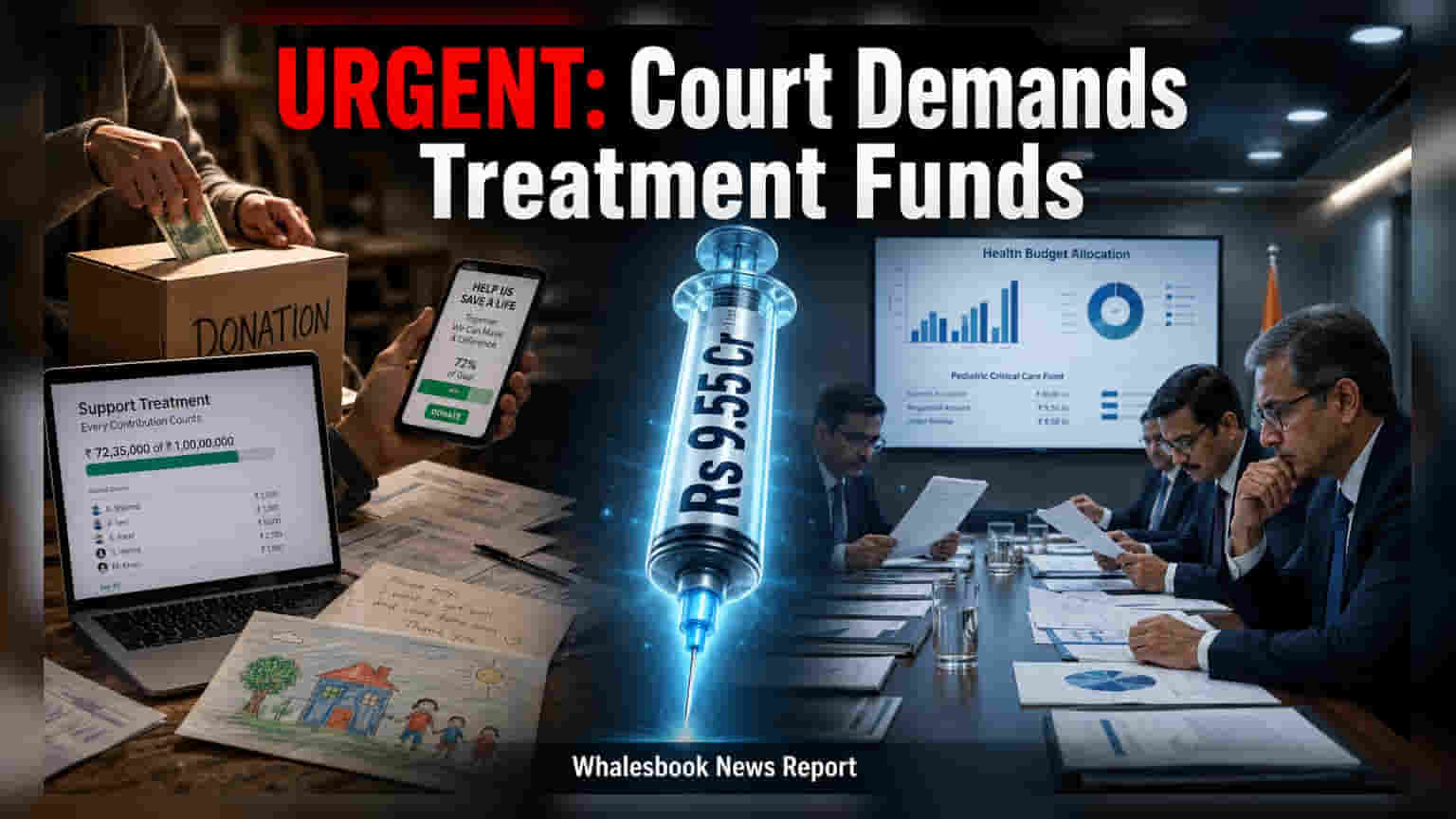
The Madhya Pradesh High Court has directed authorities to bridge a Rs 1 crore funding shortfall for a three-year-old girl’s spinal muscular atrophy treatment, which costs Rs 9.55 crore. This case highlights ongoing policy challenges regarding the financing of high-cost rare disease treatments in India. Investors and industry participants track such cases to understand the evolving healthcare policy landscape and the risks associated with ultra-rare therapy access.
The Madhya Pradesh High Court, sitting at Indore, is currently handling an urgent petition involving a three-year-old child diagnosed with Spinal Muscular Atrophy (SMA) Type-2. The case focuses on the significant financial hurdle required to access life-saving treatment, which is estimated to cost approximately Rs 9.55 crore. During recent proceedings, the court emphasized the need for prompt action to ensure the child receives the necessary medical intervention without further delays.
The Funding Gap Challenge
Despite combined efforts from the public and the government, a shortfall remains. Documentation presented to the court shows that approximately Rs 8 crore has already been raised through public crowdfunding and charitable initiatives. Additionally, the Central Government provides financial assistance of up to Rs 50 lakh per patient under the National Policy for Rare Diseases (NPRD). Even with these contributions, a deficit of about Rs 1 crore exists. The court has now urged central and state authorities to explore options to cover this remaining amount, noting the exceptional nature of the case.
Policy Context for Healthcare Investors
This case highlights the complexities within India's current framework for rare diseases. The National Policy for Rare Diseases (NPRD) aims to provide a structured approach to funding treatments, but high-cost therapies, often imported and manufactured by global pharmaceutical companies like Novartis, continue to strain existing financial mechanisms. For the broader healthcare and pharmaceutical sector, the frequency of such cases and the resulting judicial involvement often signal that funding models for ultra-rare conditions remain a work in progress.
Investors often monitor developments in this space because they reflect the government's stance on healthcare spending and the predictability of reimbursement or aid frameworks. Frequent judicial intervention in healthcare funding can indicate a gap between existing policy coverage and the actual cost of treatment, which remains a material risk factor for companies involved in the distribution and manufacturing of specialized, high-cost drugs in the Indian market.
Systemic issues such as administrative delays in the disbursement of funds and the reliance on ad-hoc crowdfunding can create uncertainty for both patients and healthcare providers. As the government continues to refine its approach to the NPRD, the ability to balance fiscal constraints with the need for patient care remains a key monitorable for the healthcare sector.
The High Court has mandated that the relevant documentation be submitted to the All India Institute of Medical Sciences (AIIMS), New Delhi, for processing. The matter is next scheduled for a hearing on August 18, 2026, where the progress on bridging the funding gap will be reviewed.