

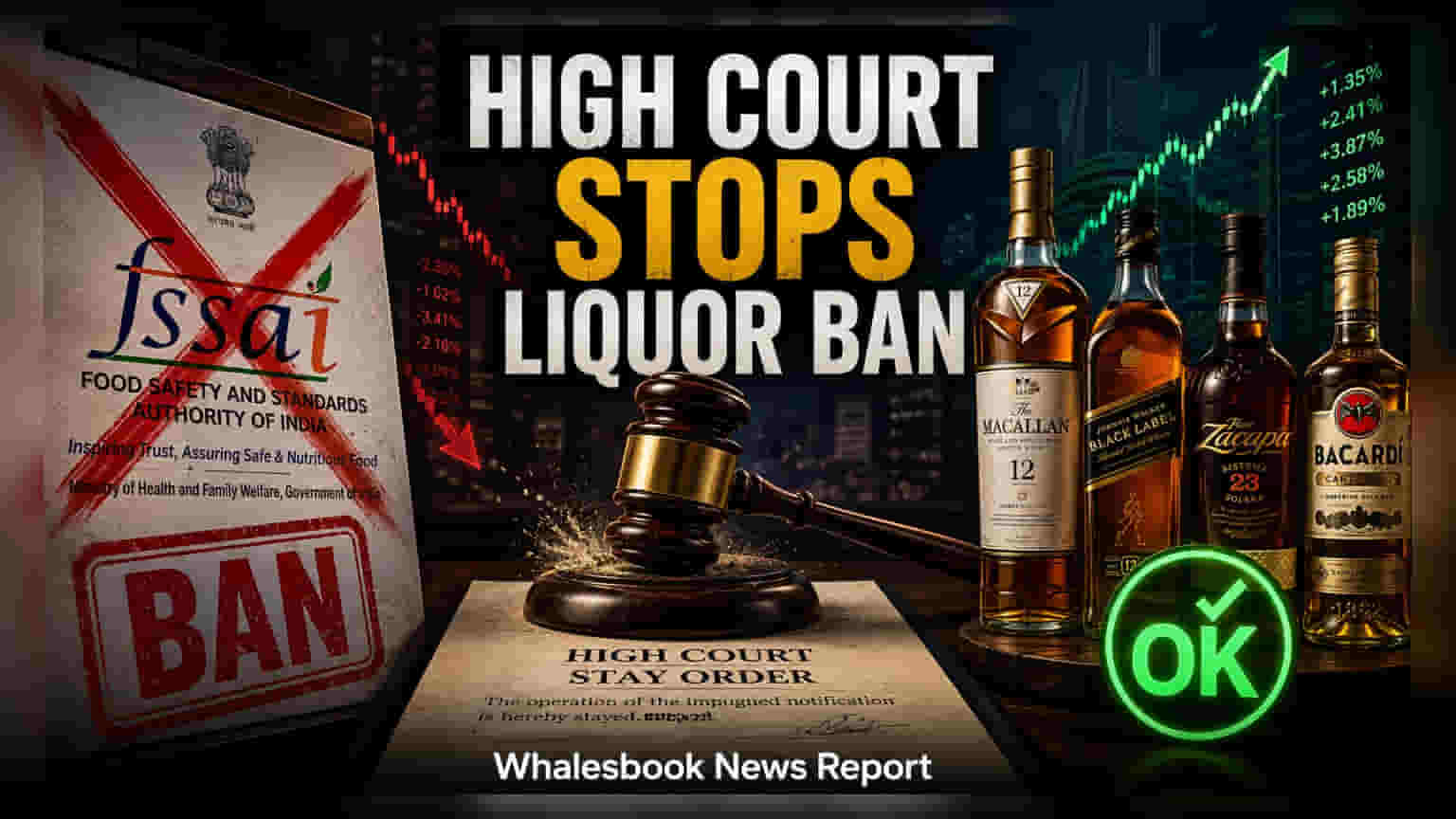
The Madhya Pradesh High Court has paused an FSSAI order banning certain whisky and rum sales by Associated Alcohols and Breweries Limited. The interim stay remains effective until the next hearing on September 7, 2026, providing temporary relief while the legal debate over federal food safety jurisdiction versus state excise authority continues.
The Madhya Pradesh High Court has granted an interim stay on a July 29, 2026, directive from the Food Safety and Standards Authority of India (FSSAI) that sought to ban the sale of specific pre-packaged whisky and rum products from Associated Alcohols and Breweries Limited. The court’s decision provides immediate relief to the Khargone-based firm, allowing it to continue operations until the matter is revisited on September 7, 2026.
The conflict originated from an FSSAI laboratory report that flagged the company’s use of "artificial flavors" and "nature-identical flavoring substances" in its products. The regulator deemed these disclosures a violation of its prescribed labeling standards. However, the company successfully argued in court that its products strictly comply with Madhya Pradesh excise laws, which permit the use of these ingredients in the manufacturing of liquor.
A significant part of the legal dispute centers on jurisdiction. Associated Alcohols and Breweries Limited has contested the FSSAI's authority to regulate liquor labeling, asserting that liquor production and regulation fall under the exclusive purview of the state government. The court noted that the FSSAI had moved to ban the products without adequately considering the formal response the company provided following a show-cause notice issued in July. Consequently, the court found merit in the company's procedural objections, leading to the current stay.
For investors and stakeholders, this legal challenge highlights the broader regulatory risks inherent in the alcoholic beverage sector, where companies often navigate overlapping state and central regulations. Beyond the immediate legal hurdle, the company faces internal financial pressures. In its recently reported June 2026 quarter (Q1 FY27), the company recorded a 24.61% decline in consolidated net profit. Furthermore, the firm's working capital cycle has seen an increase, with days rising to 64.2 compared to 40.3 previously, suggesting tighter liquidity management in the current operating environment.
The outcome of the September 7 hearing will be critical. It may clarify the limits of the FSSAI’s mandate over liquor products and set a precedent for how such labeling disputes are resolved. Until a final ruling is reached, investors will likely monitor both the legal proceedings and the company’s ability to manage its margins amid rising input costs and these ongoing regulatory uncertainties.