

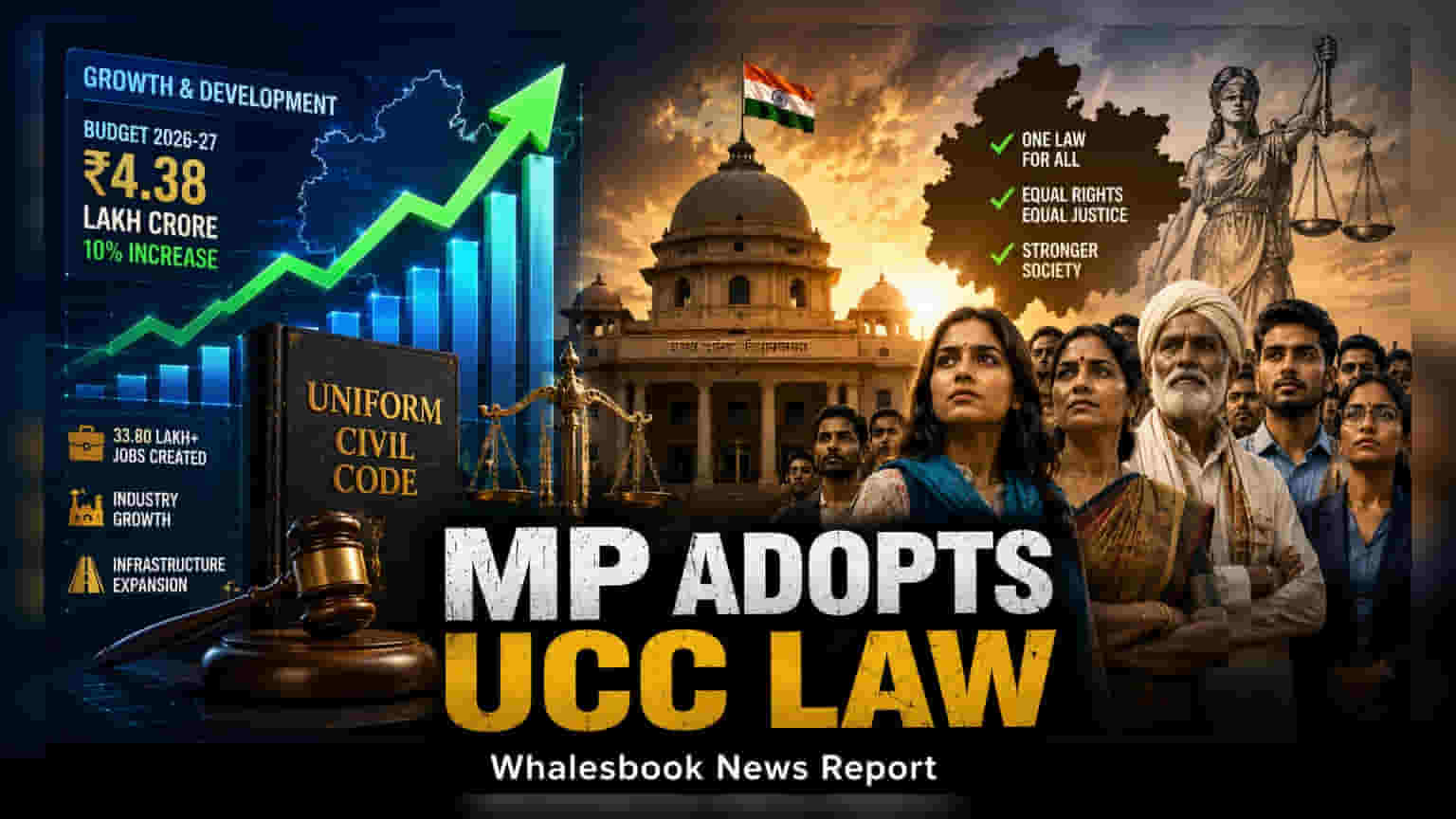
Madhya Pradesh Chief Minister Mohan Yadav has reiterated plans to implement the Uniform Civil Code following legislative approval in July 2026. The policy aims to standardize personal laws while excluding tribal communities. As a government legislative update, this development carries no direct impact on stock market listings or corporate share prices.
Madhya Pradesh Chief Minister Mohan Yadav used the Independence Day address on August 15, 2026, to reaffirm the state government's commitment to implementing the Uniform Civil Code. The legislation, which was passed by the state assembly in July 2026, seeks to introduce a unified framework for personal laws governing marriage, divorce, and inheritance across the state.
The law introduces significant changes to current personal law structures, including a formal prohibition on polygamy and a mandate for the registration of all live-in relationships. A key feature of the legislation is the specific exemption for tribal communities, which ensures that existing customary practices for these groups remain outside the scope of the new rules.
Alongside the legislative announcement, the Chief Minister provided an update on the state’s economic trajectory. The administration has outlined a state budget of ₹4.38 lakh crore for the 2026-27 financial year, which represents a 10% increase over the previous year. The state government also highlighted its focus on employment generation, reporting that over 33.80 lakh jobs have been created through business units registered on the Udyam portal.
From an investor perspective, it is important to distinguish this legislative event from corporate or market developments. The implementation of the Uniform Civil Code is a matter of state policy and constitutional law. It does not have direct implications for corporate stock market listings, sector-specific financial results, or individual equity valuations. There is no correlation between this legislative shift and the performance of companies on the NSE or BSE.
The primary monitorable for this policy remains the legal process. Legislative changes of this nature often undergo judicial review regarding their constitutional validity and scope. The timeline for the notification of the rules and any potential legal challenges to the code in high courts will be the next important phase for the state government to navigate.