 Whalesbook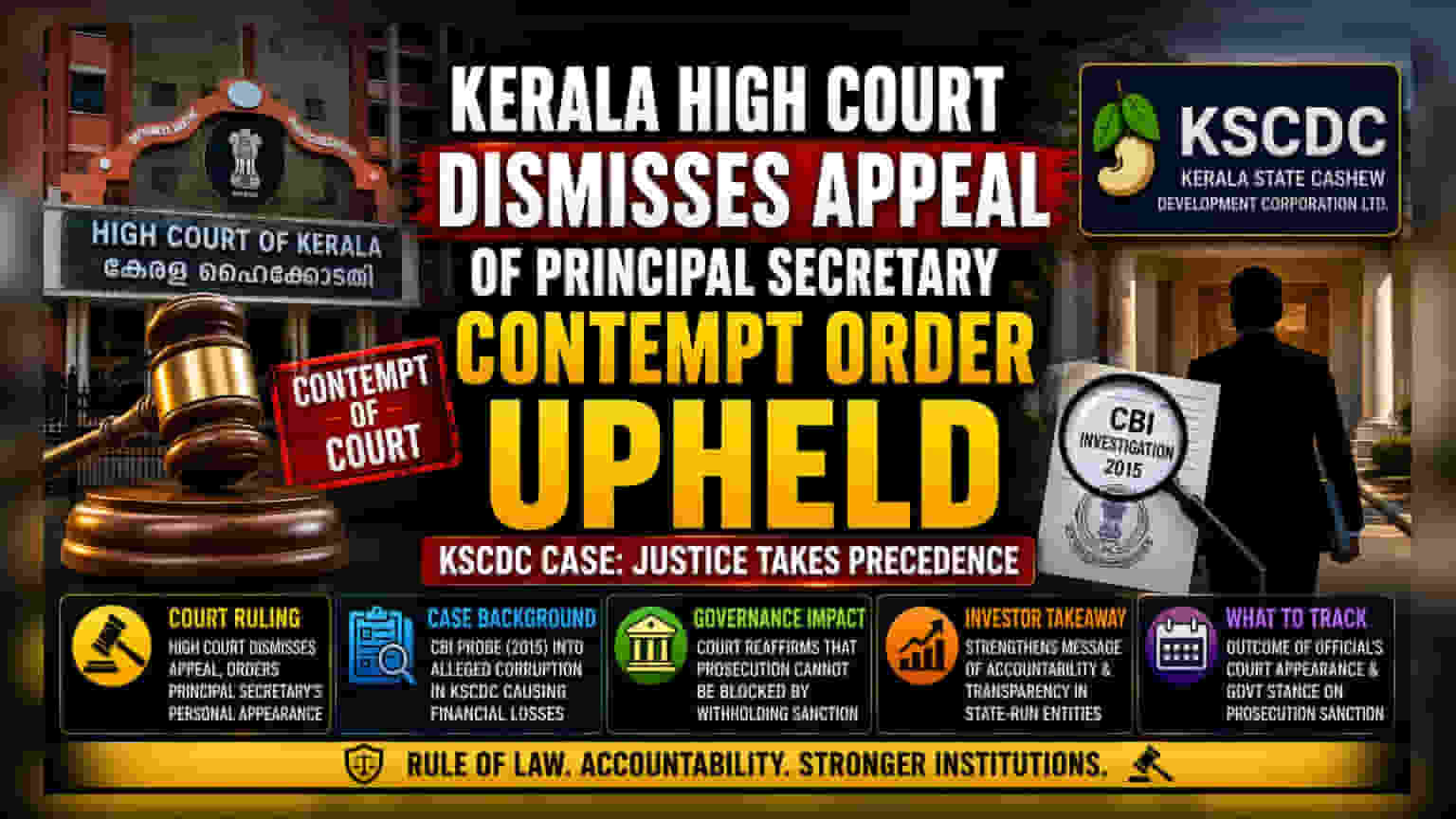


The Kerala High Court has dismissed an appeal by the Industries Principal Secretary regarding a contempt case involving the state-run Cashew Development Corporation. The matter concerns a 2015 corruption probe where the state government reportedly withheld prosecution sanction despite court directives. This ruling highlights the legal oversight of administrative decisions in state-run entities.
What Happened
The Kerala High Court has dismissed an appeal filed by the Industries Principal Secretary, Mohammed Hanish, regarding a contempt of court case. A division bench, consisting of Justices K Natarajan and Johnson John, upheld a previous order requiring the official to make a personal appearance before the court. This legal development is linked to the Kerala State Cashew Development Corporation Limited (KSCDC) and a long-standing corruption investigation.
Background of the Case
The case originated from a Central Bureau of Investigation (CBI) probe that began in 2015. The investigative agency alleged a criminal conspiracy involving former officials of the KSCDC and a private firm, which reportedly resulted in significant financial losses to the corporation. A single judge of the High Court had previously identified prima facie evidence against the accused. However, the legal proceedings were stalled because the state government had repeatedly denied permission to prosecute the officials involved.
Why It Matters For Governance
While the Kerala State Cashew Development Corporation Limited is a state-owned entity and not a publicly traded stock, the case is significant for those monitoring administrative and corporate governance. Courts often act as the final check on administrative decisions, and this ruling emphasizes that the competent authority cannot repeatedly override judicial findings by withholding prosecution sanction. For observers, this reflects the complexities of legal compliance within state-run corporations.
How Investors May Read This
Market participants and policy observers generally view legal and administrative stability as a vital component of a healthy business environment. When state-run entities face persistent legal challenges or disputes regarding compliance with court directives, it raises questions about internal accountability and administrative transparency. Investors often watch such developments to understand the broader legal and regulatory climate in the region, as consistency in following judicial orders is essential for maintaining efficient and trustworthy public institutions.
What Investors Should Track
The primary monitorable in this case is the outcome of the scheduled personal appearance of the official before the court. Stakeholders will be watching to see if the state government changes its stance on the prosecution sanction following this ruling. The resolution of this long-pending legal matter will be the key indicator for those interested in the administrative handling of the case and the subsequent legal steps taken by the authorities.