 Whalesbook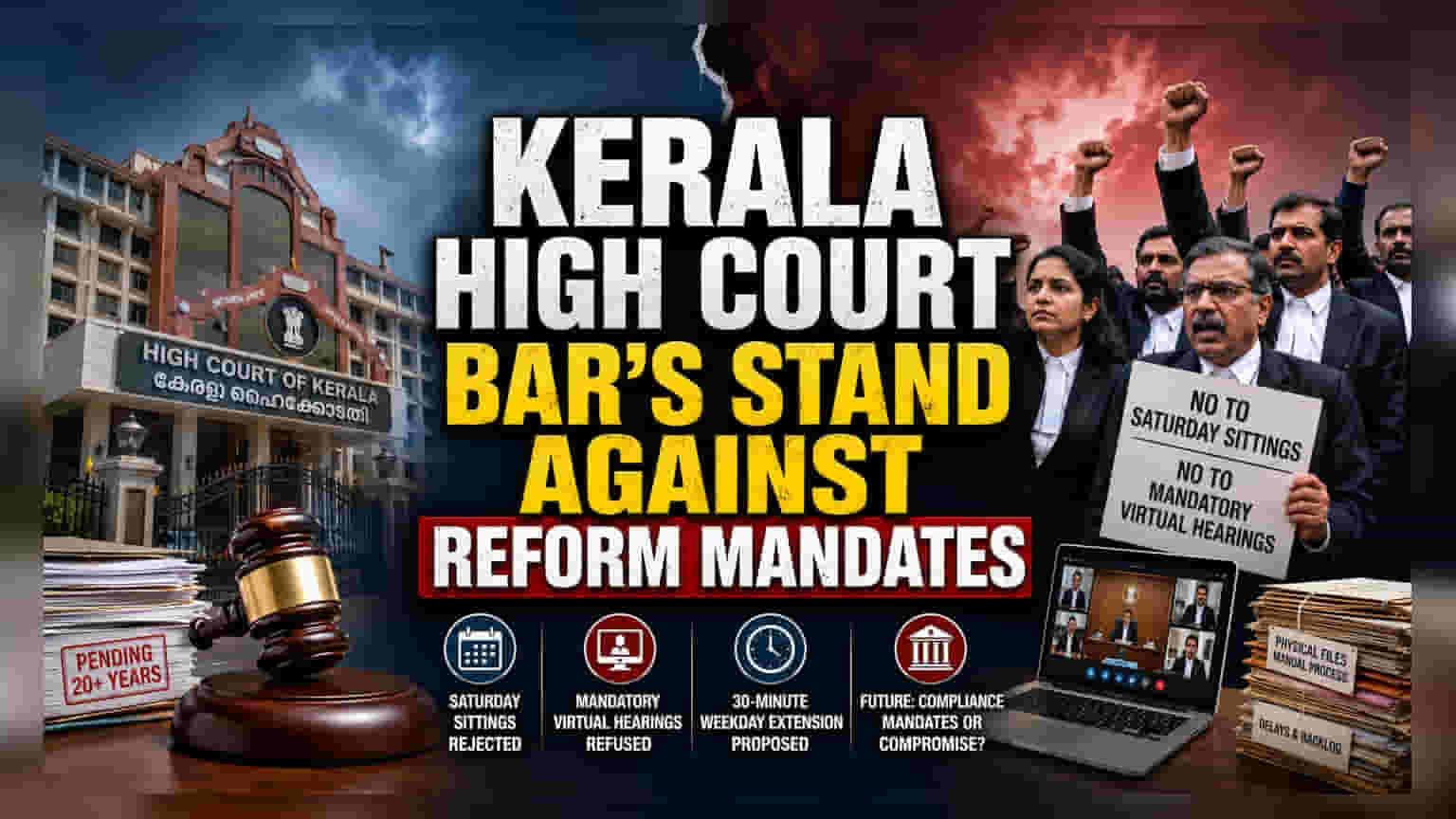


Structural Resistance to Procedural Reform
The tension between judicial administration and the legal practitioner base has reached a new threshold as the Kerala High Court Advocates Association formally dismissed directives regarding Saturday sittings and mandatory digital appearances. This standoff highlights a widening gap between top-down efforts to curb systemic case accumulation and the practical operational realities of the regional bar. While the administration views weekend sessions as a necessary mechanism to address cases pending for twenty years or more, the association maintains that such shifts ignore the geographical and professional constraints of those practicing outside the immediate Ernakulam jurisdiction.
The Operational Hybridity Debate
Beyond the weekend scheduling conflict, the rejection of mandatory virtual hearings on Mondays and Fridays marks a defense of the status quo regarding client interaction. Advocates contend that the current hybrid model, which reserves virtual access for specific necessity, preserves the integrity of in-person advocacy and document handling. The association posits that imposing rigid digital mandates disrupts the workflow established as the profession normalized post-pandemic protocols. By prioritizing the flexibility of the existing hybrid arrangement, the bar is effectively asserting that physical presence remains the gold standard for high-stakes litigation, despite broader national trends pushing for digital-first court environments.
Strategic Alternatives and Institutional Friction
The association has redirected the focus toward a proposal involving thirty-minute extensions to daily weekday sittings as a means to alleviate pendency without sacrificing weekend availability. This move reflects a broader tactical strategy to maintain control over professional scheduling while appearing cooperative with the goal of increasing clearance rates. However, this proposal exposes a fundamental misalignment with the Chief Justice of India's vision, which seeks more aggressive structural intervention. As the Supreme Court continues to push for austerity and efficiency across state-level high courts, this pushback may invite stricter oversight or further mandates from higher judicial authorities looking to force compliance in the face of record-breaking caseloads.
Risk Factors and Future Outlook
The ongoing impasse carries significant risks for court efficiency in the region. Persistent refusal to adopt standardized virtual or weekend scheduling may lead to an administrative bottleneck, potentially resulting in further case delays if the court is forced to impose unilateral working conditions. Furthermore, the reliance on manual-heavy physical processes as a primary mode of operation leaves the system vulnerable to the same logistical constraints that contributed to the decades-long backlog in the first place. Future developments will likely center on whether the administration forces compliance through new procedural rules or if the association can successfully negotiate a compromise that preserves their current operational freedom.