 Whalesbook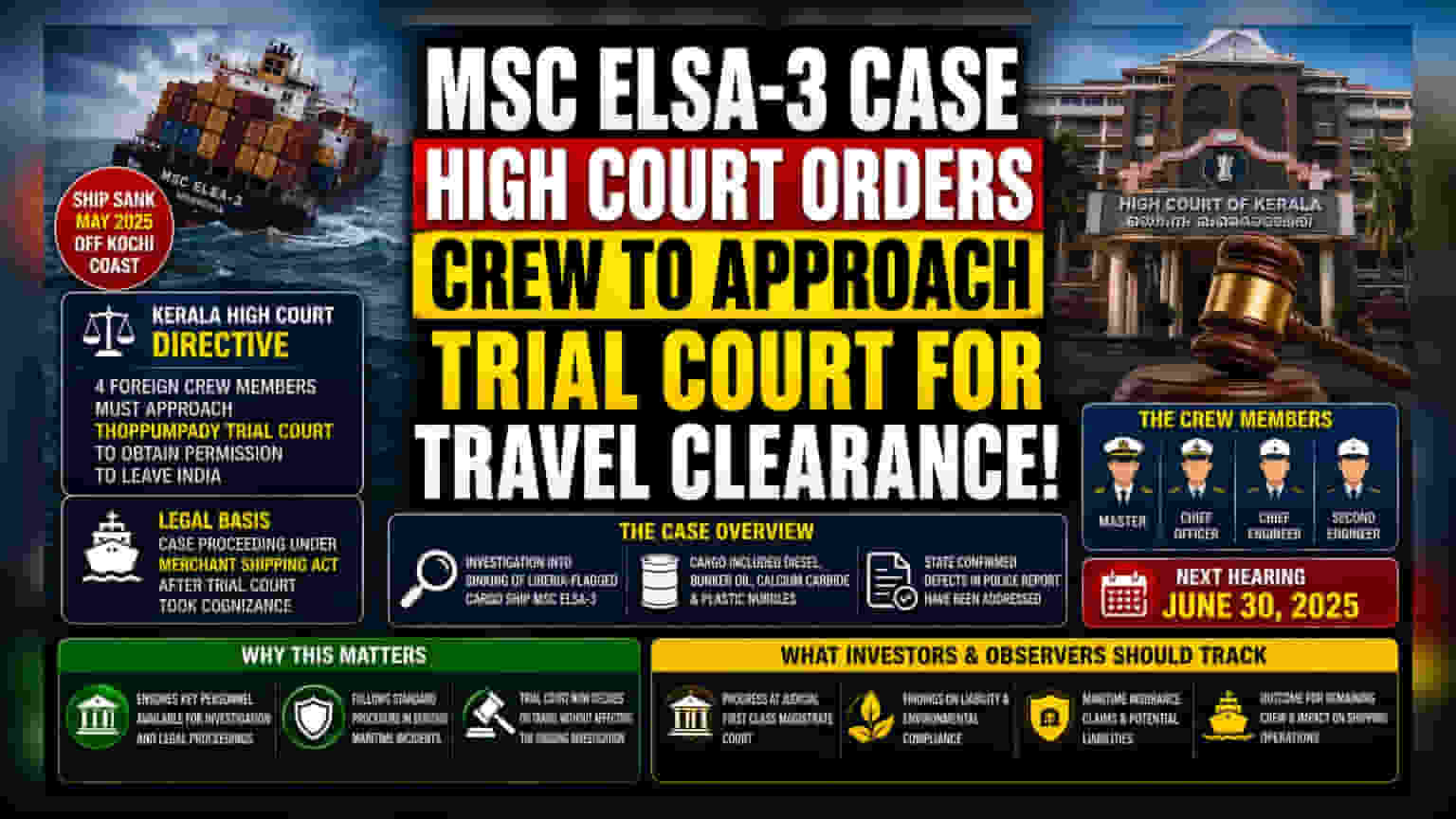


The Kerala High Court has directed four foreign crew members of the sunken cargo ship MSC Elsa-3 to seek travel clearance from the local trial court. This ruling comes as investigations continue into the vessel's sinking off the Kochi coast in May 2025.
What Happened
The Kerala High Court has issued a directive regarding the travel status of four foreign crew members associated with the cargo ship MSC Elsa-3. The vessel, which was flagged in Liberia, sank off the coast of Kochi in May 2025. Following the incident, the crew members faced travel restrictions as part of ongoing investigations into the sinking.
Justice Bechu Kurian Thomas, presiding over the case, ruled that the crew members must approach the Thoppumpady trial court to obtain permission to leave India. The High Court clarified that this step is necessary because the trial court has formally taken cognizance of the case, which is being investigated under the Merchant Shipping Act. This law governs matters related to shipping, safety at sea, and crew responsibilities in the event of an incident.
The Legal Context
The decision comes after a petition was filed by seven foreign crew members who requested the return of their passports and authorization to return to their home countries. They argued that they had been effectively held in India for more than a year while investigations were ongoing. The legal proceedings concern the circumstances surrounding the ship’s sinking, which reportedly involved a cargo of diesel, bunker oil, calcium carbide, and plastic nurdles.
While the High Court had previously allowed three other crew members to leave, the remaining four—identified as the vessel's master, chief officer, chief engineer, and second engineer—remained under restriction. The state government had confirmed that previous defects in the police report had been addressed, allowing the case to move forward to the magistrate court.
Why This Matters For Legal Procedure
For those observing maritime legal proceedings in India, this ruling highlights the procedural path often followed during serious shipping accidents. When a vessel sinks or causes an environmental incident, investigations by maritime authorities and police are standard. These investigations often result in restrictions on key personnel to ensure they are available for questioning and legal hearings.
By directing the crew to the trial court (the Judicial First Class Magistrate Court), the High Court is delegating the decision-making process to the specific court handling the ongoing criminal or civil proceedings. This indicates that the legal process has reached a stage where the local magistrate is the appropriate authority to determine whether the individuals can be permitted to travel without jeopardizing the investigation.
What Investors And Observers Should Track
The key monitorable for this case is the progress of the proceedings at the Judicial First Class Magistrate Court. The court is examining the casualties and circumstances linked to the sinking of the MSC Elsa-3. As the case proceeds, stakeholders in the shipping and maritime insurance sectors will look for outcomes related to potential liabilities, environmental compliance findings, and the final resolution of the legal status of the remaining crew. The High Court has scheduled further hearings for June 30, which may provide more clarity on the timeline for these legal matters.