 Whalesbook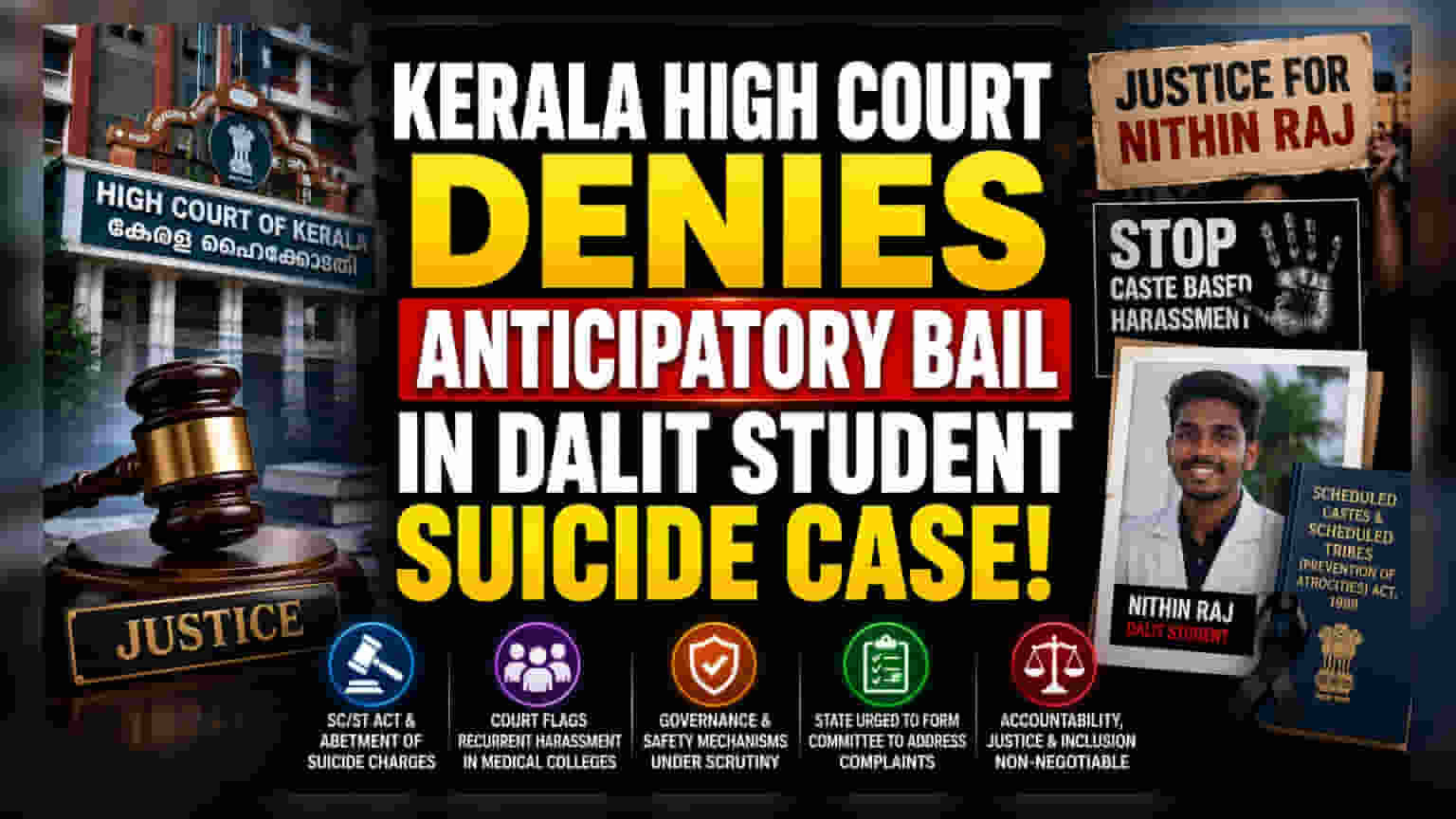
The Kerala High Court has denied anticipatory bail to a professor at Kannur Dental College in a student suicide case. This development underscores the critical need for robust governance and strict student welfare compliance within the education and institutional sector.
What Happened
The Kerala High Court has denied the anticipatory bail plea of Dr. M Kodanda Ram, a professor at Kannur Dental College. The case relates to the suicide of a Dalit student, Nithin Raj, in April. The court's decision follows accusations of verbal and caste-based harassment leveled against the faculty member. Police have registered a case against the professor and other staff under the Scheduled Castes and the Scheduled Tribes (Prevention of Atrocities) Act, 1989, and for abetment of suicide. During the hearing, the court noted the recurring nature of harassment allegations within medical colleges and suggested that state authorities consider forming a committee to address and remedy such complaints.
The Governance and ESG Lens
For investors and stakeholders observing the education and institutional sector, this case highlights the critical importance of Social (S) and Governance (G) parameters. In any large institution, particularly in education and healthcare, governance is not limited to financial audits. It encompasses the internal culture, strict adherence to anti-harassment policies, and the effectiveness of grievance redressal mechanisms. When internal controls fail, it leads to significant legal, regulatory, and reputational risks. These risks can affect the operational stability, licensing, and public perception of any institution, making governance an essential monitorable for those tracking the sector.
Why Regulatory Compliance Matters
Legal proceedings involving statutes like the Scheduled Castes and the Scheduled Tribes (Prevention of Atrocities) Act carry serious implications. Organizations that fail to maintain a safe and inclusive environment often face increased regulatory scrutiny, potential loss of operational licenses, and long-term litigation. For stakeholders, such events serve as a reminder that institutional success is heavily dependent on maintaining high ethical standards. A failure in oversight—whether in student welfare, faculty conduct, or internal complaints handling—often points to deeper issues in management and organizational culture.
Monitoring Sector Risks
The court’s observation regarding the recurring nature of such issues in medical colleges suggests a broader challenge within the sector. Investors and observers should note that institutions with weak internal mechanisms for reporting and resolving grievances are more susceptible to external legal intervention. Managing reputation and legal exposure is essential for long-term viability. When evaluating institutions in the healthcare or education space, the quality of human resource policies, internal ethics committees, and adherence to social compliance regulations are key indicators of operational health. A proactive approach to these issues is often what distinguishes stable organizations from those prone to crisis.

