 Whalesbook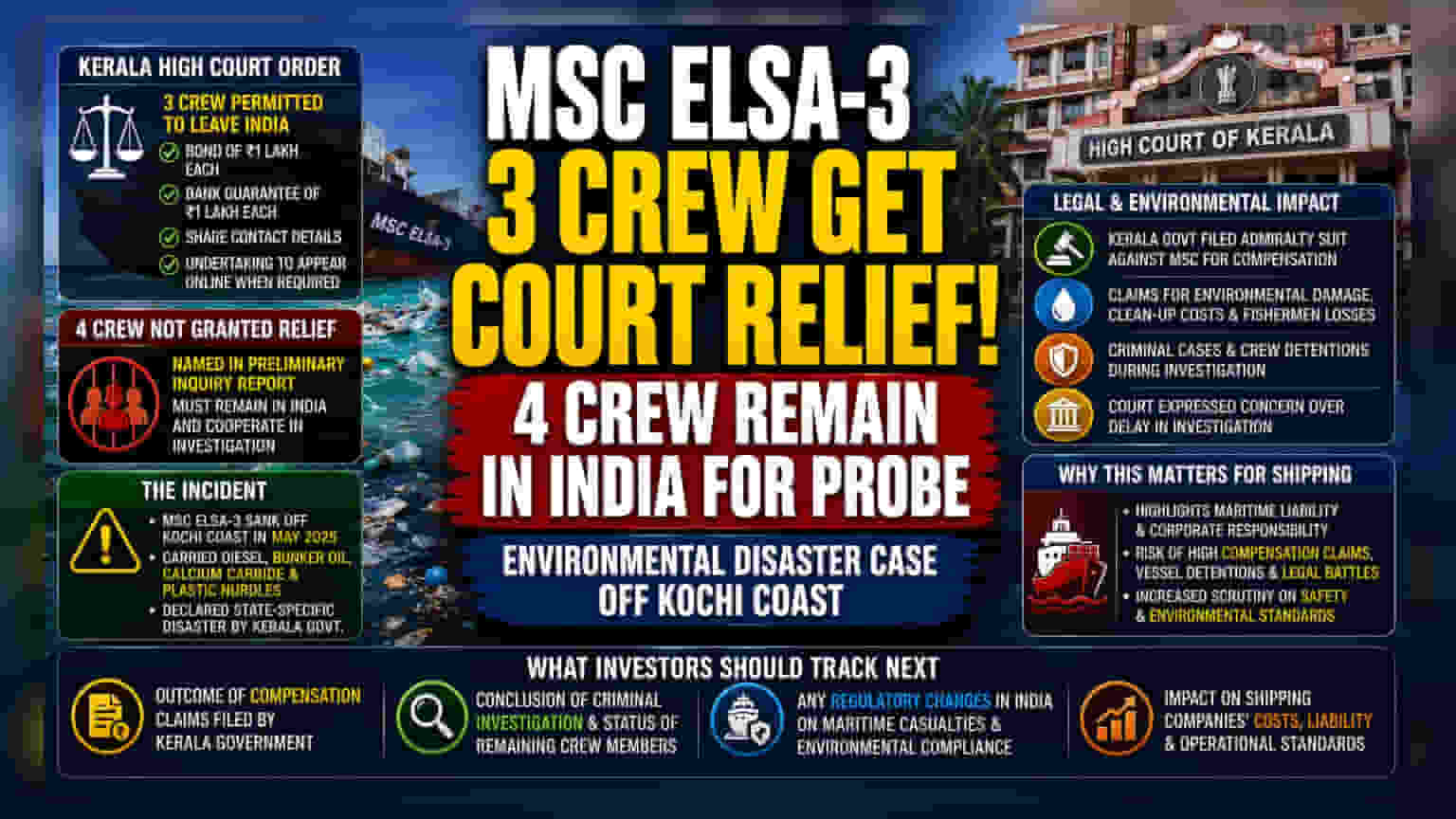


What Happened
The Kerala High Court has granted permission to three foreign crew members of the sunken vessel MSC ELSA-3 to return to their home countries. The court order, passed by Justice Bechu Kurian Thomas, stipulates that the individuals must provide a bond and a bank guarantee of ₹1 lakh each. Additionally, they are required to share their contact details and provide an undertaking to appear for court proceedings online whenever requested.
The court, however, did not grant the same relief to four other crew members involved in the same petition. These individuals remain in India as they are named in the preliminary inquiry report and must participate in the ongoing investigation into the ship's sinking. The legal proceedings arise from the aftermath of the vessel, which sank off the Kochi coast in May 2025.
The Legal and Environmental Context
The sinking of the MSC ELSA-3 in May 2025 was declared a state-specific disaster by the Kerala government. The vessel, which was carrying diesel, bunker oil, calcium carbide, and plastic nurdles, caused significant marine pollution. Following the incident, the Kerala government initiated an admiralty suit against Mediterranean Shipping Company (MSC), the owner of the vessel, seeking substantial compensation for environmental damage, clean-up operations, and economic losses to local fishermen. The incident triggered investigations by maritime authorities and local police, leading to criminal cases and detention of crew members during the inquiry process.
Why It Matters for Shipping Liability
This case highlights the complexities of maritime liability and corporate responsibility for large shipping entities. The Kerala High Court has previously expressed concern over delays in the investigation process and has sought reports from lower magistrate courts regarding the status of the proceedings. For business and maritime stakeholders, this situation underscores the financial and legal risks that shipping lines face when environmental disasters occur in international waters near a nation's coast. The claims for compensation by state authorities often lead to extended legal battles, the detention of other vessels in the fleet as security, and increased scrutiny of a company's safety and operational standards.
What Investors Should Track Next
Investors and stakeholders in the maritime and logistics sectors should monitor the outcome of the compensation claims filed by the state government. The final resolution of the legal battle and any potential settlements will have implications for the ship owner's liability and operational costs in the region. Other monitorables include the conclusion of the ongoing criminal investigation, the release of the remaining crew members, and any regulatory changes in India regarding the treatment of maritime casualties and the environmental compliance required for foreign-flagged vessels operating in Indian waters.