

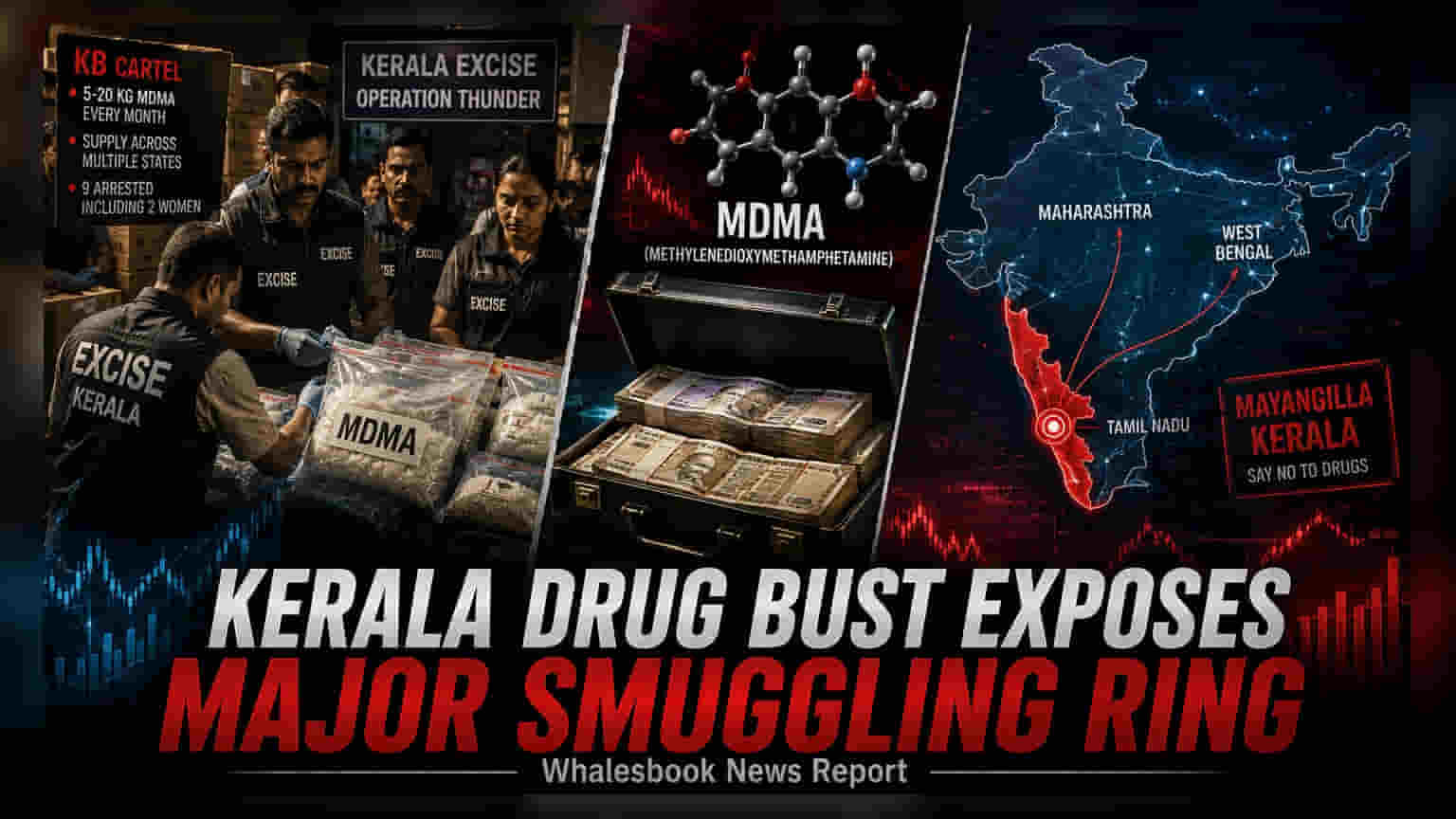
The Kerala Excise Department has dismantled the 'KB Cartel' during 'Operation Thunder', leading to the arrest of nine individuals. The network was allegedly planning to smuggle up to 20 kg of MDMA into the state each month. This crackdown underscores the ongoing challenges in controlling synthetic drug trafficking and the importance of inter-state coordination for law enforcement agencies.
The Kerala Excise Department has officially dismantled a major synthetic drug trafficking network known as the 'KB Cartel' as part of an enforcement initiative codenamed 'Operation Thunder'. The crackdown resulted in the arrest of nine individuals, including two women, following an investigation that traced the network's connections across several Indian states.
The operation was launched after authorities uncovered plans by the syndicate to smuggle between 5 and 20 kilograms of Methylenedioxymethamphetamine (MDMA) into Kerala every month. The investigative breakthrough began with an initial seizure of 3.5 kg of MDMA from a 20-year-old woman and a male accomplice in the Kondotty region. This discovery allowed officials to map the broader network, eventually leading to follow-up operations in Maharashtra, West Bengal, and Tamil Nadu.
This event is part of the state's ongoing 'Mayangilla Kerala' anti-narcotics campaign, which seeks to curb the rising trend of synthetic drug abuse. Authorities have noted that the inter-state nature of the trafficking poses significant challenges, as syndicates often exploit infrastructure gaps at state borders to move contraband. The complexity of these cases, which are prosecuted under the Narcotic Drugs and Psychotropic Substances (NDPS) Act, requires close coordination between state excise departments and central agencies to handle investigations and mandatory legal protocols effectively.
The success of 'Operation Thunder' highlights the increasing pressure on law enforcement to monitor drug supply lines that reach deep into the state. Previous enforcement drives in 2026, including operations led by state police and the Directorate of Revenue Intelligence (DRI), have also focused on dismantling similar networks and increasing surveillance in public and educational spaces. For observers of the state's regulatory environment, the consistent enforcement against such cartels remains a key factor in maintaining social order and public safety. The next steps for the authorities will involve the continued prosecution of those arrested and further investigations to determine if other supply lines connected to the 'KB Cartel' remain active.