

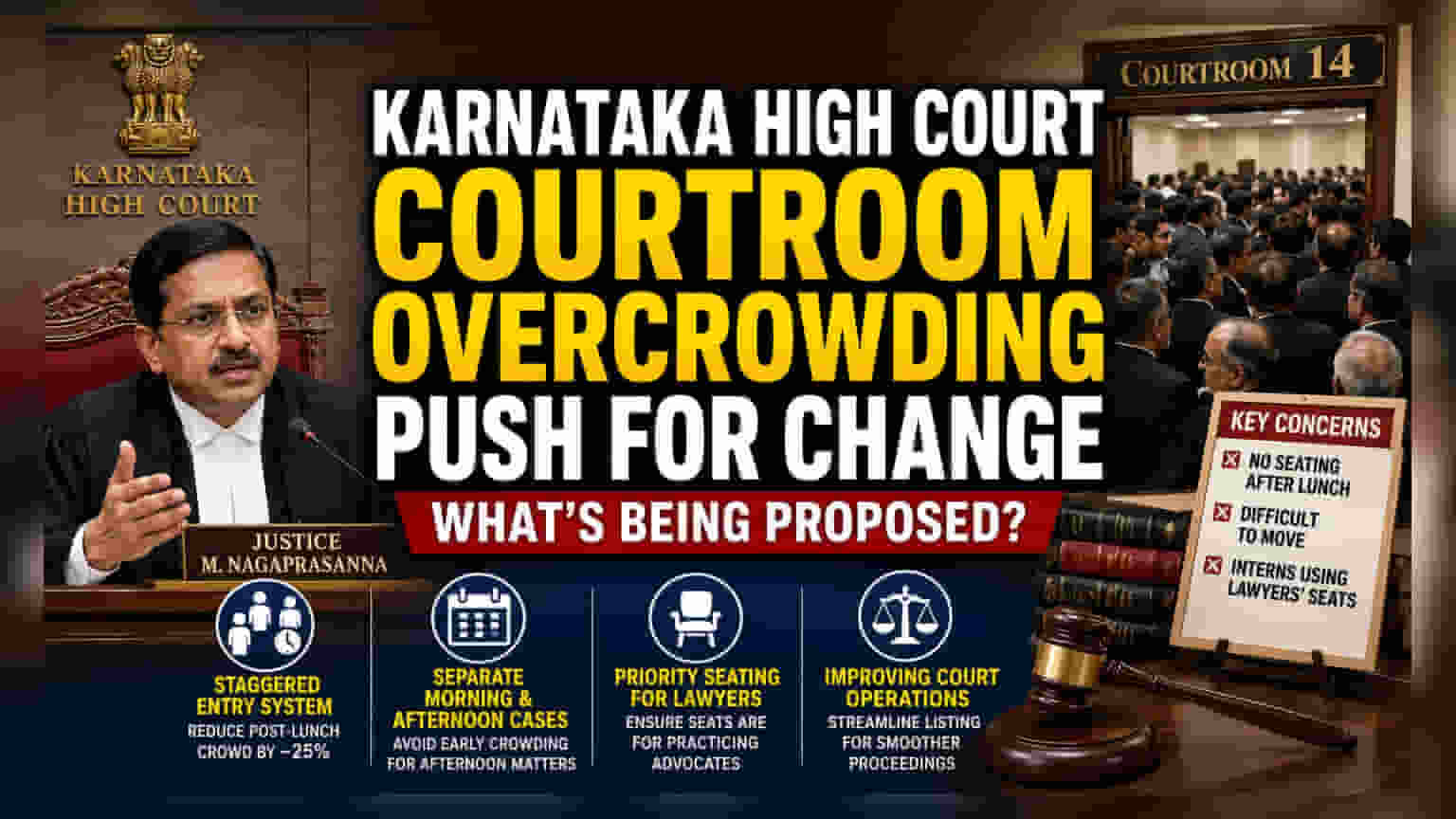
Justice M. Nagaprasanna is working with legal professionals to address persistent overcrowding in the Karnataka High Court’s Courtroom 14. The court is considering measures such as staggered entry for settlement cases and adjusted causelist management to improve operational flow. While this is an administrative issue within the judiciary, it highlights the ongoing challenges of managing high case volumes, which the legal system is actively seeking to resolve.
What Happened
Justice M. Nagaprasanna of the Karnataka High Court recently initiated a discussion with members of the legal fraternity to address significant overcrowding in Courtroom 14. The issue has become a growing concern, with lawyers reporting difficulty moving within the courtroom and a lack of available seating, particularly after the lunch break. During the proceedings, Justice Nagaprasanna solicited practical suggestions from advocates to alleviate the congestion and ensure the efficient functioning of the court.
Challenges in Courtroom Operations
The discussion highlighted that the current design and management of the courtroom are struggling to accommodate the high volume of daily participants. Senior Advocate K.N. Phanindra noted the immediate shortage of space and chairs, which hinders the ability of lawyers to effectively represent their clients. A specific point of concern raised was the presence of interns occupying seats intended for practicing lawyers. The court emphasized the need for maintaining professional decorum and ensuring that the limited seating is available for those directly involved in case arguments.
Proposed Administrative Changes
To manage the influx of people, the court is exploring several operational changes. One proposal involves implementing a staggered entry system for cases, particularly for settlements, which could potentially reduce the post-lunch crowd by approximately 25%.
Additional Solicitor General Arvind Kamath suggested a separation of morning and afternoon cases in the causelist. The goal is to prevent the early gathering of litigants and lawyers for afternoon sessions, which currently adds to the morning congestion. However, Justice Nagaprasanna pointed out the practical difficulties in this approach, noting that the daily volume of fresh matters requires a consistent and flexible listing process to avoid delays.
The Impact of Daily Listing
Historically, the court occasionally listed fresh matters on specific days, which naturally regulated the number of people in court on any given day. The current shift toward listing fresh matters daily, while intended to facilitate faster justice and accommodate urgent requests, has significantly increased the load on the court's infrastructure.
Why This Matters
While this event is an internal administrative matter for the judiciary, it underscores the systemic challenges faced by Indian courts in handling large volumes of litigation. For businesses and individuals involved in legal proceedings, the efficiency of courtroom operations is critical to the timely resolution of cases. Improving flow management and streamlining causelists are part of the broader efforts by the judiciary to enhance the overall experience for legal practitioners and litigants, ultimately aiming to reduce delays in the legal process.