

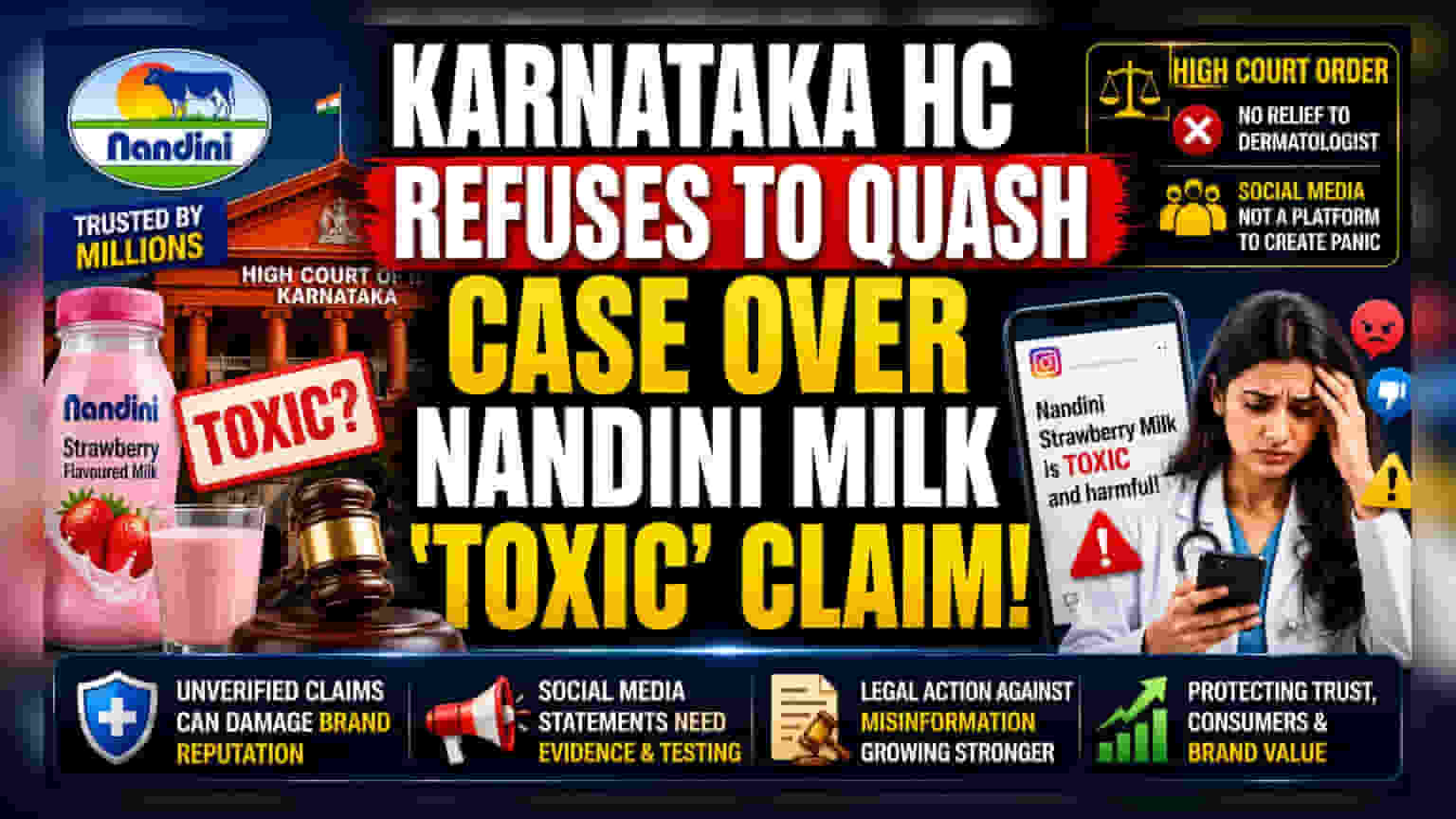
The Karnataka High Court has denied a plea to quash criminal proceedings against a dermatologist who allegedly spread misinformation about Nandini dairy products on social media. The court’s decision underscores the legal risks for social media influencers and professionals making unverified health claims about established food brands.
What Happened
The Karnataka High Court on Monday declined to halt criminal proceedings against a Bengaluru-based dermatologist, Dr. Sharanya Padma, who is facing a legal case filed by the Karnataka Milk Federation (KMF). The case stems from a complaint alleging that the doctor uploaded content on Instagram describing certain Nandini dairy products—specifically strawberry-flavored milk—as "toxic" and harmful to health.
Dr. Padma had approached the court seeking to quash the police complaint registered against her in Malleshwaram, Bengaluru. However, Justice M. Nagaprasanna rejected the request, noting that social media platforms should not be used to create public panic without any scientific evidence or testing to back such claims.
Why This Matters For Brand Reputation
For consumer brands, especially in the dairy and food sector, public trust is a core asset. When professionals or social media influencers make claims about product quality without verifying them, it can lead to unnecessary panic and potentially damage a brand's reputation built over years.
This court order is significant because it highlights the growing legal accountability for social media users who share unverified health or safety information. For established brands like Nandini, which command a large market share and significant public trust in Karnataka, such legal actions serve as a protective measure against unfair negative publicity. It signals to the market that companies are increasingly prepared to defend their brand equity through legal channels when misinformation threatens their reputation.
The Legal And Social Media Risk
During the proceedings, the court questioned the basis of the statements made by the doctor. The bench emphasized that making claims about a product being "spurious" or "toxic" without conducting any independent lab tests or notifying government authorities is irresponsible. The judge highlighted the danger of generating public anxiety regarding essential food items.
This case also points to a broader trend where food and beverage companies are becoming more sensitive to online narratives. With the rise of short-form video content on platforms like Instagram, even a single viral video containing unverified claims can impact consumer sentiment. Companies now monitor these platforms more closely and are taking swifter action to mitigate risk.
What Investors And Stakeholders Should Track
While this case involves a specific legal dispute, it is a reminder of the evolving landscape for food safety and digital communication. Investors in the FMCG and dairy sectors may want to watch how legal precedents regarding "influencer accountability" develop. The core monitorable for businesses in this sector remains their ability to manage brand perception and respond effectively to misinformation that could otherwise harm consumer demand and long-term brand value.