

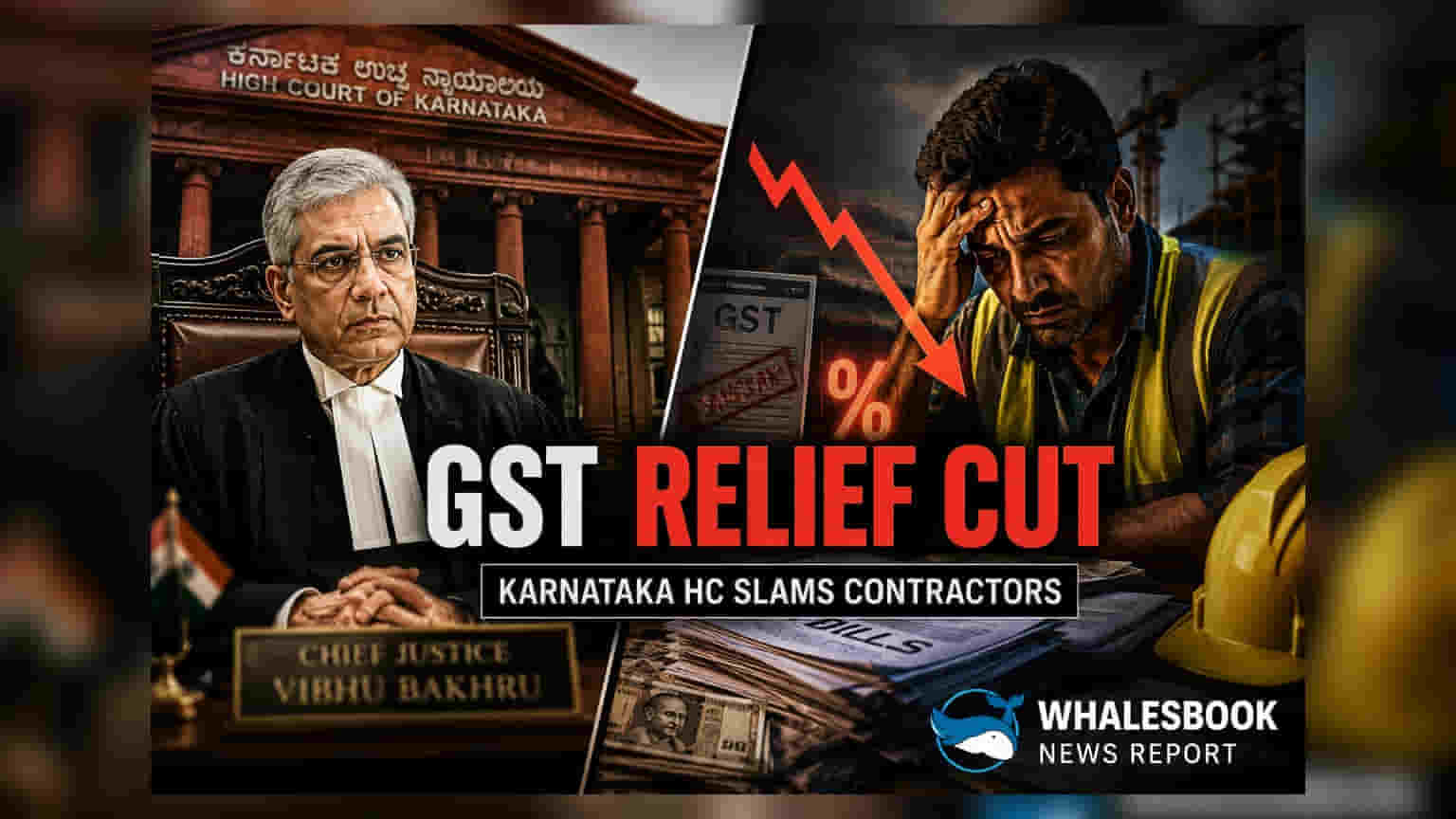
The Karnataka High Court ruled that while contractors may seek tax reimbursement from government departments, courts cannot override GST laws. The decision prevents judicial waivers of interest, penalties, or statutory tax filings, narrowing the scope for relief in legacy contract disputes.
What Happened
The Karnataka High Court has clarified the legal standing of government contractors seeking relief from additional Goods and Services Tax (GST) burdens. A division bench, led by Chief Justice Vibhu Bakhru and Justice KS Hemalekha, partially allowed appeals filed by state authorities. The ruling modifies previous orders that had granted broader relief to contractors, including directives that allowed for the revision of tax returns and the waiver of penalties and interest under the GST framework.
Contractual Claims vs. Tax Law
The legal dispute originated from public works contracts that were signed before the introduction of GST in 2017. Contractors faced a situation where their original tender agreements were based on pre-GST tax structures, leading to unexpected tax costs when the new regime came into force. Many contractors had approached the courts seeking two things: reimbursement from the government departments they worked for, and protection from tax recovery actions initiated by GST authorities.
The Court's Decision
The court established a clear boundary between contractual disputes and statutory tax compliance. While it acknowledged that contractors might have a valid claim for reimbursement from their employer departments, it ruled that these private contracts do not hold authority over national tax laws. Specifically, the bench stated that courts do not have the power to permit the filing of revised GST returns that go against the law, nor can they waive mandatory interest, penalties, or extend timelines for tax filings set by the statute. Any reimbursement claims for tax burdens must now be pursued directly against the employer department rather than through the tax administration.
Impact on Pending Cases
In a separate but related matter involving SKS Karkala Infra Projects and Davanagere Smart City, the court upheld the dismissal of a petition for reimbursement. The contract in question was signed after the GST rollout, with terms already inclusive of tax obligations. The court determined that such disputes involve complex factual disagreements and are not suitable for resolution through writ petitions. Contractors in similar positions are now directed to use alternative legal channels to resolve these disputes, rather than seeking immediate relief through the High Court.
What Investors Should Track
For investors in construction and infrastructure companies with large portfolios of government projects, this ruling brings significant clarity regarding legacy liabilities. The key monitorable is how government departments handle reimbursement requests now that judicial intervention in tax law is limited. Investors should monitor:
- The status of ongoing arbitration or litigation related to GST reimbursement in public sector contracts.
- Potential provisions or write-offs for tax-related penalties that companies may now be fully liable for.
- Management commentary on contract terms for new government tenders, specifically regarding tax variation clauses and how they insulate margins against future regulatory changes.