 Whalesbook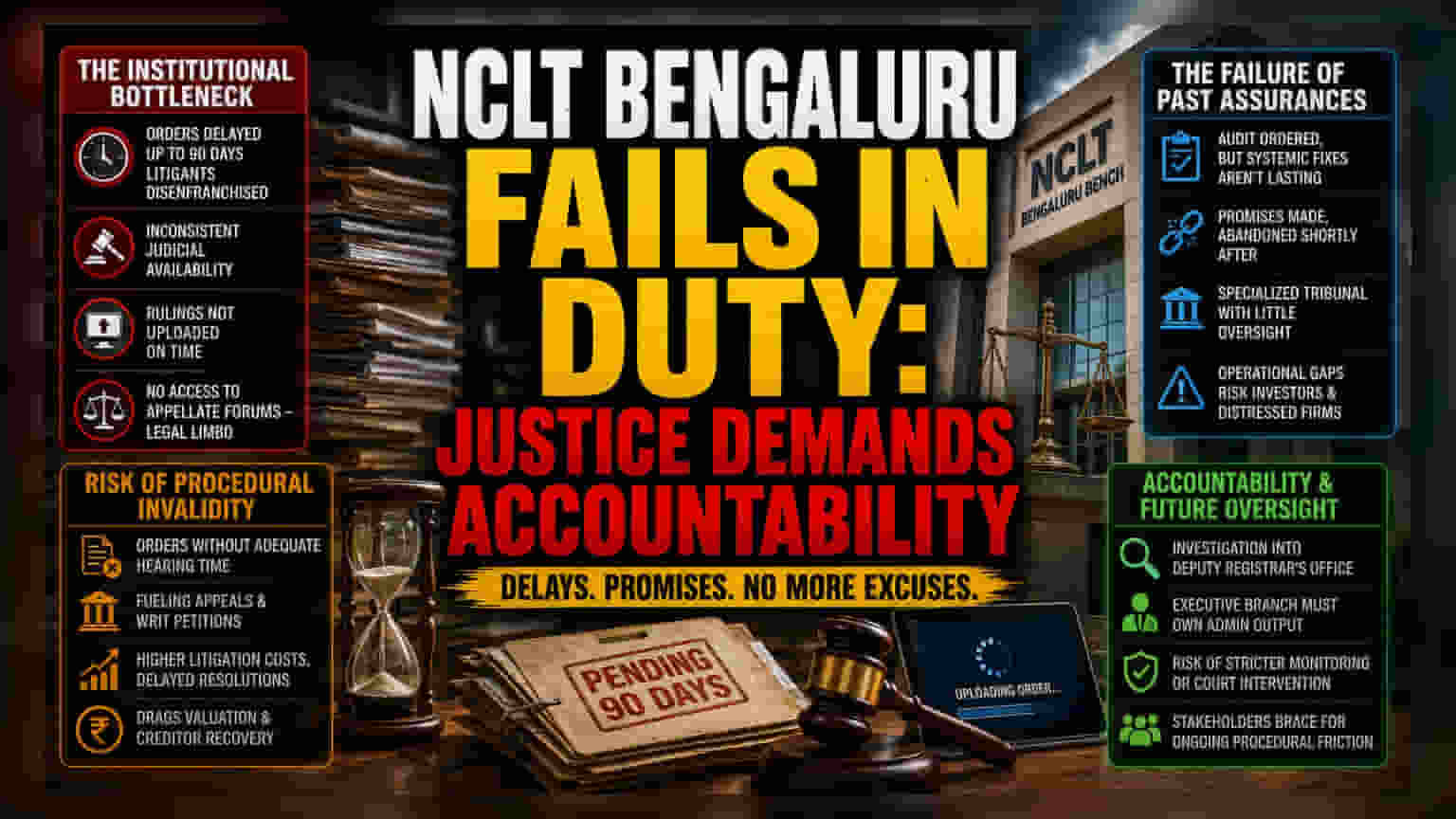


The Institutional Bottleneck
The judiciary has increasingly signaled impatience with the administrative inertia characterizing the National Company Law Tribunal Bengaluru Bench. Justice Suraj Govindaraj recently emphasized that the tribunal is suffering from a structural failure, marked by chronic delays in order dissemination and inconsistent judicial availability. By failing to upload rulings in a timely manner—often stalling the process for up to ninety days—the tribunal is effectively disenfranchising litigants, preventing them from accessing higher appellate forums. This lack of transparency forces market participants into a state of legal limbo, where the inability to challenge decisions disrupts ongoing corporate and insolvency proceedings.
The Failure of Past Assurances
Although the Additional Solicitor General Aravind Kamath has been tasked with auditing these deficiencies, historical data suggests that internal administrative fixes have yielded only ephemeral improvements. The High Court observed that prior commitments from the tribunal to expedite workflow were abandoned shortly after implementation. This cycle of promise and non-performance highlights a deeper issue regarding oversight within specialized tribunals. Unlike standard commercial courts, the NCLT functions as a front-line defense for corporate solvency and stakeholder rights, making these operational gaps a systemic risk for investors and distressed companies alike.
The Risk of Procedural Invalidity
Legal experts suggest that the practice of issuing orders without granting adequate hearing time, as noted by the bench, threatens the validity of the tribunal's own findings. If the NCLT Bengaluru continues to bypass due process, it creates a fertile ground for high-frequency appeals and writ petitions. This creates a secondary market for litigation costs, as parties are forced to bring procedural grievances before the High Court rather than resolving the primary commercial disputes. For firms undergoing insolvency or restructuring, this uncertainty acts as a massive drag on valuation and creditor recovery, effectively eroding the efficiency that the Insolvency and Bankruptcy Code was originally designed to provide.
Accountability and Future Oversight
The ongoing investigation into the Deputy Registrar’s office represents a critical stress test for the tribunal’s management. While the court stopped short of issuing immediate punitive measures against individual presiding officers, the directive to the Additional Solicitor General indicates that the executive branch must now take direct responsibility for the tribunal's administrative output. Should these procedural irregularities persist, it is likely that the High Court will move toward stricter monitoring frameworks or direct intervention in the tribunal's scheduling protocols. Investors and stakeholders should anticipate further friction in insolvency timelines until these internal administrative barriers are dismantled.