

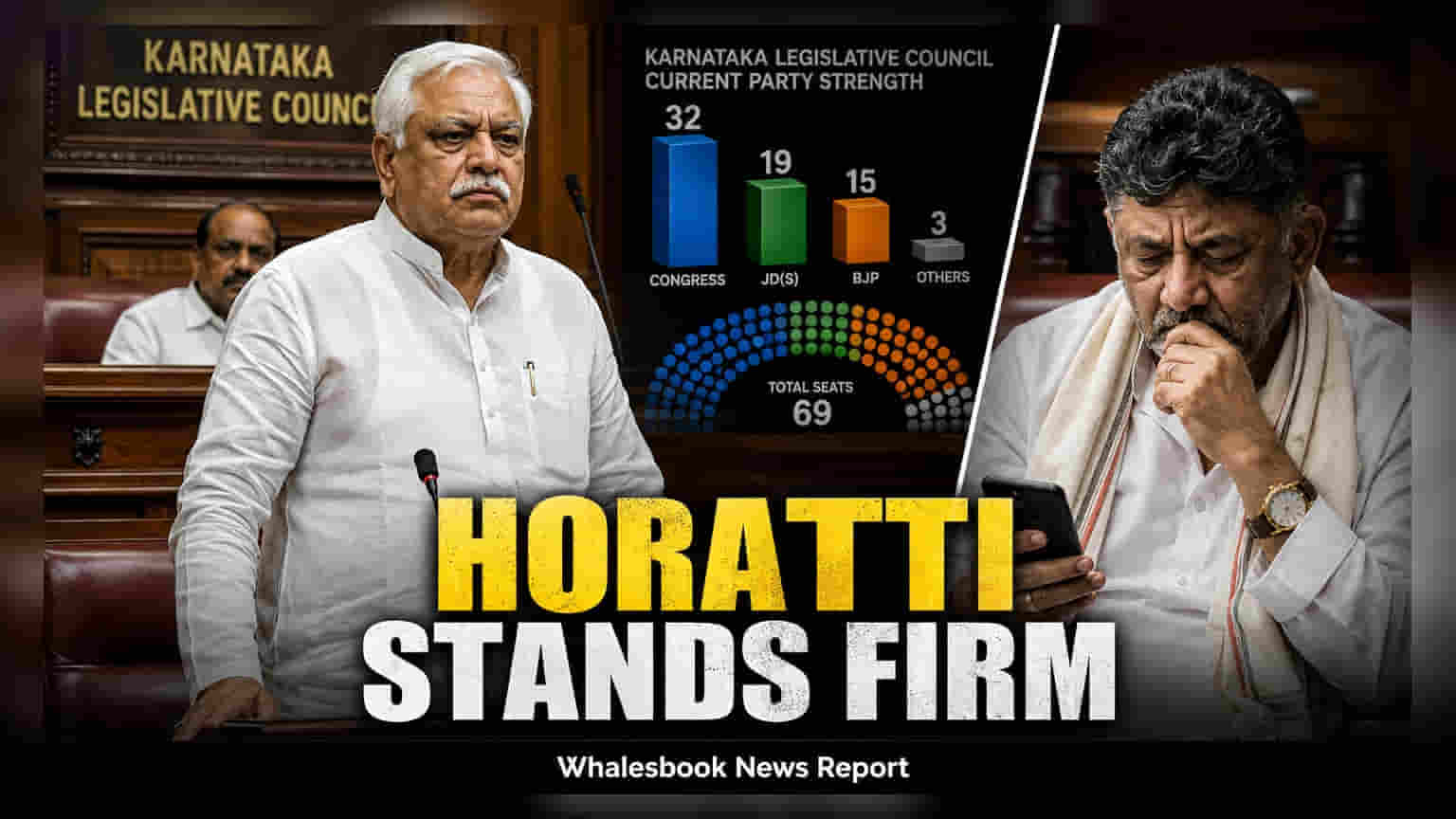
Karnataka Legislative Council Chairman Basavaraj Horatti has declined a request by Chief Minister D.K. Shivakumar to step down from his position. Horatti stated that as a constitutional office holder, his removal must follow formal procedures, such as a no-confidence motion, rather than party directives. This political development impacts legislative proceedings as the state government seeks to nominate its own candidates for top house posts.
Basavaraj Horatti, the Chairman of the Karnataka Legislative Council, has publicly declined a request from Chief Minister D.K. Shivakumar to resign from his constitutional post. The refusal comes amid a push by the Congress party to appoint its own nominees to leadership positions within the legislative body. Horatti, an experienced member of the council serving his eighth term, stated that the office of the Chairman is meant to be independent and should not be treated as a political appointment subject to the decisions of party leadership.
Constitutional Process for Removal
Horatti emphasized that his position is protected by constitutional and parliamentary rules. He explained that removing an incumbent Chairman is not a matter of a simple resignation request but requires a formal, legal process. According to the existing legislative framework, such a move necessitates a no-confidence motion initiated by at least ten members of the House, accompanied by a 14-day advance notice. The final decision would then rest with the members of the Council, rather than being determined solely by the political high command.
Legislative Composition and Political Context
This development is significant for the state’s legislative stability. The Karnataka Legislative Council currently comprises 75 members. The Congress party holds a majority with 38 seats, while the BJP holds 24, and the JD(S) has 6. The government's push to align the Chairman’s office with its own nominees is viewed as an effort to ensure smoother passage of bills and legislative priorities in the upcoming sessions.
Implications for Governance
For those monitoring the state’s political and policy environment, the primary interest lies in whether this friction leads to disruptions in the upcoming legislative proceedings. A standoff between the executive government and the presiding officer of the Council could slow down the legislative agenda, potentially impacting the timing of government policies or infrastructure projects that require legislative approval. Observers will be watching to see if the government proceeds with the formal no-confidence motion or if the situation leads to a period of political uncertainty within the House. The next major monitorable will be the schedule of the upcoming monsoon session, which is set to begin on August 13, 2026, as this will clarify whether the legislative body continues to function as usual or faces procedural hurdles.