

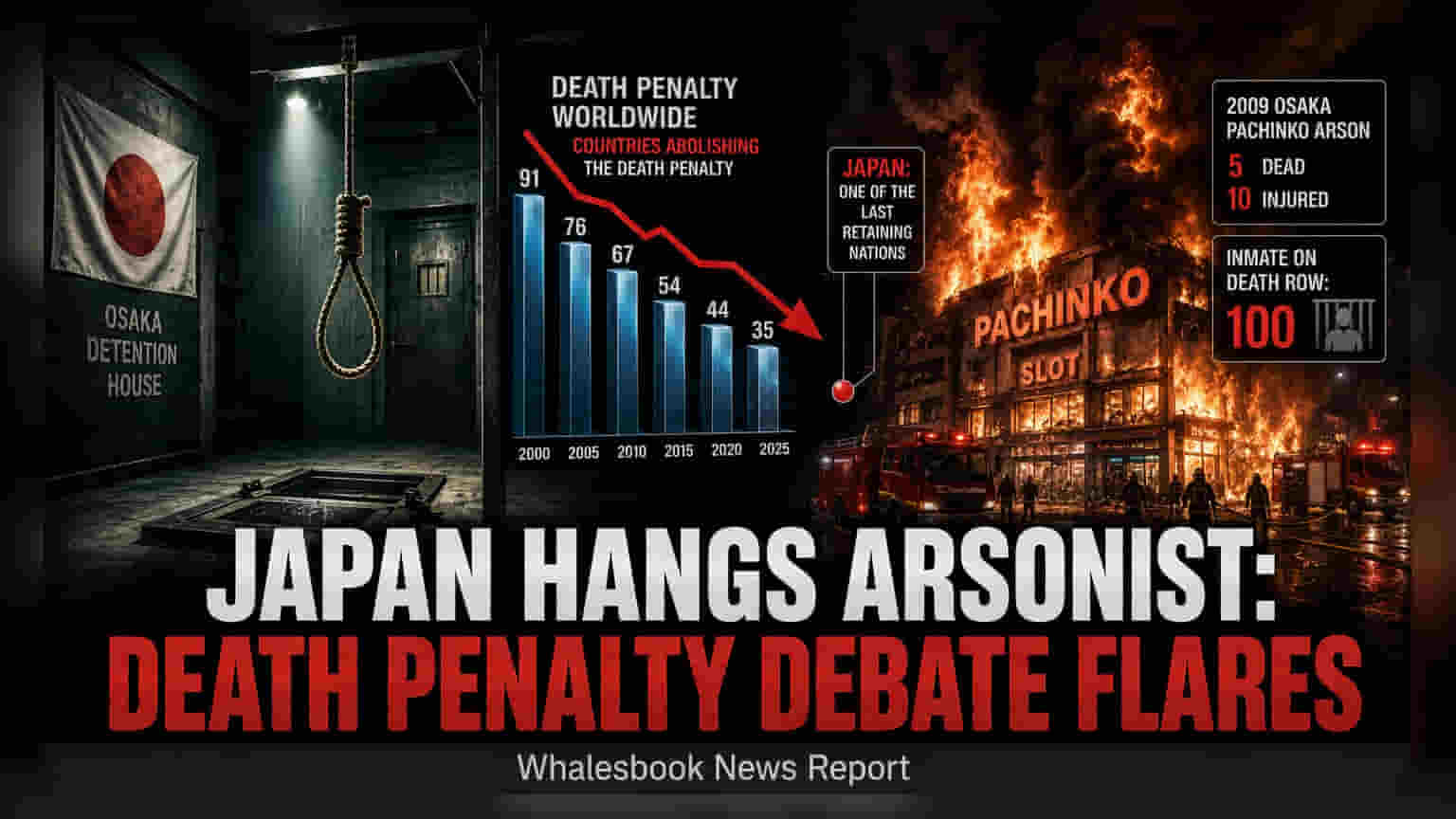
Japan has executed Sunao Takami, convicted for a 2009 arson attack on an Osaka pachinko parlor that killed five people. This marks the first execution under Prime Minister Sanae Takaichi's administration, bringing renewed global and domestic attention to Japan’s secretive capital punishment system and the regulatory environment surrounding the gaming parlor industry.
Japan carried out the first execution under the administration of Prime Minister Sanae Takaichi on Friday, involving the death of Sunao Takami, 58. Takami had been convicted for a deadly arson attack on an Osaka pachinko parlor in 2009, an incident that resulted in five deaths and ten injuries. The execution, which took place in the Osaka Detention House, has served as a flashpoint for renewed scrutiny of Japan's use of the death penalty, a practice that continues to distinguish the country from most of the global community.
Judicial and Legal Background
The case dates back to 2009 when Takami ignited petrol inside a crowded pachinko venue. Following his arrest, the Osaka District Court handed down a conviction for murder, attempted murder, and arson in 2011. The legal process concluded in 2016 when the Supreme Court rejected his final appeal. According to the Justice Ministry, there are currently 100 individuals on death row in Japan. The procedure remains highly secretive, with inmates typically notified of their execution only on the morning the sentence is carried out, a practice that has drawn consistent criticism from international human rights organizations.
Impact on the Gaming Industry
While this event is primarily a matter of criminal justice, it also highlights the challenging environment for the pachinko industry in Japan. Pachinko parlors are a staple of Japanese entertainment, yet they operate under constant public and regulatory pressure. The industry faces long-term structural challenges, including an aging demographic that is less likely to frequent these venues, as well as strict government oversight regarding social impact and safety. Investors and stakeholders in the entertainment and leisure sector often monitor such events, as high-profile tragedies can trigger calls for tighter regulations, increased security compliance costs, or stricter operational oversight for parlor owners.
Global Scrutiny and Domestic Debate
Japan remains one of the few G7 nations that retains the death penalty, a status that frequently places it at odds with international human rights standards. The execution has reignited domestic discussions about the necessity of capital punishment. Justice Minister Hiroshi Hiraguchi defended the move as an unavoidable option, citing the gravity of the crime. However, the timing of the execution, which occurred during a parliamentary recess, has prompted questions from critics about whether the government is attempting to avoid direct legislative and public debate on the matter.
Moving forward, the primary monitorable for observers will be how the Takaichi administration responds to the escalating international pressure regarding its judicial practices. Domestically, the government faces the dual task of addressing public safety concerns while navigating the broader societal debate on whether to reform or abolish the capital punishment system.