 Whalesbook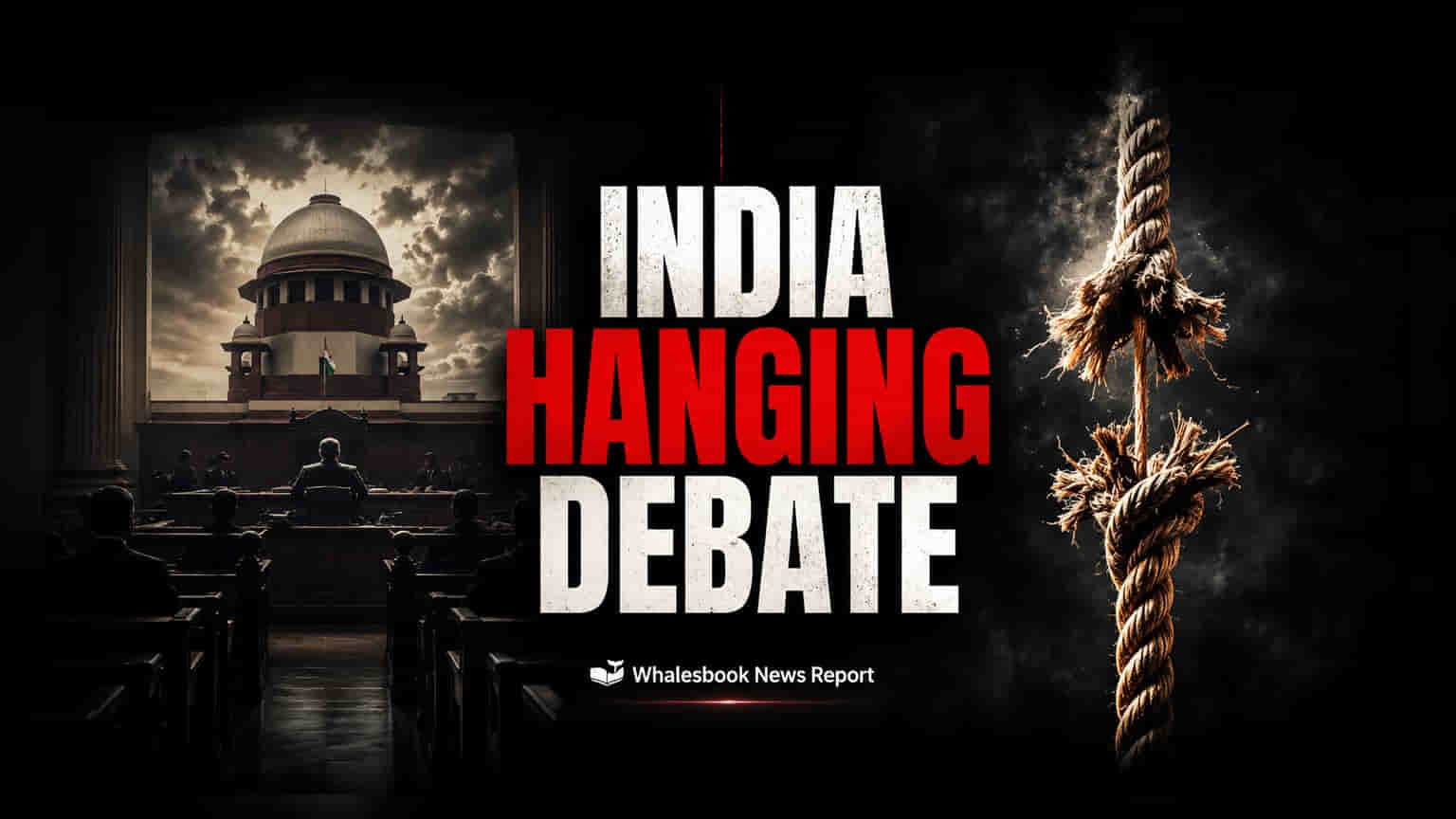


This judicial review marks a significant moment in India's stance on capital punishment, moving beyond the mechanics of execution to the ethical implications of state-sanctioned death. The government's willingness to consider alternatives suggests a potential shift in how the nation handles its most severe penalty, influenced by constitutional challenges and evolving moral considerations.
Constitutionality of Hanging
The Supreme Court is questioning the legality of hanging, as prescribed by current law, and whether it aligns with the fundamental right to dignity under Article 21 of the Constitution. The Union government's openness to alternative methods indicates a possible recognition of constitutional issues with the current procedure. This review is part of a broader judicial examination of capital punishment laws.
Historical Execution Methods
Throughout history, execution methods have often been framed as progress. In France, the guillotine was introduced as a more equitable and efficient alternative to earlier, socially varied methods. Such pursuits of 'humane' execution often reflect society's efforts to sanitize state-sanctioned killing. In British India, execution practices were used as tools of power, with royal pardons sometimes acting as instruments of governance.
Systemic Fallibility in Death Penalty Cases
A major concern with capital punishment is its irreversible nature, compounded by evidence of systemic errors. Data from the 'Death Penalty in India Annual Statistics Report, 2025' shows a significant difference between death sentences imposed by lower courts and those confirmed by higher tribunals. From 2016 to 2025, only 8.31% of the 1,310 death sentences were upheld by high courts; many others were commuted or resulted in acquittals. This points to the possibility of wrongful death sentences.
The Debate Over 'Humane' Killing
Legal experts view the current discussion on 'humane' execution methods as an effort to refine the instrument of death rather than questioning the act of killing itself. Given that capital punishment is absolute and irreversible, the concept of a truly 'gentler' method remains debatable. The focus often leans towards the comfort of observers and the state's own moral standing, rather than the finality for the condemned.