 Whalesbook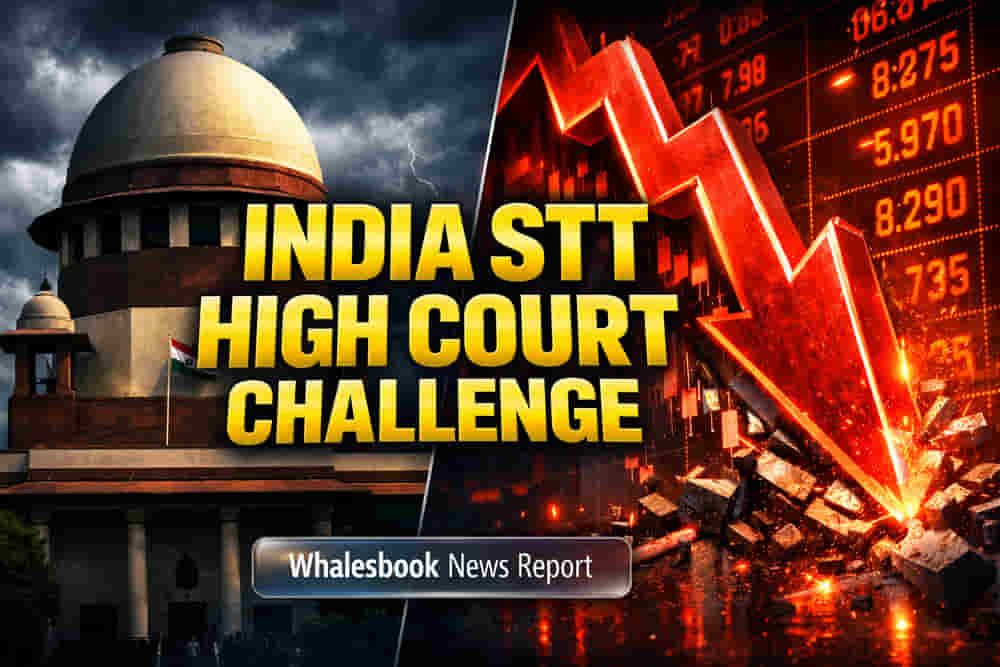


### The Derivatives Tax Squeeze
The recent Union Budget 2026-27 has intensified the cost of trading Indian derivatives through a notable increase in Securities Transaction Tax (STT). Effective April 1, 2026, STT on futures contracts has climbed to 0.05% from 0.02%, while options transactions, encompassing both premium payments and exercise, will now incur a 0.15% tax, up from 0.1% and 0.125% respectively. This marks a policy shift toward increasing friction in derivatives trading, a segment that has seen substantial retail participation [3, 4, 5, 7, 17, 28].
The immediate market reaction was sharp. On February 1, 2026, benchmark indices like the Sensex and Nifty saw significant declines of approximately 1.9-2%, wiping out substantial investor wealth in a single session [2, 9, 11, 13]. Stocks of brokerages and market infrastructure companies, beneficiaries of high derivatives volumes, also bore the brunt of the sell-off, falling between 5-9% [2, 11]. This heightened STT directly impacts traders by raising breakeven points and compressing margins, particularly for high-frequency and short-term strategies that rely on narrow profit windows [4, 14, 23, 28]. While long-term equity investors remain largely unaffected as delivery-based STT rates are unchanged, derivatives traders face a material increase in their operational expenses [6, 17].
### Strategic Intent vs. Legal Standing
The government's stated rationale for the STT hike centers on discouraging excessive speculative trading and protecting retail investors, who, according to SEBI data, often incur significant losses in the derivatives segment [4, 7, 9, 23]. This move, described as a deliberate attempt to temper churn and leverage, represents the third adjustment to F&O STT in recent years, signalling a consistent policy direction [4].
However, this fiscal recalibration is occurring under the shadow of a constitutional challenge. The Supreme Court has accepted a petition from Aseem Juneja questioning the legality of STT, arguing it violates fundamental rights including equality, freedom of trade, and the right to life [1, 8, 10, 12, 15, 16]. Key arguments include allegations of double taxation (levying STT and capital gains tax on the same transaction) and the punitive nature of taxing trades regardless of profit or loss, without a refund or adjustment mechanism akin to TDS [8, 10, 12, 15, 16]. The Court issued notice to the Union government in October 2025, and the case remains sub judice, awaiting the Centre's response [10].
Globally, the concept of financial transaction taxes (FTTs) is debated. While some nations employ them to curb speculation and boost revenue, countries like the USA, Germany, and Japan do not impose similar STT-like taxes on derivatives, potentially offering a lower-friction trading environment [15, 20, 29]. India's STT approach, particularly the recent hike, contrasts with markets that prioritize minimal transaction costs for derivatives trading [15, 19].
### The Bear Case: Liquidity Risk & Regulatory Overreach
While the government aims to curb speculation, the increased STT introduces significant risks. Higher transaction costs directly translate to reduced profitability for active traders, potentially leading to a contraction in market liquidity as fewer participants find trading viable [4, 14, 25]. The National Stock Exchange (NSE) has expressed hope for a review of the STT hike, acknowledging its negative impact on the futures segment and noting that futures are often used by long-term investors for hedging, not just short-term speculation [25].
This policy could inadvertently dampen market activity, impacting price discovery and potentially making the Indian market less competitive globally. The argument that STT discourages gambling instincts among retail investors is counterbalanced by the risk of stifling legitimate hedging and arbitrage activities. Furthermore, a substantial drop in derivatives volumes, a significant revenue contributor, could offset any gains from increased tax rates, impacting overall government collections [3, 7]. The Supreme Court's ruling, whenever it arrives, could fundamentally alter the STT regime, with potential implications for market structure and liquidity, creating an overhang for market participants [8, 16]. The existing legal challenge highlights that the government's strategy faces not only market resistance but also significant constitutional scrutiny, raising questions about regulatory overreach versus market efficiency.
Future Outlook
Market participants and broker bodies are actively lobbying for a review of the STT increase, citing its potential to negatively impact liquidity and trading volumes [25]. The resolution of the Supreme Court case adds a layer of uncertainty, as a favourable ruling for the petitioner could lead to STT's abolition or modification. While the government's intent is to foster a more stable, less speculative market, the immediate effect has been increased costs and market unease, underscoring the delicate balance between regulatory objectives and market dynamics.