 Whalesbook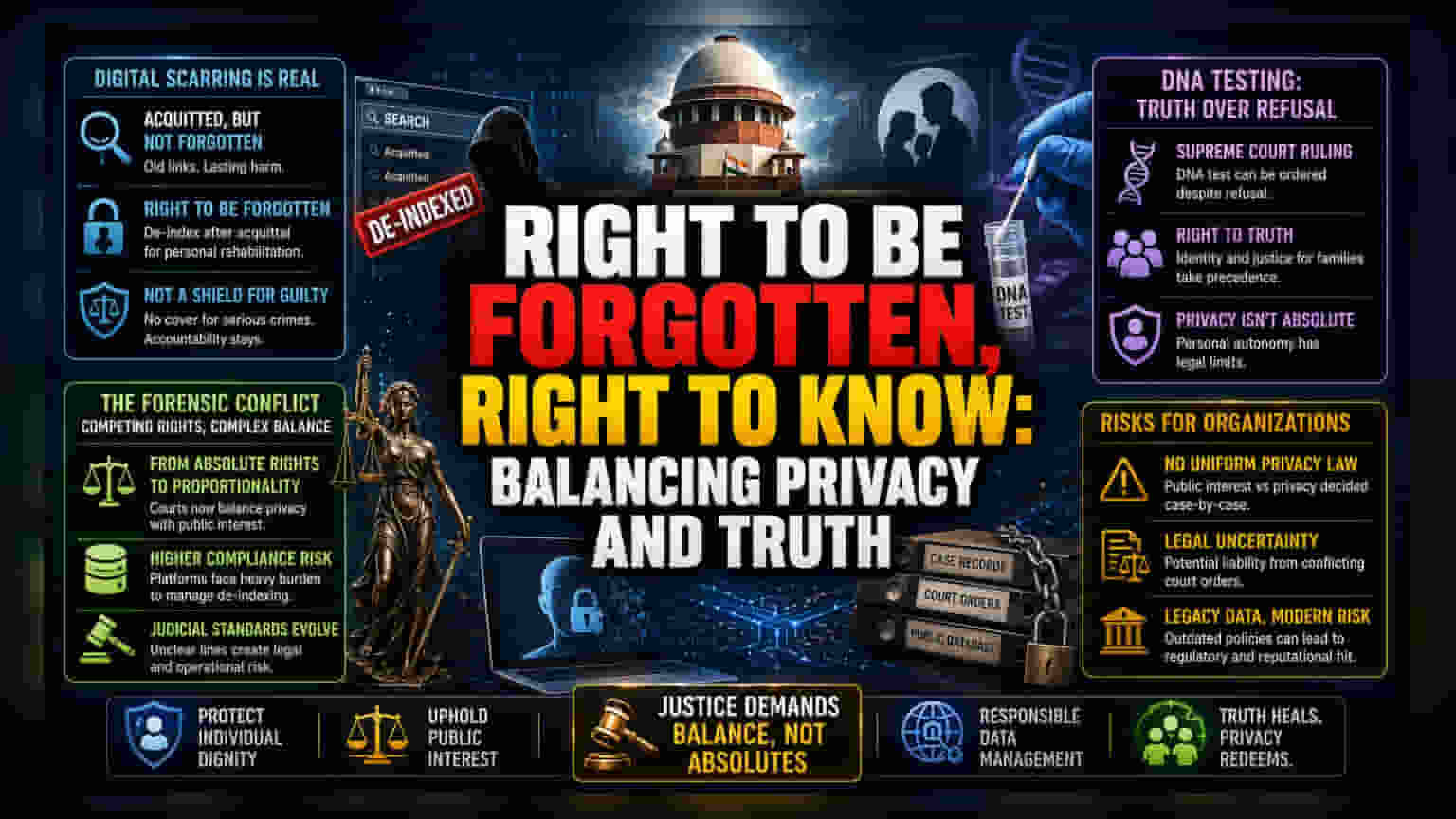


The Erosion of Digital Indelibility
The recognition of the right to be forgotten by the Delhi High Court represents a significant shift in how personal data intersects with historical records. By advocating for the de-indexing of information following case acquittals, the court is effectively addressing the long-standing issue of 'digital scarring,' where settled legal history continues to penalize individuals in the professional and social spheres. This framework mandates that platforms and record-keepers manage the tension between public record transparency and personal rehabilitation. Yet, the narrow tailoring of this right ensures that it cannot be utilized as a tool to evade accountability for serious crimes, effectively creating a tiered system of digital privacy.
DNA Testing and the Limits of Autonomy
While the lower court sought to provide a mechanism for personal digital erasure, the Supreme Court’s recent decision regarding biological identity verification highlights the limits of personal privacy when faced with the necessity of truth. By forcing compliance with DNA testing despite a subject’s refusal, the judiciary has asserted that the individual's right to control their genetic and personal data is not absolute. This move reflects a broader legal philosophy where the court acts as an arbiter of material facts, prioritizing the social and emotional resolution of identity over the singular, isolated right of an individual to withhold sensitive information.
The Forensic Conflict of Competing Rights
These rulings signify a departure from the idealized, expansive view of data protection that previously dominated the discourse following the landmark K.S. Puttaswamy judgment. The legal system is now explicitly moving toward a model of proportionality. This transition creates significant risk for entities relying on legacy data management policies. If the right to be forgotten becomes a standard expectation, service providers and search platforms will face increased administrative burdens to maintain compliance while navigating shifting judicial standards that prioritize state-sanctioned truth over user-driven data control.
Structural Risks in the New Legal Framework
For investors and corporate entities, the primary risk lies in the lack of a standardized legislative baseline. While these judicial pronouncements provide guidance, they also introduce volatility for organizations managing vast databases of user information. The absence of a uniform, codified privacy law leaves the interpretation of 'public interest' versus 'individual privacy' to case-by-case litigation. This environment invites potential liability for companies that may be caught in the middle of these high-stakes balancing acts, forced to toggle between competing court orders that may lack systemic synchronization.