 Whalesbook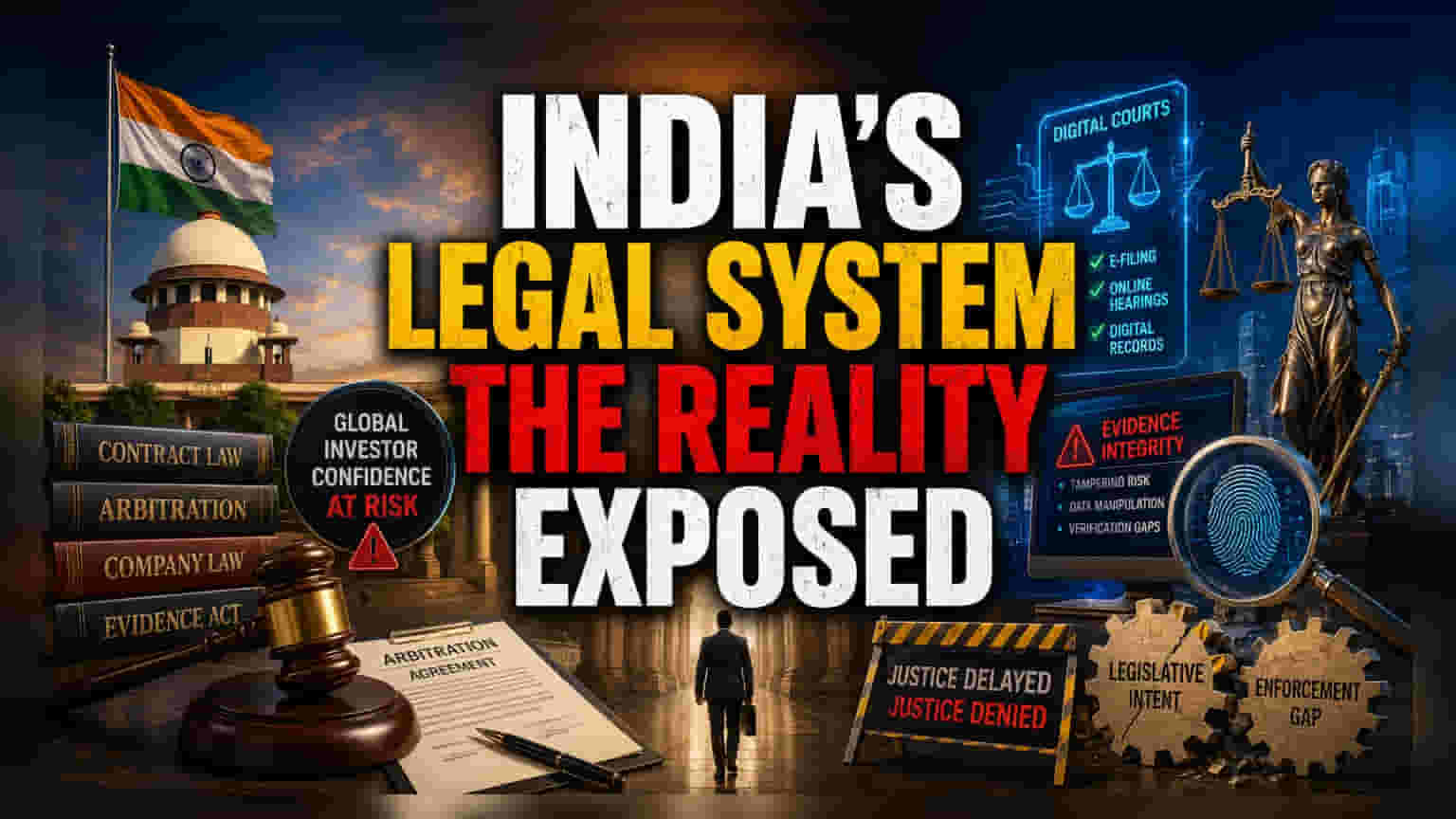


The Institutional Reality Check
The narrative surrounding India’s legal development often oscillates between external optimism and internal operational reality. While international observers view the nation’s legal framework as a growing force, the pragmatic challenges of implementation suggest that systemic reform remains fragmented. The core issue is not a lack of regulatory ambition but a recurring lag in the mechanical application of justice that commercial entities require for long-term capital commitment.
Efficiency Gaps and Arbitration Hurdles
The push for arbitration as a primary dispute resolution mechanism is currently obstructed by institutional habits that treat it as an extension of standard litigation. When arbitration processes mimic the timelines of traditional court proceedings, the primary value proposition—speed—is nullified. Market participants increasingly point to inconsistent government directives that create an environment of regulatory ambiguity. This uncertainty directly affects the risk-adjusted returns for global investors, who often weigh the clarity of established jurisdictions like the United Kingdom against the high-potential yet unpredictable Indian legal environment.
The Digitalization Paradox
India’s shift toward digital courts has improved accessibility, yet it has simultaneously exposed structural vulnerabilities regarding the admissibility and security of electronic evidence. Current legal standards for verifying digital records remain prone to potential manipulation, a concern that carries significant weight in high-stakes corporate fraud cases. Furthermore, the reliance on automated solutions and artificial intelligence introduces a secondary layer of risk: the degradation of nuanced professional legal rigor. If the reliance on AI outpaces the development of robust verification protocols, the legal system risks substituting human error with machine-generated systemic failures.
The Forensic Risk Perspective
The discrepancy between projected growth and existing infrastructure remains a tangible risk. Investors must contend with a system where the legislative intent—such as the decriminalization of corporate laws—frequently clashes with the enforcement culture on the ground. Until foundational record-keeping and transcription standards are fully modernized to prevent tampering, foreign entities may continue to view India as a market with high institutional growth potential but excessive operational friction. The reliance on legacy processes, coupled with the rapid integration of unproven AI tools, places the burden of proof on companies to navigate an environment where evidentiary integrity remains, at times, inconsistent.