 Whalesbook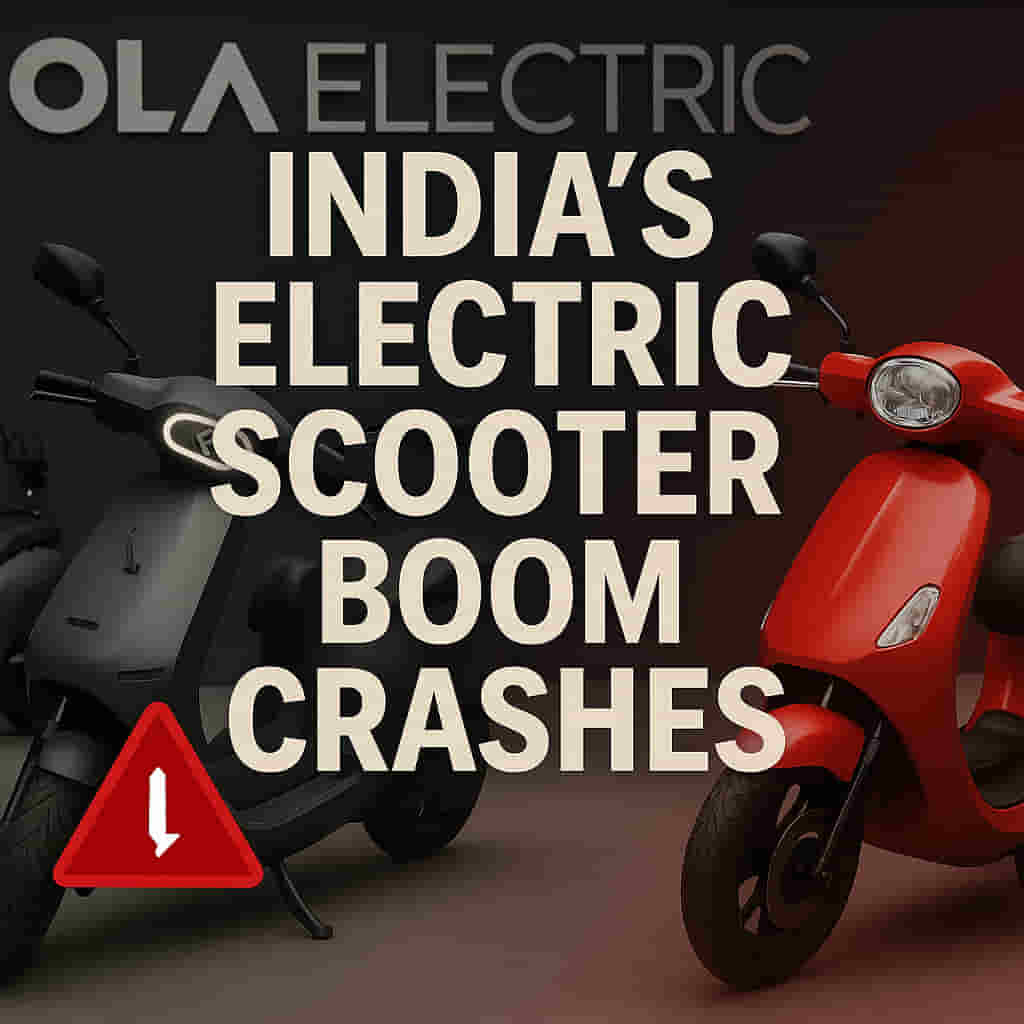
India's Electric Two-Wheeler Boom Stalls Amidst Sales Reversal
India's once-celebrated electric two-wheeler market is experiencing an unexpected and sharp slowdown, with sales figures contracting year-on-year. This trend marks a significant reversal for a segment that analysts and industry insiders had predicted would rapidly dominate city streets by the end of the decade. The current data paints a stark picture, indicating that the rapid growth phase has not only halted but, in some areas, is reversing.
The contrast is particularly striking when compared to the overall two-wheeler market, which is still predominantly powered by internal combustion engines (ICE). While the petrol-powered segment saw a modest 3.94% decline in November, reflecting a seasonal dip from a higher base, it exhibits a stability that the electric vehicle (EV) segment currently lacks. Legacy manufacturers like Hero MotoCorp, Honda, and TVS Motor continue to anchor the overall market, demonstrating resilience in demand for their fossil-fuel-powered models.
The Core Issue
In sharp contrast to the relative stability of ICE vehicles, India's electric two-wheelers sold 117,000 units in November, a 2.3% year-on-year contraction. This decline is a jarring reversal for a category that was once the fastest-growing mobility segment. The industry is home to at least 173 electric two-wheeler manufacturers, many of whom emerged during a period of subsidy exuberance and easy venture funding. However, recent data reveals that more than 46 of these companies reported zero sales last month, and approximately 100 players sold fewer than 10 units.
Market Reaction
The market share landscape has also undergone a significant shift. Ola Electric, which previously held the largest share, has slipped to third place. TVS Motor Company has emerged as the new leader, followed by Bajaj Auto. Ather Energy and Hero MotoCorp round out the top five players in the electric two-wheeler space. Ravneet Singh Phokela, Chief Business Officer at Ather Energy, noted growth driven by their family scooter and aggressive distribution expansion, with plans for product launches and manufacturing capacity increases.
Financial Implications
A decisive factor contributing to the slowdown appears to be the Goods and Services Tax (GST) reset in September 2025. While EVs maintained their 5% GST rate, the GST on petrol two-wheelers was slashed from 28% to 18%. This policy change, combined with the higher duties EV manufacturers still face on critical components like batteries, semiconductors, and power electronics, resulted in an immediate widening of upfront price differences, estimated at ₹20,000–25,000. For buyers focused on monthly EMIs, petrol models suddenly became the more attractive and affordable choice.
Manufacturer Woes
Many startups scaled prematurely, relying heavily on early subsidies and market hype. Without robust trust, extensive service networks, and adequate working capital, they have found that the mass market is not receptive. Ravi Bhatia, president of Jato Dynamics, highlighted that instability within the manufacturer ecosystem directly translates into purchase hesitation for potential buyers, especially first-time customers.
Consumer Hesitation
Beyond pricing, structural challenges persist. Consumers face limited high-trust EV options, uncertain resale values, and inconsistent financing. Persistent anxieties around charging infrastructure, particularly in apartment buildings and rental housing, further deter adoption. The majority of India's EV two-wheelers still utilize fixed batteries, making reliable home or shared charging a significant bottleneck.
Expert Analysis
Ravi Bhatia stated that India's EV slowdown is fundamentally driven by economic and structural factors rather than technological limitations. He emphasized that the breakdown of price logic after the GST reset, coupled with manufacturer instability and insufficient financing and resale confidence, are the primary culprits. Bhatia believes that unless these three issues are addressed concurrently, EV penetration will likely remain cyclical rather than achieving compounding growth.
Impact
The current slowdown in the electric two-wheeler market has significant implications for the automotive sector, component suppliers, and associated industries in India. Companies heavily invested in EV production may face financial strain, potentially leading to consolidation or exits among smaller players. Consumer choice in the mass-market two-wheeler segment might temporarily lean back towards ICE vehicles due to cost advantages and established infrastructure. This trend could also influence future government policy regarding EV incentives and taxation. The overall impact on market returns for auto stocks could be negative in the short to medium term, reflecting reduced sales and profitability for affected companies.
Impact Rating: 7/10
Difficult Terms Explained
- EV (Electric Vehicle): A vehicle powered entirely by electricity, stored in batteries.
- ICE (Internal Combustion Engine): A type of engine that burns fuel like petrol or diesel to produce power.
- GST (Goods and Services Tax): A consumption tax levied on the supply of goods and services in India.
- TCO (Total Cost of Ownership): The complete cost associated with owning an asset, including purchase price, running costs, and maintenance, over its lifespan.
- EMI (Equated Monthly Installment): A fixed monthly payment made by a borrower to a lender, typically for loans, covering principal and interest.
- Subsidy: Financial aid or support extended by a government or public body to help an industry or business keep the price of a commodity or service low.
- Venture Funding: Capital provided by investors to startups and small businesses with perceived long-term growth potential.