 Whalesbook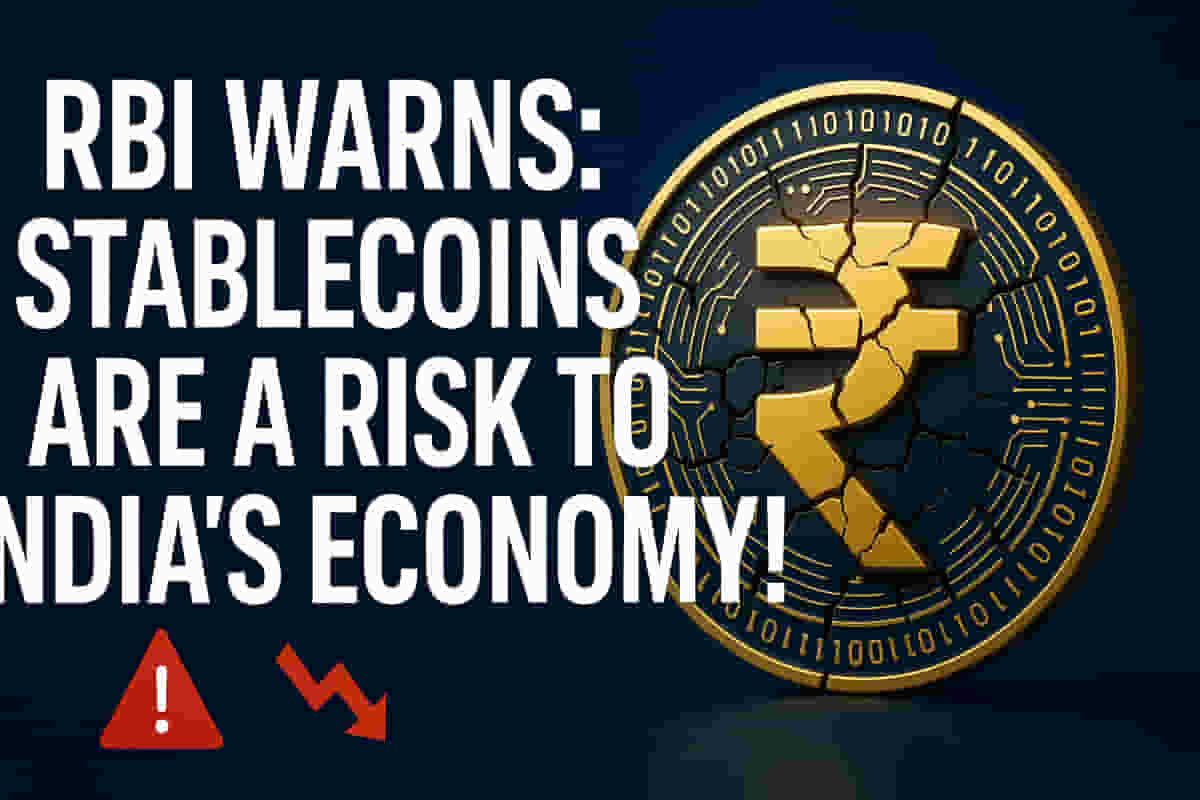
RBI Deputy Governor Warns Stablecoins Pose Major Financial Risks
Reserve Bank of India Deputy Governor T Rabi Sankar has issued a stern warning regarding stablecoins, deeming them inherently unstable and a significant threat to India's financial stability. Speaking at the BFSI conclave, Sankar articulated concerns that widespread adoption of these digital assets could undermine the nation's monetary policy and lead to risks like dollarization and currency substitution. His remarks contrast with a broadly supportive stance from the U.S. government towards dollar-denominated payment stablecoins within its formal financial system.
Sankar elaborated that stablecoins fundamentally fail to possess the key attributes of modern money, specifically its nature as fiat currency and its singleness of issuance. This, he argued, could result in a chaotic ecosystem with potentially hundreds of competing currencies, making the entire system precarious. The deputy governor's strong stance underscores the Reserve Bank of India's cautious approach to the burgeoning digital asset space, prioritizing domestic financial integrity over potential innovations that may not align with national economic goals.
The Core Issue: Why Stablecoins Aren't Money, According to the RBI
Deputy Governor Sankar directly challenged the definition of stablecoins as true money. He explained that unlike fiat currencies, which are backed by sovereign authority, stablecoins are essentially private creations. This lack of a sovereign guarantee raises questions about their ultimate redemption and stability. Sankar posited that the very concept of multiple stablecoins could fragment the monetary landscape, unlike the unified nature of a national fiat currency.
Significant Financial Risks Identified
The potential for stablecoin adoption to significantly impact India's economy is a major concern for the RBI. Sankar warned of currency substitution, where the local currency demand diminishes, and dollarization, a trend where foreign currencies gain prominence in domestic transactions. This would weaken the effectiveness of monetary policy transmission, making it harder for the central bank to manage inflation and economic growth. Furthermore, it could divert deposits from banks, increasing their funding costs and dependency on central bank liquidity.
Challenging the Promised Benefits
Sankar also cast doubt on the widely touted advantages of stablecoins, such as faster cross-border payments and greater financial inclusion. He pointed out that India's own Unified Payments Interface (UPI) already provides fast, low-cost, and reliable domestic payment solutions. The purported benefits of stablecoins, he argued, are largely unproven and often confined to facilitating trading and leverage within the cryptocurrency market itself. Claims of expanding financial inclusion are further undermined by their reliance on smartphones and digital infrastructure.
The Greater Threat: A Stablecoin That Works Well
Paradoxically, Sankar identified a well-functioning stablecoin as a greater potential threat. If a stablecoin were to become widely adopted and trusted, its impact on monetary sovereignty and financial stability could be profound and difficult to reverse. This suggests the RBI's concern is not just about the current limitations of stablecoins but about their potential evolution and disruptive power within the established financial order. The central bank remains focused on safeguarding the integrity of India's fiat currency and its monetary policy tools.
Impact
This news could lead to stricter regulations or outright bans on stablecoins in India, impacting fintech companies exploring stablecoin integration or crypto exchanges operating within the country. It reinforces the central bank's cautious approach to digital assets and its commitment to maintaining control over monetary policy. Investors in fintech or crypto-related ventures in India might face increased uncertainty.
Impact Rating: 7/10
Difficult Terms Explained
Stablecoins: Digital tokens designed to maintain a stable value, often pegged to a fiat currency like the US dollar or gold.
Fiat Money: Currency that a government has declared to be legal tender, not backed by a physical commodity but by the issuing government.
Monetary Policy Transmission: The process through which central bank policy decisions (like interest rate changes) affect the broader economy.
Currency Substitution: When a foreign currency becomes widely used in domestic transactions, reducing demand for the local currency.
Dollarization: A specific form of currency substitution where the US dollar is predominantly used.
UPI (Unified Payments Interface): India's real-time payment system allowing instant money transfer between bank accounts.