

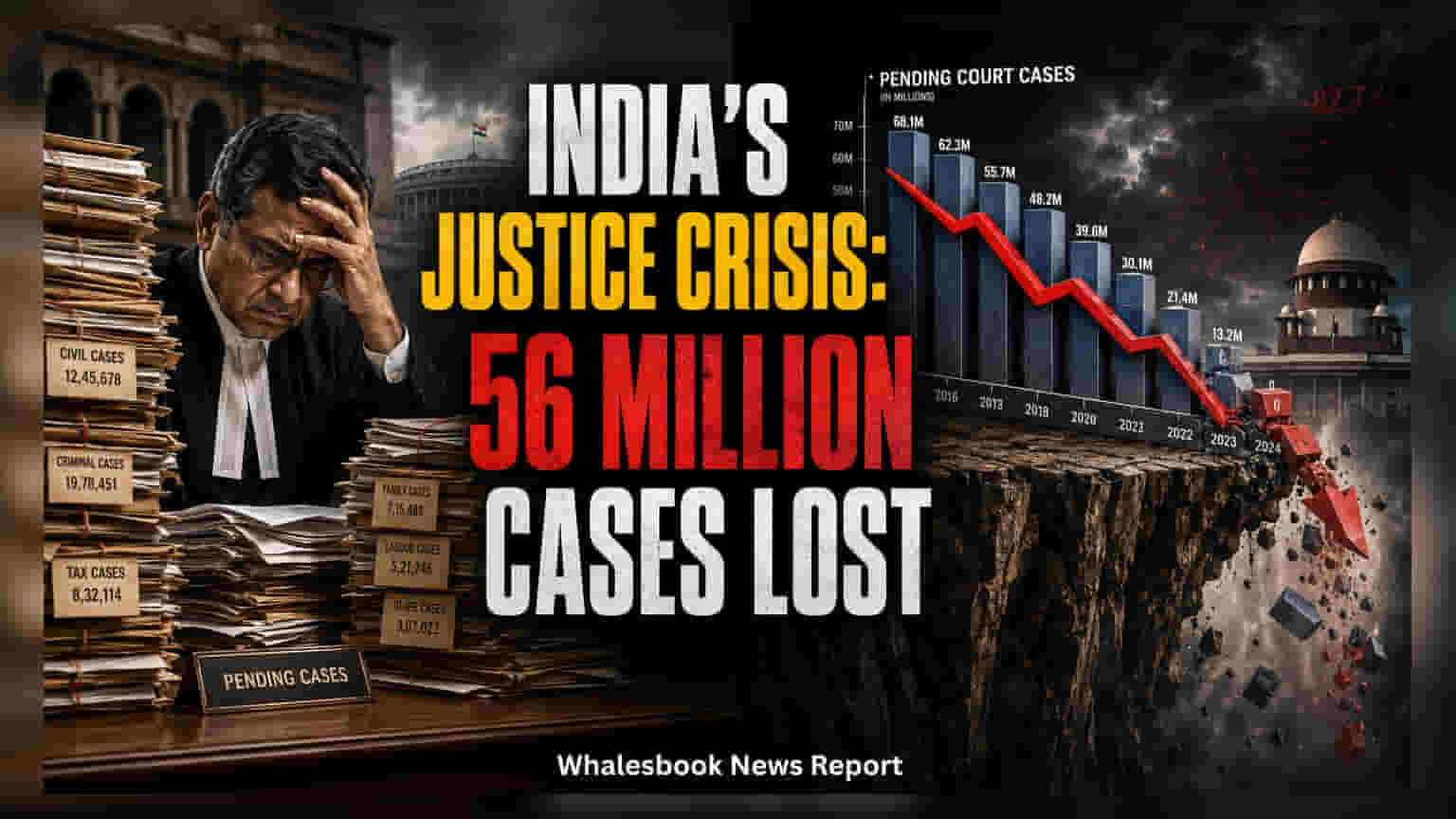
India's judicial system is struggling with over 56 million pending cases, including 96,000 in the Supreme Court. This massive backlog slows down contract enforcement and ties up an estimated ₹25 trillion in commercial disputes. For investors, these delays create significant risks regarding business efficiency, capital recovery, and the overall ease of doing business in the country.
India’s judicial system currently faces a massive backlog of over 56 million cases across its courts. According to data from the National Judicial Data Grid, the crisis is spread across all levels of the judiciary. The Supreme Court is handling over 96,000 pending cases, while high courts hold more than 6.4 million, and subordinate courts account for nearly 49.8 million cases. This situation has drawn attention for its potential to hinder economic activity and the legal enforcement of business contracts.
Economic Impact and Commercial Disputes
The consequences of this judicial delay extend beyond legal proceedings and directly affect the economy. An estimated ₹25 trillion is currently locked in approximately 356,000 commercial disputes pending before various tribunals. When companies are involved in long-running legal battles, their working capital can become stuck for years, impacting financial health and investment plans. Historically, India has struggled with contract enforcement rankings, a metric that global investors often monitor when assessing the ease of doing business. Persistent delays in resolving these disputes can discourage new capital inflows and increase the cost of doing business.
Structural Challenges and Reforms
A primary factor contributing to this bottleneck is the low judge-to-population ratio. India maintains approximately 15 judges per million people, which is significantly lower than the 150 judges per million in the United States and the European average of 220. This shortage makes it difficult to clear the daily influx of new filings. Furthermore, experts have frequently debated the impact of long court vacations and the high volume of litigation where the government itself is a party. Reducing frivolous appeals and encouraging alternative dispute resolution mechanisms, such as mediation and private arbitration, are often cited as necessary steps to alleviate the pressure on formal courtrooms.
Monitoring the Path Forward
For investors and market observers, the effectiveness of the legal system remains a long-term monitorable. Future updates to watch include government policies aimed at increasing judicial capacity, reforms to the commercial courts act, and the speed at which specialized tribunals can resolve high-value corporate disputes. Success in these areas could improve the predictability of the business environment, whereas continued delays may keep large amounts of capital sidelined in litigation. Improving the speed of justice delivery is considered essential for supporting India’s long-term economic development goals.