

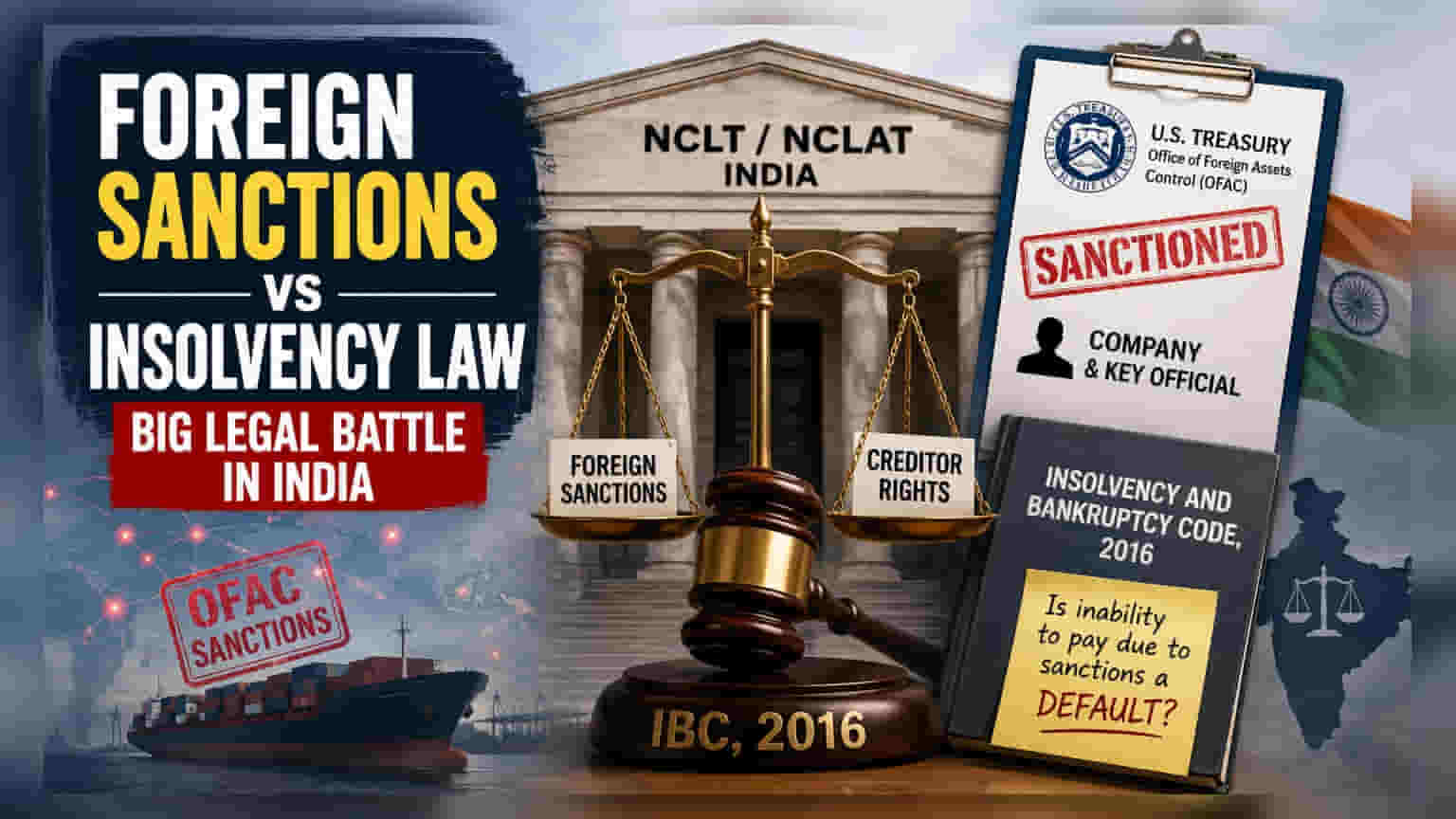
Indian insolvency courts are deciding if US-led foreign sanctions, such as OFAC designations, can be used as a valid excuse to halt bankruptcy proceedings. This case tests whether payment restrictions under international law override debt defaults in India, potentially changing how creditors recover dues from multinational-linked companies.
What Happened
Indian insolvency tribunals are currently addressing a complex legal challenge involving international compliance. The National Company Law Tribunal (NCLT) and the appellate body, the National Company Law Appellate Tribunal (NCLAT), are determining whether a corporate debtor can avoid insolvency proceedings by citing foreign sanctions.
Specifically, the debate centers on whether companies can argue that international sanctions—such as designations by the U.S. Office of Foreign Assets Control (OFAC)—legally prevent them from making payments to creditors. If such sanctions are accepted as a valid defense, it could mean that the inability to pay due to foreign laws might not be classified as a 'default' under the Insolvency and Bankruptcy Code (IBC), 2016. This would significantly complicate the process for creditors seeking to initiate insolvency actions against such entities.
Why This Matters For Investors
For creditors and investors, this legal battle carries significant weight. If tribunals accept foreign sanctions as a valid reason to halt insolvency proceedings, it could create a loophole for debtors to delay or block recovery efforts. Investors, particularly those with exposure to companies with cross-border trade or international debt, need to understand that this could lead to longer, more uncertain recovery timelines.
The core issue is whether Indian insolvency courts should get involved in interpreting complex foreign laws and compliance risks. If they do, it may limit the summary nature of the IBC, which is designed for swift resolution of debt disputes, rather than lengthy arguments over international sanctions compliance.
The 'Default' Debate
At the center of the dispute is the definition of 'default' under the IBC. Simply put, a default occurs when a debt is due and remains unpaid. Debtors often argue that if a foreign sanction makes payment legally impossible, the debt is not 'payable' in the current environment, and therefore, there is no default.
Creditors, however, maintain that a debt remains a legal obligation regardless of external payment barriers. Allowing these barriers to excuse default could, in their view, weaken the enforceability of commercial contracts in India. This case highlights the friction between global compliance regimes and domestic insolvency resolution.
The Legal Context
This debate was highlighted by the case Flint Group India Private Limited v. C J Shah & Co., where the Ahmedabad bench of the NCLT rejected a defense based on sanctions, allowing the insolvency process to proceed. That decision is now being challenged before the NCLAT. The appellate court’s ruling is expected to provide much-needed clarity on whether such foreign restrictions can effectively pause or block the insolvency process in India.
What Investors Should Track Next
Investors should watch for the NCLAT’s final ruling on the matter. The court’s interpretation will set a precedent for how tribunals handle sanctions-related defenses in the future. Additionally, developments regarding general licenses issued by bodies like OFAC—such as the recent temporary license valid until August 21, 2026—may also play a role in how tribunals assess the claim of 'impossibility' of payment. The primary focus for stakeholders will be whether the appellate body reinforces the strict enforcement of the IBC or allows for broader exceptions based on international regulatory pressure.