 Whalesbook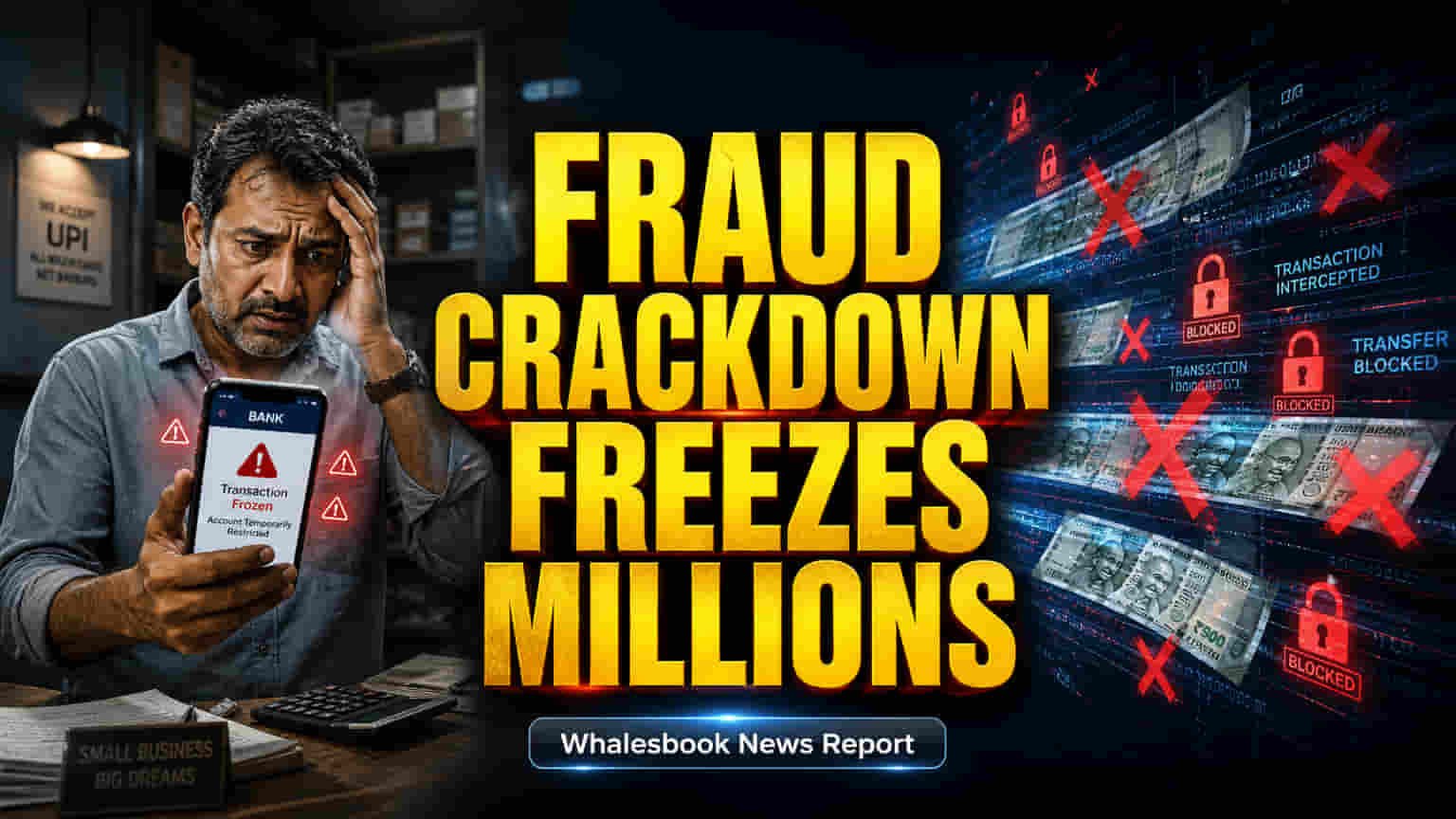


The Cost of Fraud Prevention
India's fast-growing digital payment system, expected to reach $10 trillion by 2026, is facing serious issues. Aggressive anti-fraud actions, taken to combat rising cybercrime losses of ₹22,495 crore in 2025 (up 24%), are freezing many legitimate accounts. This response, focused on stopping 'mule' accounts, is paralyzing real businesses and individuals. By shifting the burden of proof to account holders, it's creating operational chaos for small and medium-sized businesses (SMEs) and weakening trust in the digital financial system.
Fraud Prevention's Economic Impact
The surge in digital transactions, including UPI processing over 13 billion monthly payments by March 2026, has unfortunately also fueled sophisticated cyber fraud. The case of Ajay Arora, a nursery owner whose ₹1 lakh account was frozen for 14 months due to a ₹150 transaction linked to fraud, shows the widespread impact. When authorities freeze accounts rapidly and often remotely, it halts businesses, disrupts cash flow, and can lead to loan defaults. This highlights a key problem: systems built for speed often lack clear, fair procedures for verifying transactions, forcing legitimate businesses to bear the cost of the crackdown.
Global AI Use vs. India's Lagging Systems
Worldwide, banks are using Artificial Intelligence (AI) heavily to fight fraud, with 90% employing it for real-time checks. AI can spot patterns and unusual activity far better than older, simpler systems that often generate too many false alarms. India has developed AI tools like MuleHunter.AI, but getting them fully integrated across its large banking system will take years, with some banks not expecting full use until 2028–2030. This technology lag, alongside the massive daily transaction volume (around 22.6 billion UPI payments in March 2026), creates ongoing vulnerabilities. India's fintech market, valued at $51.30 billion in 2026 and projected to nearly double by 2031, has digital payments as its largest segment. Analysts predict a consolidation phase in 2026 focused on revenue models and compliance, highlighting the growing importance of cybersecurity. However, the current crisis reveals a fundamental mismatch: while the digital economy expands rapidly, supported by reforms and infrastructure, the mechanisms for ensuring financial integrity and protecting legitimate users are lagging. This widening gap strains market confidence, even as India is poised for strong economic growth.
Regulatory Measures and Systemic Risks
India's current anti-fraud strategy heavily relies on freezing accounts based on risk indicators, essentially reversing the burden of proof onto account holders. This approach prioritizes preventing fraud over the risk of freezing legitimate accounts. The Reserve Bank of India (RBI) is proposing measures like a one-hour delay for large digital payments and stronger authentication for some users. However, these measures may not fully address the underlying issue of identity commoditization, where easily obtained or coerced identities form the basis of fraud networks. Legal clarity is also pending, with RBI draft amendments on fraud liability set to take effect from July 1, 2026. Proposed rules to limit credits in accounts without clear business ties aim to tackle mule accounts, but their rollout and impact are uncertain. This creates systemic risk, particularly as fraudsters increasingly use AI, including generative AI, to automate attacks and launch sophisticated scams that overwhelm older security controls.
The Path Forward: Security vs. Commerce
For India's digital economy to thrive, it must balance robust fraud prevention with smooth operations for legitimate businesses. The RBI is working to update rules, including proposed customer protection guidelines for electronic banking, aiming for clearer definitions of fraud and responsibilities. Implementing AI for fraud detection is essential, but widespread adoption across India's varied banking sector will demand significant investment and time. Until that is achieved, legitimate users will likely continue to suffer the consequences of a system struggling to keep pace with modern financial crime.