

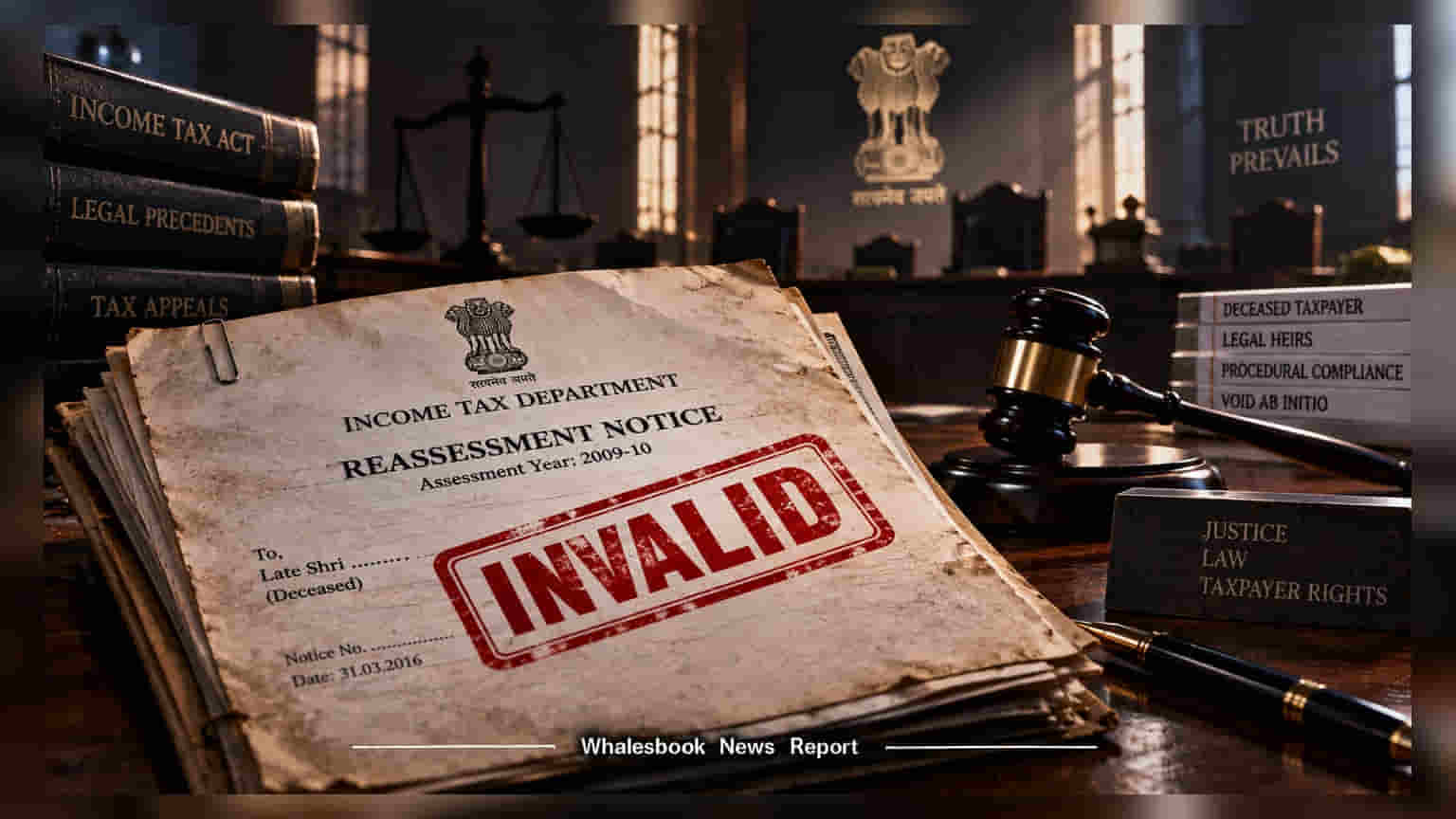
The Income Tax Appellate Tribunal (ITAT) has ruled that reassessment notices sent to deceased individuals are legally invalid. This decision cancelled an Rs 8.71 crore tax demand from the 2009-10 assessment year. The ruling clarifies that tax authorities must strictly follow correct service procedures when dealing with legal heirs.
The Delhi bench of the Income Tax Appellate Tribunal (ITAT) has delivered a significant ruling for taxpayers, confirming that reassessment notices issued to a deceased individual are void from the start, or 'void ab initio.' This judgment resulted in the cancellation of an Rs 8.71 crore tax addition related to a property transaction from the 2009-10 assessment year.
The case involved a dispute where the tax department had attempted to reassess capital gains based on a draft agreement discovered during a 2013 search. This agreement indicated a higher sale value of Rs 9.90 crore, compared to the Rs 2.75 crore reported in the registered documents. However, a major procedural error undermined the department's effort: the notice for reassessment was issued in the name of the taxpayer on March 31, 2016, even though the individual had passed away in October 2015.
Legal proceedings revealed that the department was informed of the taxpayer’s death by the legal heir, yet it continued to pursue the case against the deceased person. The tribunal noted that because the notice was addressed incorrectly and served after the individual's death, the entire reassessment process became legally unsustainable. The ITAT clarified that Section 292BB of the Income Tax Act, which often allows for the curing of minor procedural defects, cannot be used to validate a notice issued to a person who is no longer alive.
This ruling highlights a critical requirement for tax administration: the burden lies with the tax authorities to ensure that legal notices are served to the correct recipients. For legal heirs, this decision serves as a vital precedent. It confirms that technical failures in the service of legal processes can be grounds to challenge and invalidate aggressive tax reassessment claims.
It is important to note that this ruling does not mean the estate of the deceased person is exempt from legitimate tax obligations. The tribunal made it clear that the tax department retains the right to initiate fresh proceedings against the legal heirs. However, any such action must be correctly identified and served within the statutory time limits. The key takeaway for families is to remain vigilant regarding tax notices and to ensure that the death of a taxpayer is communicated to the authorities, as procedural accuracy remains a fundamental right of the taxpayer under the law.