

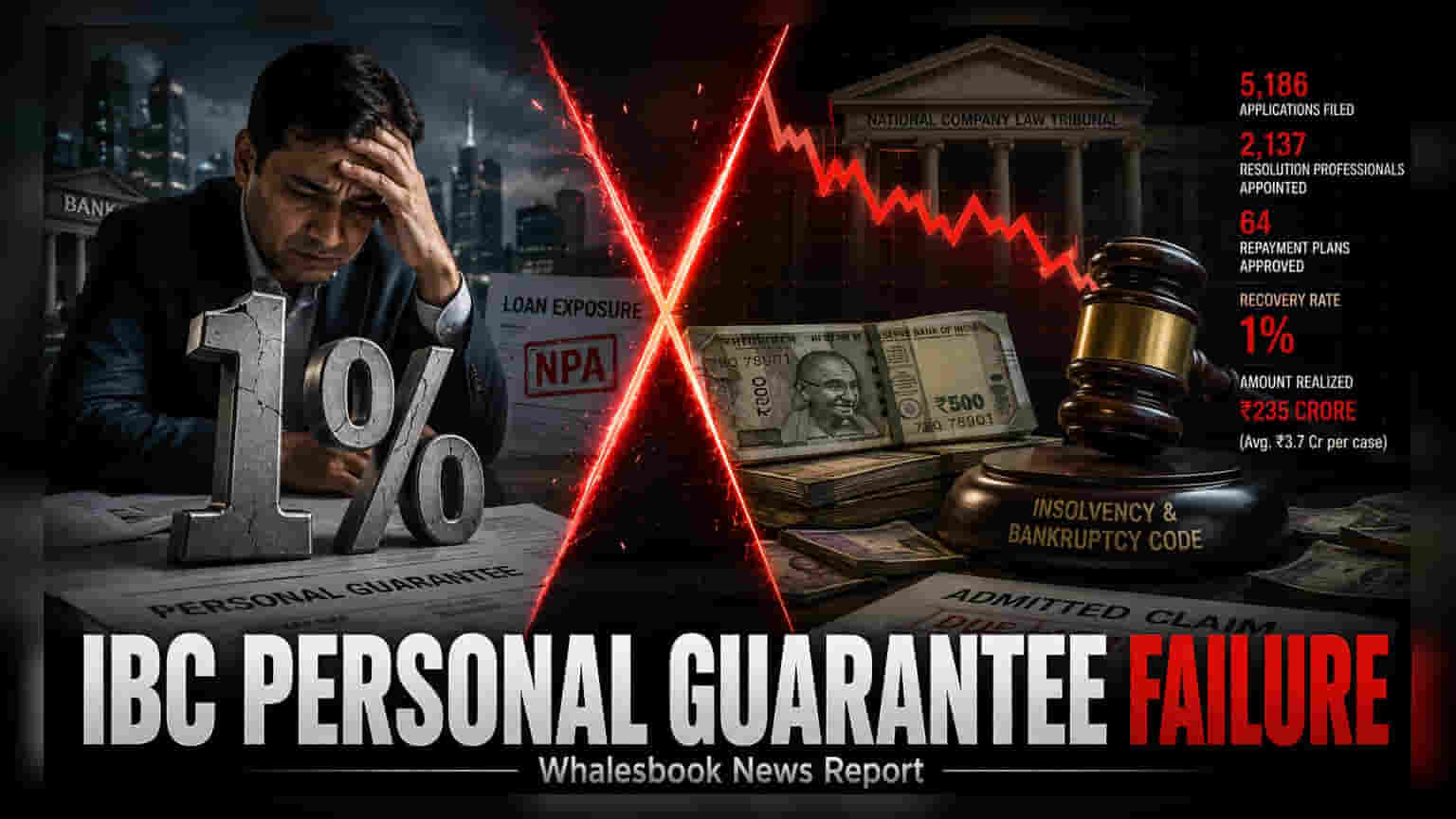
Latest data from the Insolvency and Bankruptcy Board of India shows that proceedings against personal guarantors have resulted in only 1% recovery on admitted claims. Out of over 5,000 applications, just 64 repayment plans have been approved, raising questions about the effectiveness of this recovery mechanism for the banking sector.
The Insolvency and Bankruptcy Code (IBC) process for personal guarantors is facing significant hurdles, with recent data revealing that creditors have managed to recover only a fraction of their dues. According to the latest figures from the Insolvency and Bankruptcy Board of India (IBBI) as of August 2026, the recovery rate for personal guarantees currently stands at a meager 1%.
Since December 2019, creditors have filed 5,186 applications to invoke personal guarantees, a mechanism often used as a safety net when corporate insolvency resolutions fail to cover the full debt. However, the conversion from filing to actual recovery has been slow. Resolution professionals have been appointed in only 2,137 of these cases. More critically, just 64 cases have reached the stage of an approved repayment plan. The total amount realized through these plans is approximately Rs 235 crore, averaging about Rs 3.7 crore per case against much larger admitted claims.
For the Indian banking and financial system, this data underscores the challenges in holding promoters accountable for company debts. Many of these guarantees were provided by high-profile promoters of large corporations in sectors like steel and electronics to secure loans. When these companies faced financial distress, banks expected personal guarantees to serve as a secondary line of defense. The current low recovery rate suggests that the practical enforcement of these guarantees is proving more difficult than initially anticipated.
Several factors contribute to this low recovery. The legal process is often complex, involving the intersection of corporate and personal insolvency laws. There are also persistent delays in the admission of cases at tribunals, which can lead to situations where assets are moved or encumbered before creditors can successfully claim them. Furthermore, verifying the assets of individual guarantors, especially when they are spread across various jurisdictions or held through complex structures, adds layers of difficulty to the recovery process.
While the IBC has successfully acted as a deterrent for many promoters, leading to withdrawals or settlements in thousands of other cases, the actual realization of cash in personal guarantee cases remains a major point of concern. For banks and lenders, the key monitorable going forward will be any further regulatory or judicial clarification that could help streamline the resolution process and speed up the approval of repayment plans. Investors in the banking sector will likely keep a close watch on how these recovery rates evolve, as they directly impact the potential for write-back of bad loans.