

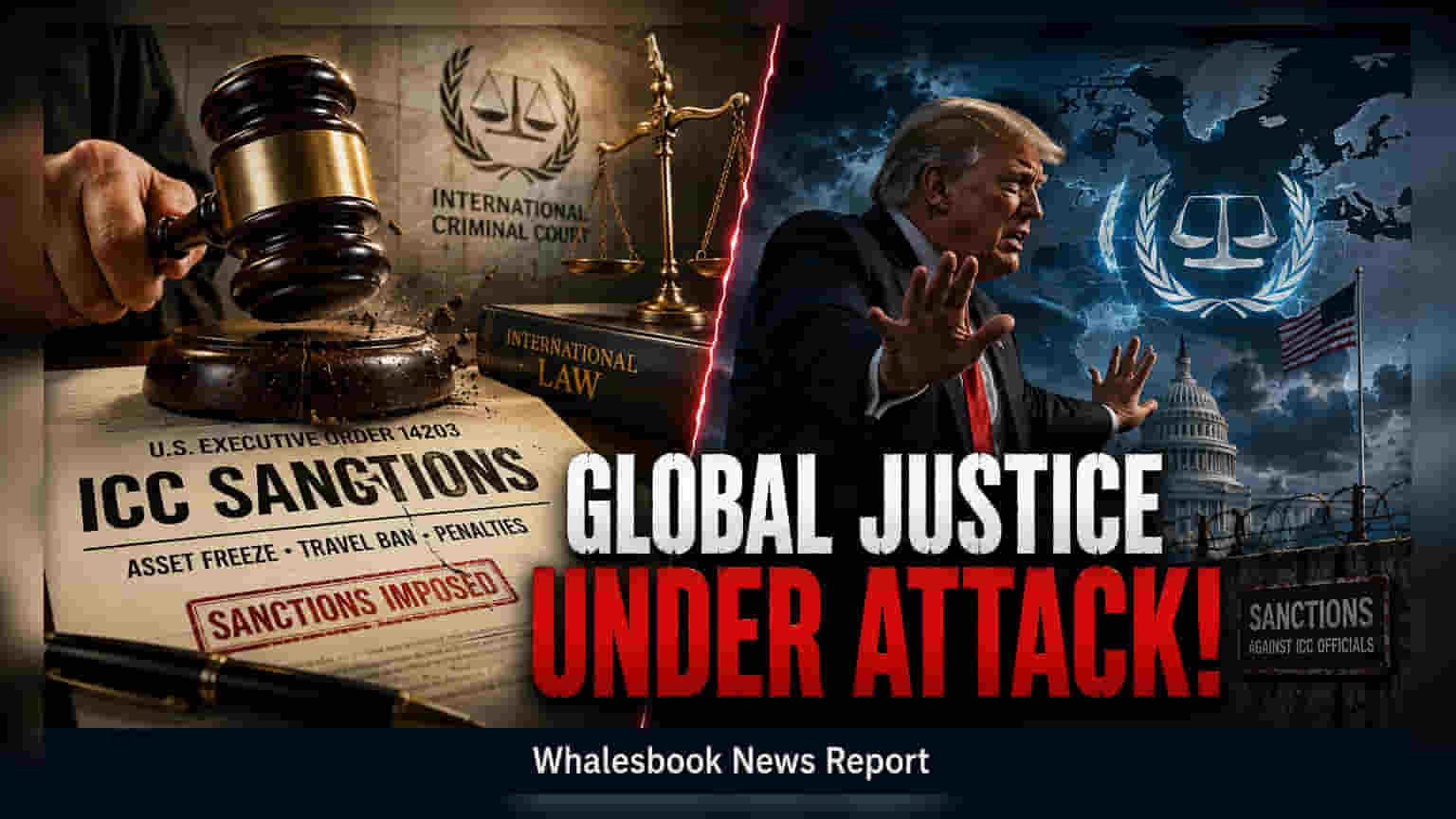
A coalition of advocacy groups has filed a lawsuit in New York challenging the Trump administration's sanctions against the International Criminal Court. The legal action targets Executive Order 14203, which imposes travel bans and asset freezes on court officials. For investors, this creates new legal uncertainty regarding global compliance frameworks and international geopolitical relations.
A coalition of prominent human rights organizations has launched a legal challenge against the United States government regarding sanctions imposed on the International Criminal Court (ICC). The lawsuit was filed in the U.S. District Court for the Southern District of New York, marking a significant escalation in the ongoing legal battle over U.S. foreign policy and international legal mechanisms.
The plaintiffs, which include Human Rights Watch, the American Friends Service Committee, the Center for Constitutional Rights, and the Open Society Institute, are seeking to strike down the sanctions regime established under Executive Order 14203. Signed by President Donald Trump in February 2025, the order authorizes asset freezes and travel restrictions against ICC officials, judges, and organizations deemed to be supporting the court’s investigations.
The advocacy groups argue that these sanctions constitute an illegal attack on international justice. They contend that the measures violate their First and Fifth Amendment rights under the U.S. Constitution, as well as the Religious Freedom Restoration Act. According to the court filing, the sanctions hinder the ability of these organizations to carry out their essential human rights work, forcing them to scale back their legal and humanitarian initiatives due to the risk of financial and criminal penalties.
This legal action is part of a series of challenges against the administration’s approach to the ICC. Previous lawsuits have been initiated by ICC judges and other advocacy groups like DAWN, reflecting a broader conflict between the current U.S. administration’s stance on national sovereignty and the jurisdiction of international legal bodies. The administration has maintained that such measures are necessary to protect U.S. officials and personnel from what it views as overreach by the international court, particularly regarding investigations into conflicts in Afghanistan and Israel.
For the global business and investor community, this situation underscores a rise in geopolitical friction. While this event does not directly impact the share price of listed companies, it highlights the increasing complexity of operating within international legal frameworks. Companies with significant cross-border operations often rely on stable international regulations and diplomatic norms. Increased tensions between the U.S. and international judicial bodies could lead to potential long-term risks, including regulatory uncertainty and heightened compliance requirements for entities operating across multiple jurisdictions.
The court will now need to weigh the constitutionality of the executive order against the plaintiffs' arguments. The outcome of this case could set a legal precedent for how the U.S. government applies sanctions to international institutions. Investors and observers will be watching the progress of the proceedings in the Southern District of New York to see if the judiciary limits the scope of these executive powers or upholds the current sanction regime.