

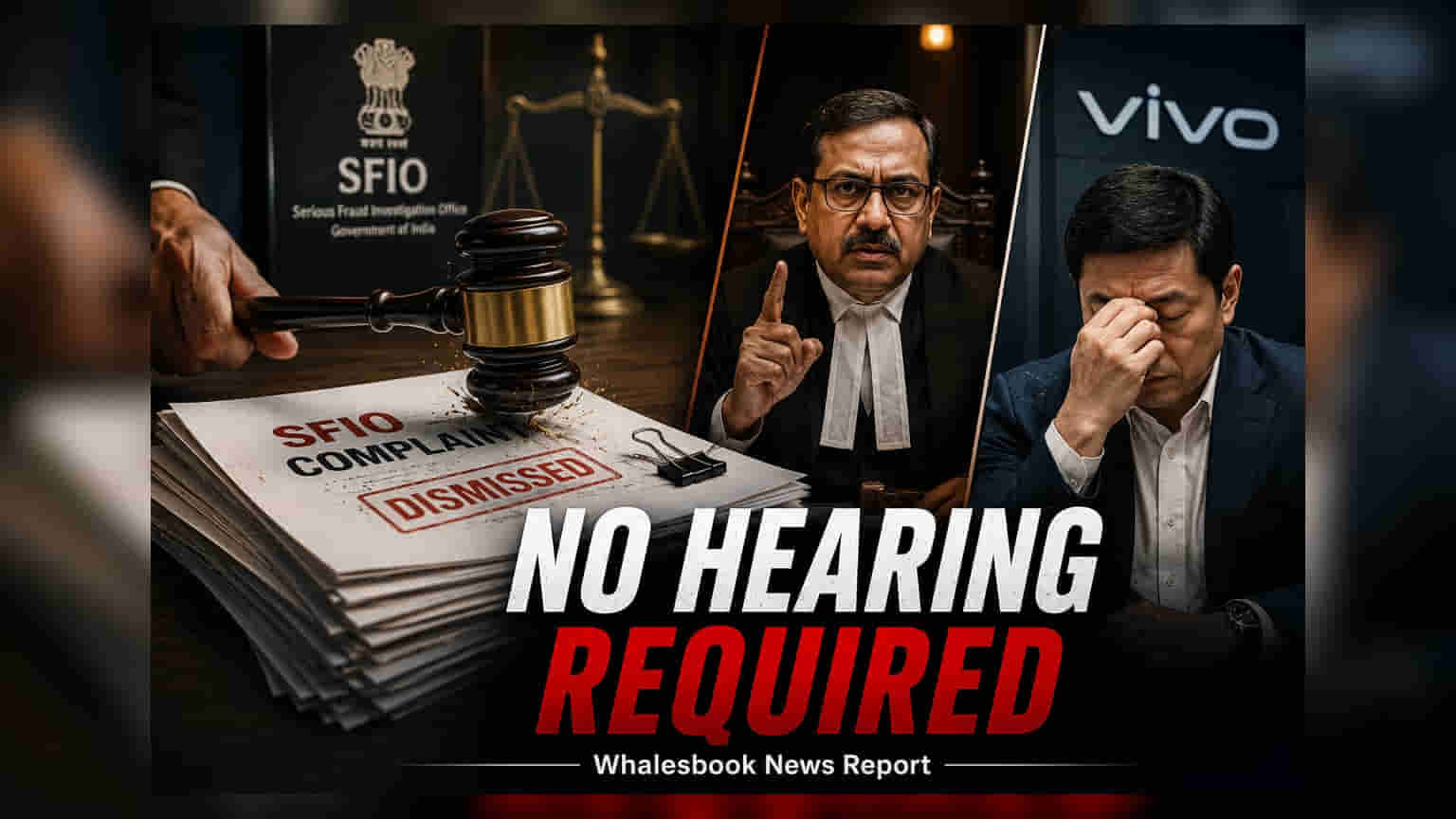
The Punjab and Haryana High Court has ruled that complaints by the Serious Fraud Investigation Office (SFIO) do not require mandatory pre-cognizance hearings. This decision simplifies the legal process for government bodies pursuing serious corporate fraud cases under the Companies Act.
The Punjab and Haryana High Court has clarified the legal procedure for corporate fraud cases in a judgment involving Vivo India Private Limited and the Serious Fraud Investigation Office (SFIO). The court ruled that the SFIO is not required to provide a pre-cognizance hearing—a preliminary legal stage where an accused party argues against the case before a judge officially takes notice of it—when filing complaints under the Companies Act, 2013.
Legal Standing of SFIO Investigations
Justice Subhas Mehla noted that the SFIO operates under a unique framework defined by the Companies Act. The court determined that this framework is distinct from general criminal procedures found in the Bharatiya Nagarik Suraksha Sanhita (BNSS). Because the Companies Act is a special law, its specific rules take precedence over general penal codes. The court compared the SFIO’s investigation report to a police report, distinguishing it from complaints filed by private individuals. This comparison was central to the ruling, as it removes the procedural requirement for an additional hearing stage before a Special Court takes cognizance of the matter.
Implications for Corporate Governance
For investors and corporate stakeholders, this ruling emphasizes the strength of the statutory investigation mechanism managed by the SFIO. By confirming that the SFIO is not obligated to provide preliminary hearings, the court has effectively streamlined the prosecution process for serious corporate offenses. This decision clarifies that the special courts designated for these cases operate under specific statutory guidelines that do not include a mandatory pre-cognizance notice for the accused. The petition filed by Vivo India, which sought such a hearing after a Gurugram court denied it, was dismissed, as the High Court found no jurisdictional error in the lower court’s original decision.
What Investors Should Track
The primary takeaway for those monitoring corporate governance is the court's stance on the independence of specialized investigative procedures. Investors often watch regulatory investigations closely, as they can signal potential governance risks or future penalties. Following this ruling, the focus for market observers will remain on how these expedited procedures impact the timelines and outcomes of ongoing or future regulatory investigations into corporate entities. Future updates from the SFIO regarding ongoing investigations will continue to be a key monitorable for companies facing regulatory scrutiny, as the legal pathway for such cases is now more clearly defined.