

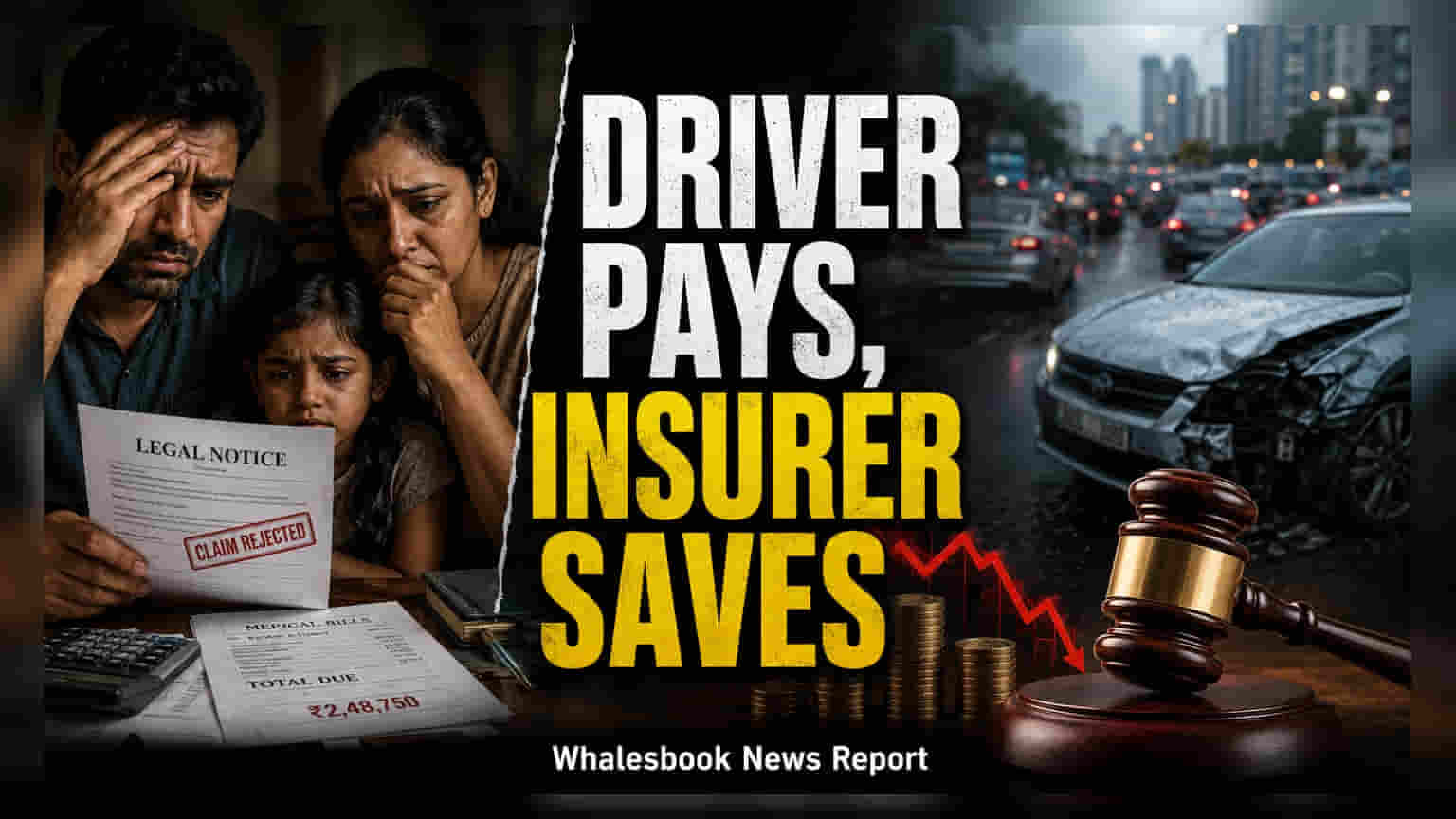
A Gurugram Motor Accident Claims Tribunal has ordered Himgiri Automobiles Private Limited and its driver to pay ₹21.30 lakh to the family of a 19-year-old victim of a 2024 fatal accident. The insurance company was exempted from paying the claim because the driver did not possess a valid driving license at the time of the incident.
A motor accident claims tribunal in Gurugram has ruled that Himgiri Automobiles Private Limited must compensate the family of a 19-year-old who died in a road accident in March 2024. The tribunal ordered the company and its driver, Chandrashekhar, to jointly pay ₹21.30 lakh, along with 9% annual interest, for the loss of life.
The case stems from an incident where the victim, Deepak Tiwari, was riding his motorcycle and was struck by a speeding car driven by the company's employee. The victim was taken to the hospital but unfortunately succumbed to his injuries.
In a significant development regarding liability, the tribunal exempted the insurance company from fulfilling the compensation claim. The decision was based on evidence showing that the driver operating the company's vehicle did not hold a valid driving license at the time of the crash. According to the tribunal, this lack of a valid license constituted a clear breach of the insurance policy terms and the Motor Vehicles Act. Consequently, the financial liability that would typically have been covered by an insurer shifted entirely to the vehicle owner and the driver.
The tribunal breakdown of the compensation includes ₹20.42 lakh for the mother of the deceased, with smaller amounts awarded to his sisters. While the civil compensation order addresses the financial recovery for the family, a separate criminal case related to the accident remains ongoing. That matter is currently in the prosecution evidence stage, with further proceedings expected later in August 2026.
This ruling serves as a stark reminder for private business entities regarding the financial and legal consequences of failing to adhere to regulatory requirements, such as ensuring that employees operating company vehicles maintain valid licenses. When basic compliance standards are not met, companies may find themselves responsible for large liabilities that would otherwise be mitigated by insurance coverage.