

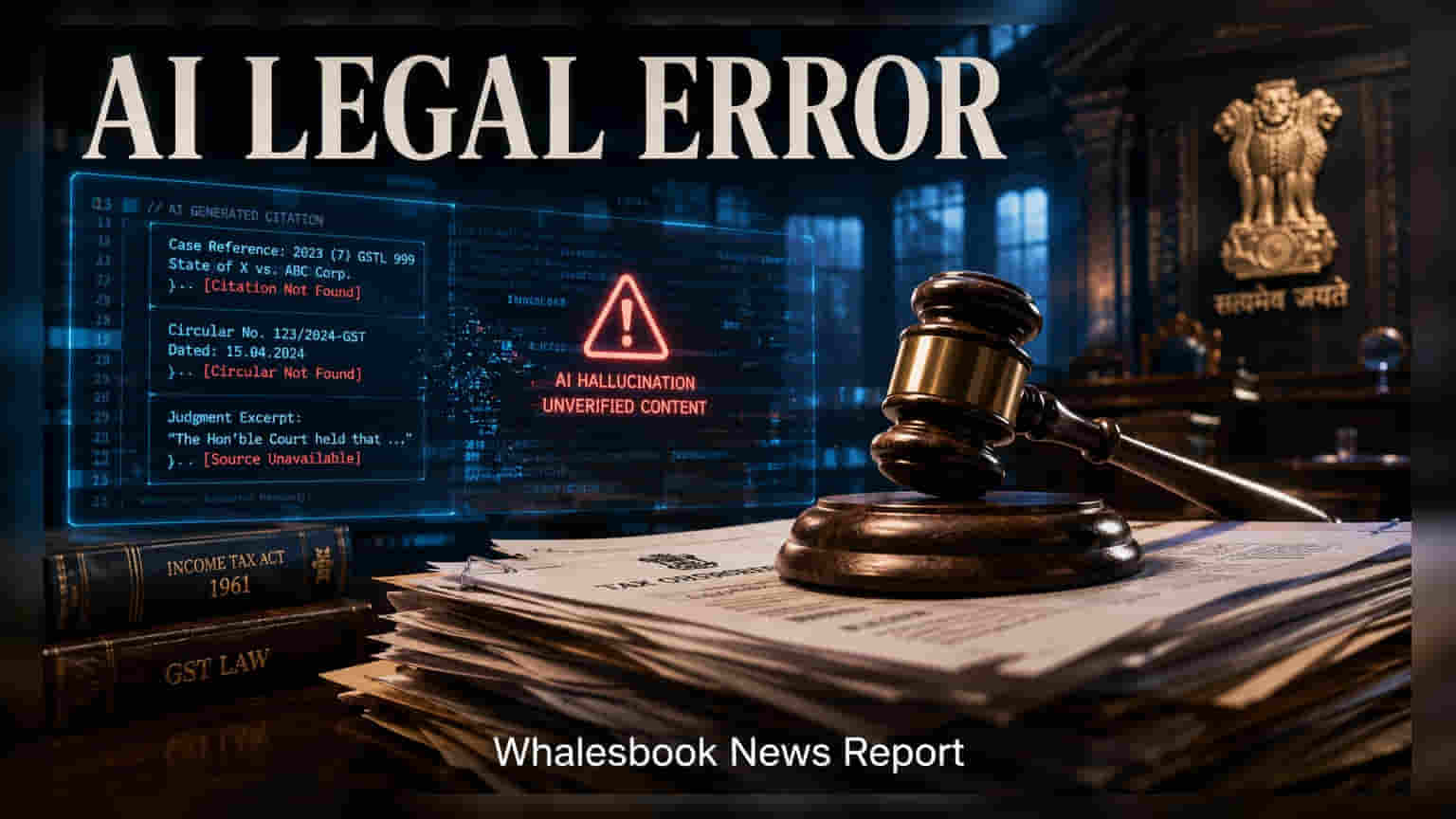
The Gujarat High Court has mandated that tax authorities independently verify all legal citations generated by AI. This follows a case involving Faiz Enterprises where an official relied on non-existent legal precedents. For businesses, this highlights the critical need to double-check the legal basis of any official tax order to ensure it aligns with actual court rulings.
The Gujarat High Court has issued a directive requiring state tax authorities to independently verify all legal citations and circulars generated by artificial intelligence. This decision follows a specific tax case involving Faiz Enterprises, where a probationary tax officer passed an order based entirely on non-existent and irrelevant legal judgments created by an AI tool.
During hearings held in August 2026, the court noted that the order appeared to rely solely on machine-generated content without the necessary human oversight. The official responsible for the order admitted to the error and apologized. In response, the court quashed the proceedings and ordered the department to issue fresh, legally compliant documents. To prevent future incidents, the state tax department has now formalized strict protocols for its adjudicating authorities.
Under these new state-wide guidelines, while AI tools may still be used for drafting and research, officers are legally responsible for the accuracy of every word in their final orders. If an AI tool is used to summarize a legal principle, the officer must now locate and cite the original text directly from the source judgment. The court has clarified that any failure to adhere to these mandates will be treated as contempt of court.
This development serves as a significant signal for business owners, legal teams, and tax consultants across India. Tax orders form the foundation of a company's financial liabilities. If an authority uses unverified AI content to support a tax demand, the legal validity of that order is compromised. For businesses undergoing audits or receiving tax notices, this environment places an extra burden on taxpayers to cross-check the legal precedents cited in government notices.
If a notice is received, companies should carefully verify the cited cases against official court records or government gazettes. Relying on the presumption that all government-issued citations are accurate may no longer be sufficient in an era where AI-assisted drafting is becoming common.
This incident in Gujarat is not an isolated event. It reflects a broader challenge faced by the Indian judicial and regulatory system as it integrates new technology. Similar instances of reliance on AI-generated 'hallucinations'—where AI produces convincing but factually incorrect information—have been flagged by the Supreme Court, as well as the National Company Law Tribunal and various other High Courts. As these institutions navigate the adoption of advanced technology, the core message from the judiciary remains consistent: technology should serve as a tool for administrative efficiency, but the duty of ensuring legal accuracy must remain a human responsibility.