

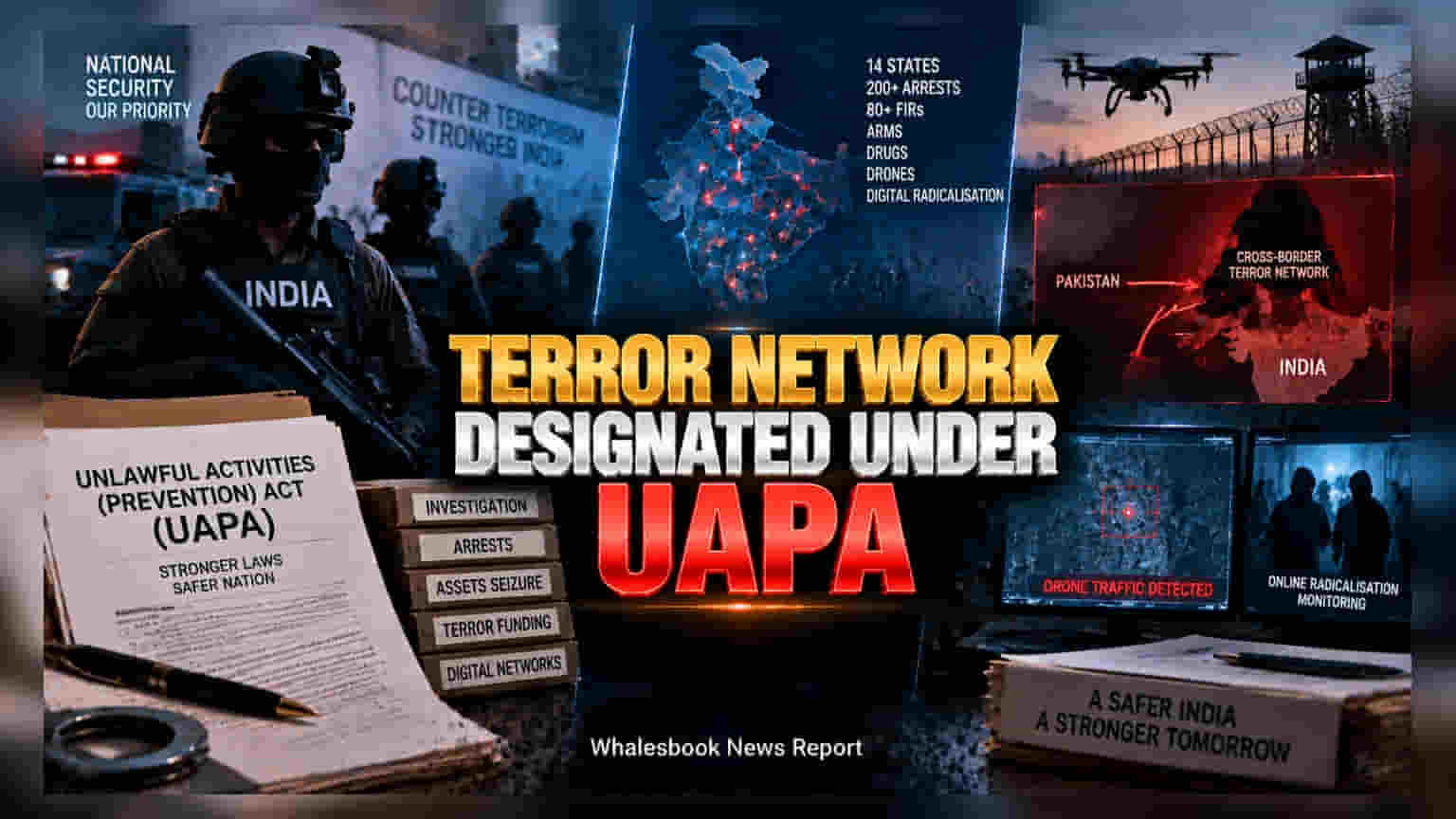
The Union Ministry of Home Affairs has officially declared the Pakistan-based Shahzad Bhatti Network a terrorist organisation under the UAPA. This move follows a major security crackdown across 14 states in August 2026 that resulted in over 200 arrests. The network is accused of cross-border smuggling of arms and narcotics and using social media for recruitment.
The Indian government has formally designated the Shahzad Bhatti Network (SBN) as a terrorist organisation under the Unlawful Activities (Prevention) Act (UAPA). This legal step allows authorities to pursue more stringent action against the network and its associates, who are accused of posing a direct threat to national security.
The designation follows a massive operation conducted by Indian security agencies in August 2026. During that nationwide crackdown, which spanned 14 states, authorities arrested over 200 alleged operatives and registered more than 80 First Information Reports (FIRs). These actions were aimed at dismantling what security officials have described as a hybrid terror-gangster syndicate operating from Pakistan with backing from external intelligence agencies.
According to government findings, the network has been involved in the illegal movement of weapons, explosives, and narcotics into India. Investigators allege that the group frequently employed drones to transport arms and explosive materials across the border, which were then distributed through local channels.
Beyond physical smuggling, the government has flagged the network for its use of digital platforms to radicalize and recruit Indian youth. Authorities claim the organisation used these platforms to assign tasks ranging from surveillance and logistics support to conducting subversive activities within the country. The network has been linked to various violent incidents, including explosions and targeted attacks.
The UAPA designation provides a powerful legal framework for law enforcement. It allows for more intense surveillance, the seizure and freezing of assets linked to the network, and the prosecution of individuals who support or are associated with the group’s activities. By labelling the entity as a terrorist organisation, the government aims to disrupt the recruitment pipeline and cut off the financial and material support systems that the network relies upon.
As the legal process continues, law enforcement and intelligence agencies are expected to maintain high surveillance. The focus remains on identifying and apprehending remaining associates and dismantling the local infrastructure that supported the network’s operations. Further developments will depend on the progress of ongoing investigations and the enforcement of the provisions under the UAPA.