 Whalesbook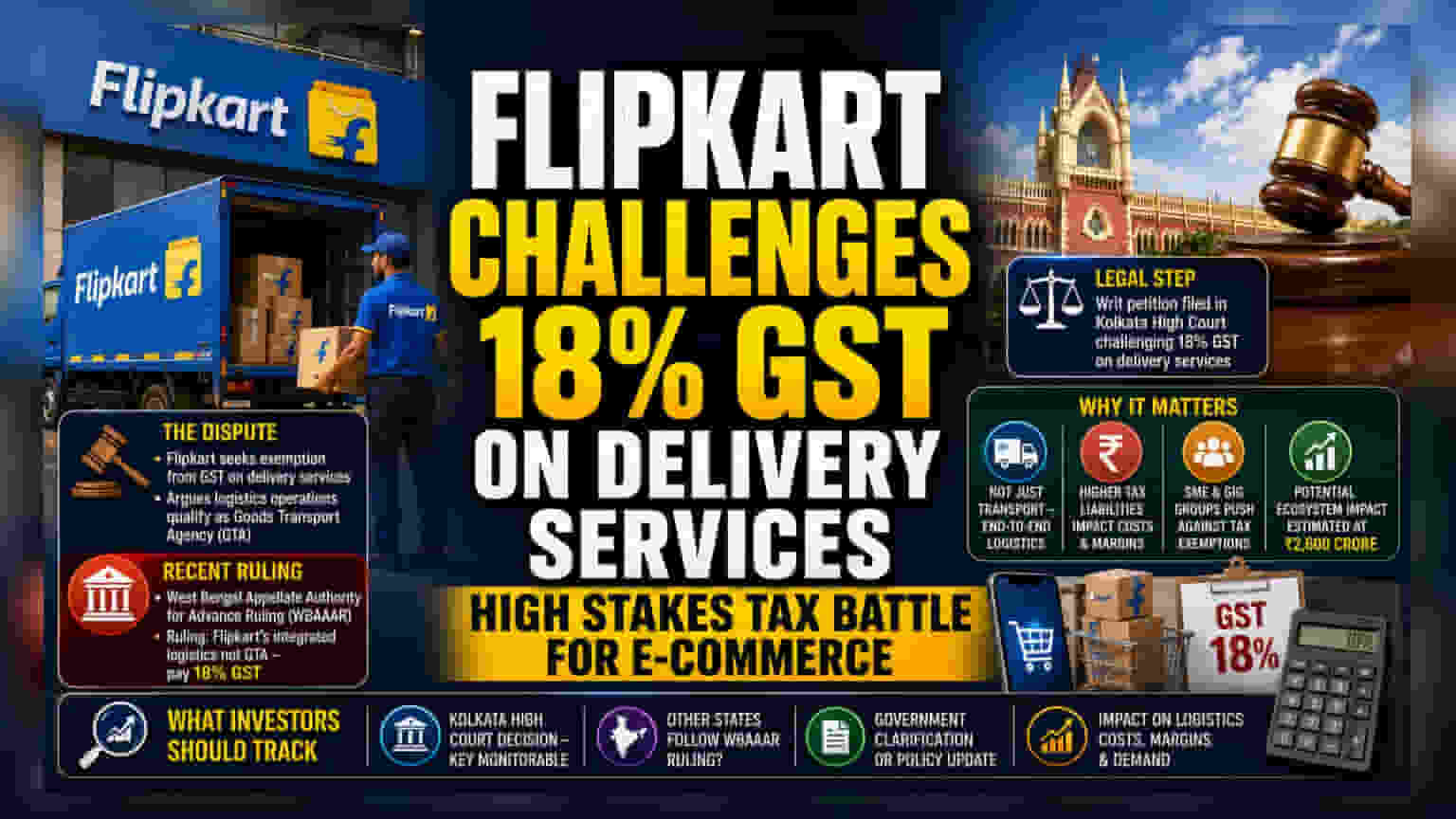


Flipkart has moved to the Kolkata High Court to contest an 18% GST levy on its delivery charges. The dispute centers on whether the company's integrated logistics network qualifies for a tax exemption usually granted to Goods Transport Agencies. This legal battle could impact operational costs for e-commerce platforms and their sellers, with industry estimates suggesting a significant tax burden across the sector.
What Happened
Flipkart has filed a writ petition in the Kolkata High Court to challenge the Goods and Services Tax (GST) being applied to its delivery services. The company is seeking an exemption, arguing that its logistics operations should be classified as a Goods Transport Agency (GTA). This legal step follows a recent decision by the West Bengal Appellate Authority for Advance Ruling (WBAAAR), which rejected the company's claim. The authority ruled that Flipkart’s logistics network, which includes sorting, warehousing, and last-mile delivery, does not fit the definition of a simple transport agency and must pay 18% GST on its delivery charges.
Why This Matters For Logistics
The dispute highlights the difference between traditional transport services and modern, integrated e-commerce logistics. A Goods Transport Agency (GTA) typically handles the movement of goods from one point to another and often enjoys specific tax exemptions or simpler tax structures. The WBAAAR argues that because Flipkart manages an end-to-end operational model—including pick-up hubs, sorting centers, and transshipment points—its services go far beyond simple transportation. For the e-commerce sector, this ruling creates uncertainty. If the court upholds the authority’s decision, companies may face higher tax liabilities on their logistics operations, which directly impacts the cost of doing business.
Industry Pressure and Economic Impact
This legal issue is drawing attention because of its potential effect on the broader digital economy. SME groups and associations representing gig workers are actively lobbying state tax authorities to deny these exemptions to large e-commerce players. The argument from these groups is to ensure a consistent tax treatment that prevents large platforms from gaining a tax advantage over smaller, local competitors. Tax experts and industry bodies have pointed out that an 18% GST on delivery charges could ripple through the market, potentially impacting millions of small businesses and farmers who use these platforms to sell their goods. Estimates suggest the potential tax impact across the ecosystem could reach nearly ₹2,600 crore.
How Investors May Read This
For those watching the e-commerce and retail sector, this development is a reminder of the evolving regulatory environment in India. As e-commerce becomes a larger part of the economy, tax authorities are increasingly scrutinizing how these companies categorize their services. The key risk here is not just the immediate tax bill, but the precedent it sets. If logistics costs for e-commerce giants rise due to higher GST, they will need to decide whether to absorb these costs, which could pressure profit margins, or pass them on to sellers and customers, which could affect demand. The market will be watching to see how courts interpret the difference between 'transport services' and 'integrated logistics' in the digital age.
What Investors Should Track
The most important monitorable is the upcoming decision from the Kolkata High Court. Beyond the immediate case, investors should track whether other states follow the West Bengal authority's lead in reviewing similar tax exemptions. Furthermore, any official government clarification or policy update regarding the classification of 'essential commerce infrastructure' versus 'commercial service' for logistics networks will be a vital indicator of how the sector’s tax regime might look in the future.