

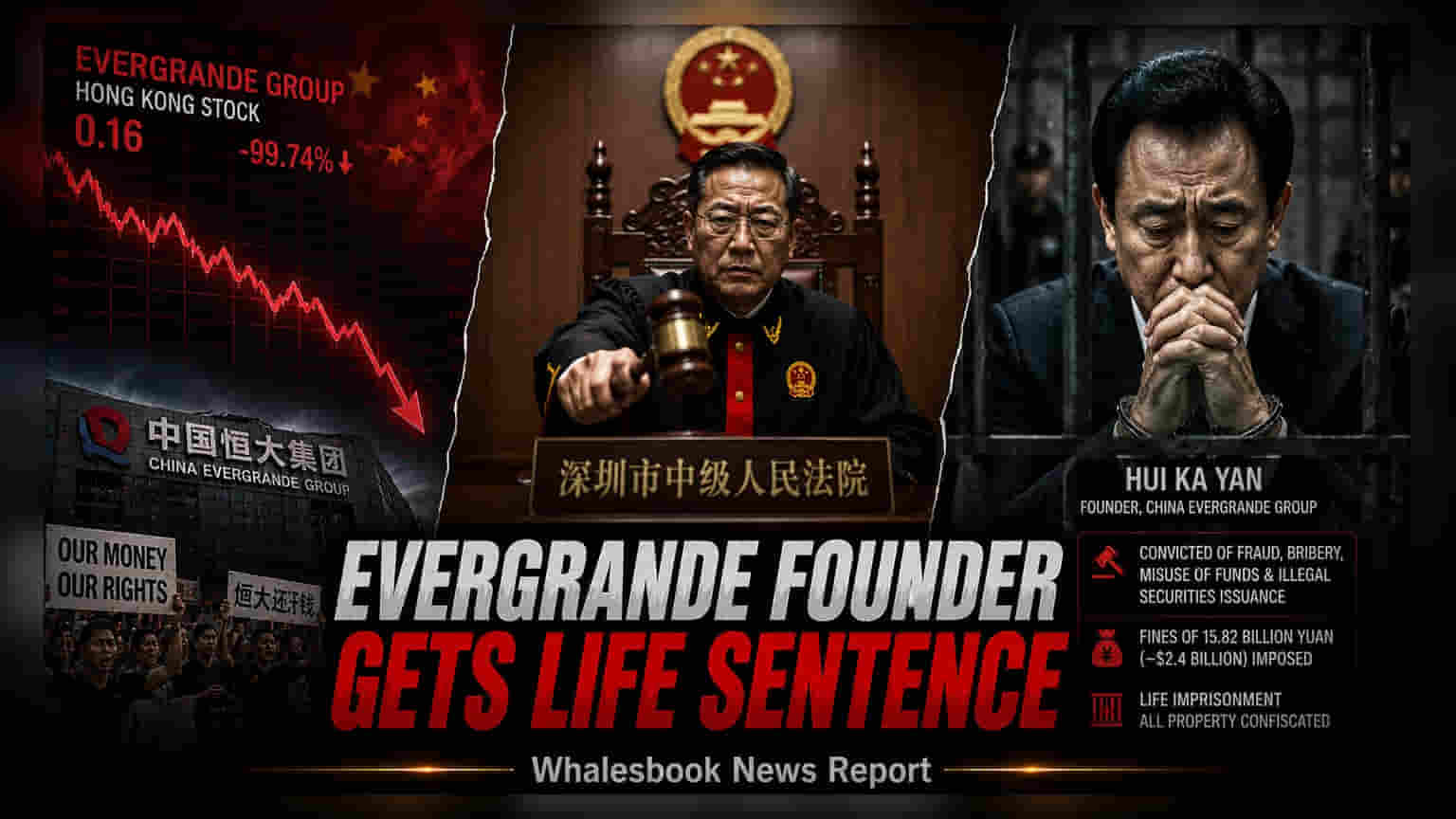
The Shenzhen Intermediate People's Court has sentenced Evergrande founder Hui Ka Yan to life in prison for fraud and bribery. This ruling marks the final chapter in the collapse of the world’s most indebted property developer, which has been in liquidation since 2025. For creditors, the verdict provides legal closure, but offers little hope for substantial asset recovery given the company's massive, unpaid liabilities.
On August 20, 2026, the Shenzhen Intermediate People's Court sentenced Hui Ka Yan, the founder of the collapsed China Evergrande Group, to life in prison. The ruling marks a significant legal conclusion following a long trial regarding the company's dramatic fall from grace. The court convicted Hui on multiple serious charges, including fundraising fraud, bribery, misuse of company funds, and the illegal issuance of securities.
As part of the judgment, the court ordered the confiscation of all of Hui’s personal property. Furthermore, the court imposed substantial fines totaling 15.82 billion yuan, equivalent to approximately $2.4 billion. These fines were split between the parent company, China Evergrande Group, and its primary onshore subsidiary, Hengda Real Estate. The court noted that these crimes led to exceptionally large economic losses and caused significant social harm, impacting both domestic and international stakeholders.
The End of an Era for a Real Estate Giant
Evergrande was once the most indebted developer in the world, carrying liabilities that exceeded $300 billion. The company's massive debt pile began to unravel in 2021, triggering a liquidity crisis that sent shockwaves through the Chinese property sector and global financial markets. Since its collapse, the company has been in formal liquidation, and it was officially delisted from the Hong Kong Stock Exchange in August 2025.
For investors and bondholders, this sentencing offers legal clarity but does not address the core issue of capital recovery. Because the company is already in liquidation, the process of recovering funds remains a complex, slow, and arduous legal challenge. The substantial fines levied by the court take priority, which may further reduce the assets available to be distributed among the company's thousands of creditors. The sentencing of Hui, alongside 56 other individuals linked to the group, highlights the severe regulatory and legal consequences now facing those involved in the company's past business practices.
Wider Implications for the Property Sector
The downfall of Evergrande has served as a cautionary tale for the Chinese real estate market, which continues to struggle with weak demand and liquidity constraints. This case has fundamentally altered how investors assess corporate governance and leverage in the property sector. The focus now shifts toward the ongoing liquidation proceedings, where liquidators face the difficult task of untangling the firm's assets and liabilities. For market observers, the key monitorable remains the progress of this liquidation process and whether it provides any eventual, albeit likely small, payout to the vast number of creditors who have been waiting for years for a resolution.