

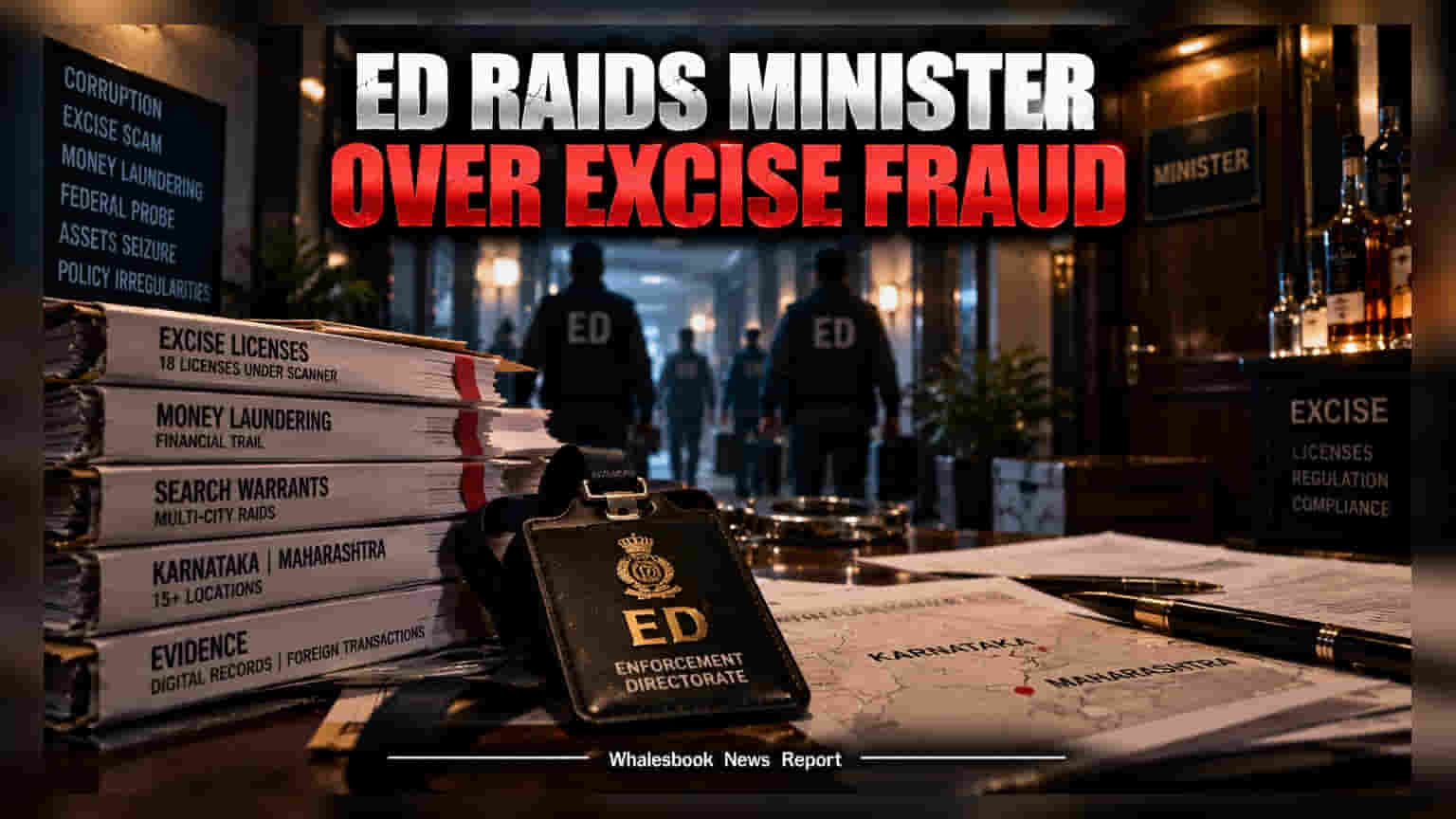
The Enforcement Directorate (ED) has conducted searches at over 15 locations linked to Karnataka PWD Minister Satish Jarkiholi. The probe focuses on alleged corruption involving 18 excise bar licenses and suspected money laundering. This investigation adds to growing scrutiny of the state’s excise department and its licensing practices.
On Wednesday, September 9, 2026, the Enforcement Directorate (ED) launched a multi-city operation across Karnataka and Maharashtra, executing search warrants at more than 15 locations connected to Karnataka Public Works Department Minister Satish Jarkiholi. The agency is investigating allegations of corruption tied to the issuance of 18 specific excise (bar) licenses, as well as suspected money laundering activities.
This investigation is part of a broader, ongoing federal effort to uncover irregularities within the Karnataka Excise Department. Investigators are tracing a potential trail of illicit funds, including reports of foreign currency transactions that were allegedly routed to avoid regulatory oversight. The current operation follows a pattern of heightened administrative scrutiny by federal agencies into the state’s liquor licensing framework, which has been the subject of investigation for several months.
Connection to Earlier Investigations
The current raids represent an expansion of an inquiry that gained momentum earlier this year. In June 2026, the ED conducted similar operations against Y.D. Manjunath, a relative of the minister and a senior excise official. During that earlier probe, agencies reportedly uncovered evidence of a bribe syndicate operating within the department and seized assets worth approximately ₹13.3 crore. By revisiting entities and locations linked to this network, federal investigators are attempting to establish a direct connection between administrative decisions on licensing and the movement of illegal capital.
Regulatory Impact on the Liquor Sector
For investors and businesses operating in the hospitality and beverage retail sectors, this investigation highlights a period of significant regulatory uncertainty in Karnataka. The state’s liquor industry operates under strict government-controlled licensing, and any allegation of a "bribe syndicate" or illegal license issuance creates operational risks for businesses. When licensing processes come under federal scanner, it can lead to temporary suspensions, prolonged audits, or a complete freeze on the processing of new applications and renewals.
Companies in the hospitality sector often rely on the smooth functioning of these administrative channels. If the investigation into the 18 specific licenses results in cancellations or further policy changes, the ripple effect could impact compliance costs and operational timelines for businesses holding or seeking similar licenses in the state. Historically, when excise departments face such intense investigations, administrative processes can slow down significantly as officials prioritize compliance and evidence gathering over routine approvals.
The investigation into potential money laundering and the validity of excise licenses is currently ongoing. Key developments to track include any formal charges filed under the Prevention of Money Laundering Act (PMLA) and the official status of the 18 licenses under scrutiny. The ED’s analysis of electronic records and physical documents recovered during these raids will likely determine the next phase of the legal process and the extent of the impact on the state’s excise administration.