 Whalesbook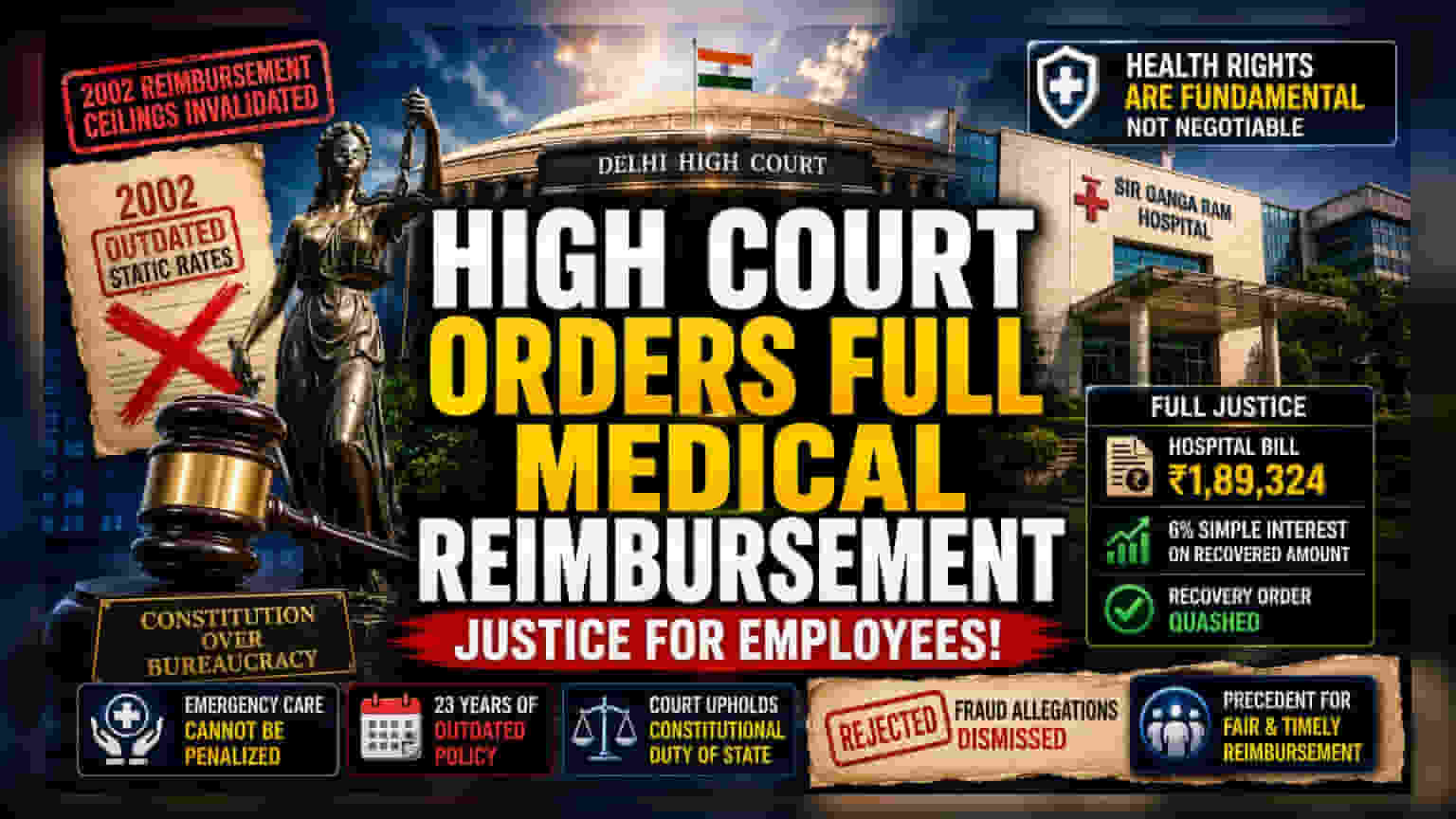


The Constitutional Mandate Over Administrative Rigidity
The judicial rebuke delivered by the Delhi High Court centers on the fundamental mismatch between static bureaucratic policy and the escalating volatility of medical inflation. By invalidating the 2002 reimbursement ceilings in the case of Jeet Singh, the court has effectively signaled that government austerity cannot override the constitutional guarantee of health protection for public servants. The administrative attempt to claw back funds based on legacy price lists was dismissed as an irrational interpretation of duty, particularly when applied to emergency life-saving procedures performed in private institutions.
The Financial Disconnect in Public Health Policy
When the initial treatment occurred in 2006, the gap between the actual expenditure at Sir Ganga Ram Hospital and the government’s fixed-rate reimbursement was nearly forty percent. This case highlights a perennial failure in state health frameworks where reimbursement schedules remain stagnant for decades, forcing employees to shoulder the weight of medical debt for critical illnesses. The court’s directive—requiring the full settlement of the ₹1,89,324 bill along with a 6% simple interest payment on any previously recovered funds—serves as a financial corrective. It signals to administrative departments that policy adherence does not grant immunity from the fiscal realities of modern healthcare, nor does it justify the pursuit of recovery claims against staff who have already endured financial and emotional strain.
The Risk of Administrative Overreach
The government's failed attempt to categorize these reimbursement claims as fraudulent suggests an aggressive stance by state auditors to minimize liability. By rejecting these allegations, the judiciary has curtailed a practice where agencies prioritize budgetary conservation over employee welfare. Future administrative actions regarding medical claims are now bound by this precedent, which emphasizes that reimbursement policies must evolve alongside medical costs. Failure to update these frameworks poses a continuous legal risk for the state, as litigants are increasingly emboldened to challenge the constitutionality of caps that bear no rational connection to market-based clinical expenses.
Future Implications for Public Sector Governance
Moving forward, the judiciary is expected to maintain a skeptical view of retrospective policy application. The government must now reconcile its budgetary constraints with the obligation to provide adequate medical coverage. If state entities continue to lean on outdated schedules, they will likely face further litigation that could result in substantial interest payouts, as seen in this resolution. This verdict forces a recalibration of how public health benefits are administered, shifting the focus from rigid cost-containment toward compliance with the evolving standards of medical accessibility.