 Whalesbook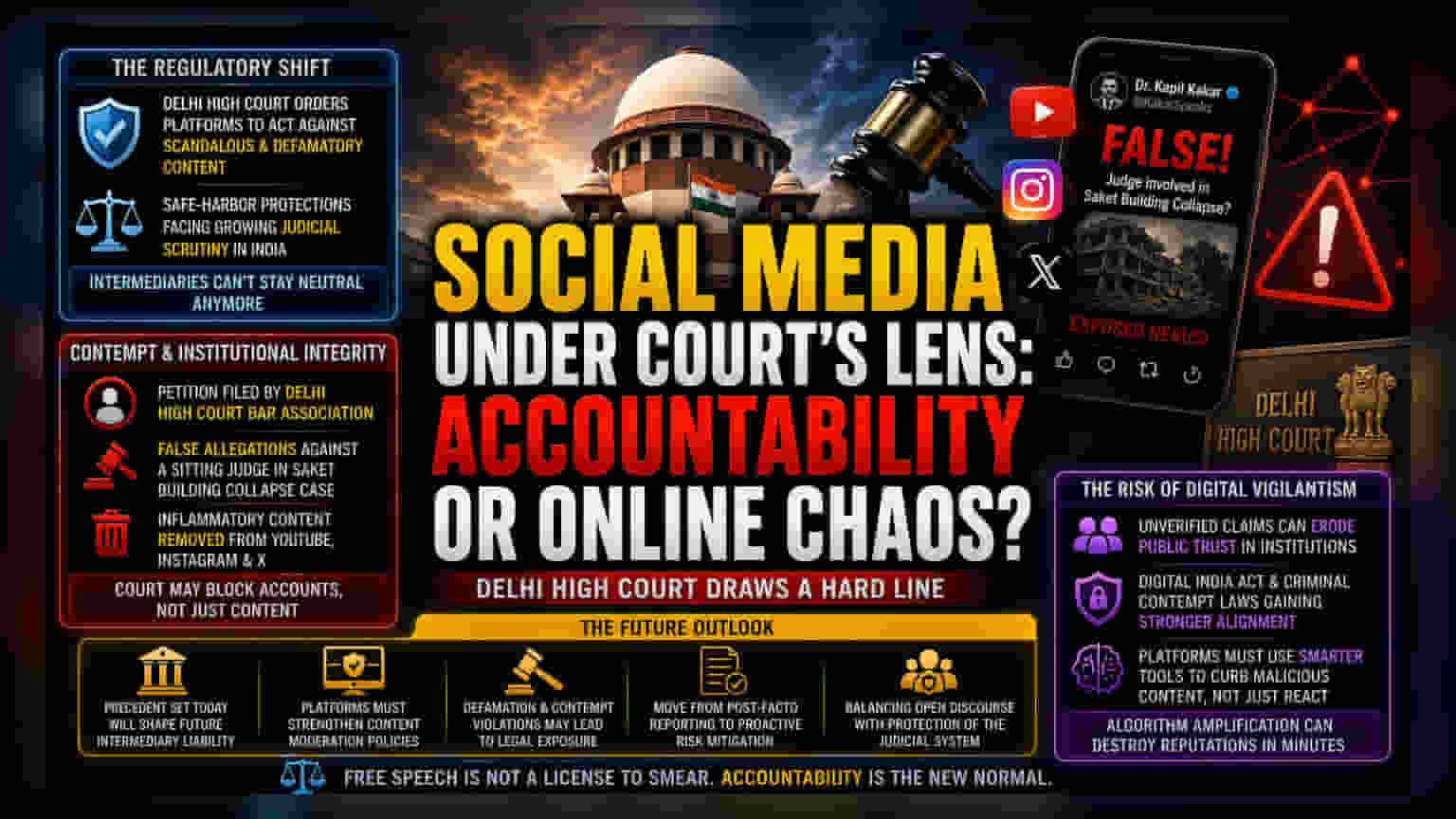


The Regulatory Shift on Intermediaries
The Delhi High Court’s directive marks a significant hardening of stance regarding the obligations of digital intermediaries. By targeting content that falsely accused a sitting judge of orchestrating a lethal building collapse, the court is effectively forcing social media platforms into a more proactive role. The judicial frustration voiced by the bench suggests that the traditional safe-harbor protections often claimed by these firms may face increasing scrutiny in India, particularly when content is deemed to intentionally scandalize the judiciary rather than merely represent protected speech.
Contempt and Institutional Integrity
Legal proceedings initiated by the Delhi High Court Bar Association highlight the intersection of digital activism and criminal contempt. The association successfully petitioned for the removal of inflammatory content spread across major platforms, including YouTube, Instagram, and X, by activist Dr. Kapil Kakar. The DHCBA effectively dismantled the narrative of a corrupt nexus by clarifying that the judge’s involvement in the Saket property case was limited to permitting a procedural withdrawal of a petition, contradicting claims of judicial malfeasance. The court’s willingness to consider blocking specific accounts demonstrates that the judiciary is moving beyond simple takedown orders toward more punitive enforcement against individual digital actors.
The Risk of Digital Vigilantism
The broader implications of this case extend to how rapidly unverified allegations can incite public distrust in institutional pillars. Legal analysts have noted that when high-profile figures or judicial officers become targets of coordinated social media smear campaigns, the resulting erosion of public confidence is difficult to reverse. The government’s recent legislative efforts, such as the Digital India Act discussions, reflect a growing alignment between the judiciary and the executive to curb the influence of algorithmic amplification in cases involving potential criminal contempt. Future developments will likely focus on whether platforms can deploy automated moderation tools that differentiate between genuine public discourse and calculated efforts to destabilize the legal system.
The Future Outlook
Legal experts anticipate that the court’s focus on intermediary liability will encourage tech firms to tighten content moderation policies within the Indian market. While platforms have historically relied on post-facto reporting, the current judicial mood suggests that platforms failing to mitigate clearly defamatory and scandalous content may face significant legal exposure. The outcome of the ongoing criminal contempt notices will serve as a critical precedent for how social media entities manage the tension between hosting open forums and protecting the sanctity of judicial proceedings.