 Whalesbook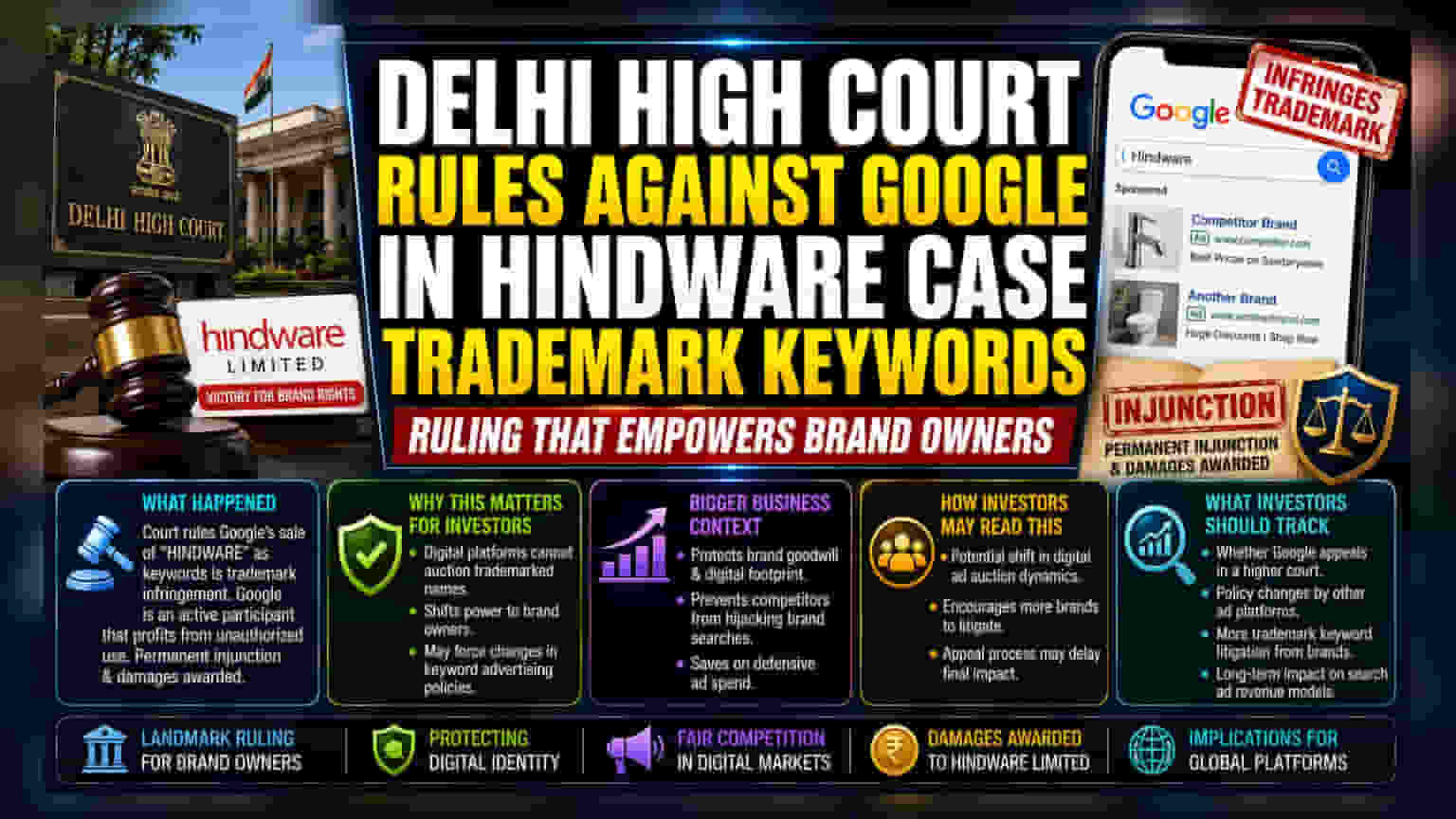


The Delhi High Court has ruled that Google infringed on Hindware’s trademark by allowing competitors to use the brand name as a keyword in its advertising platform. This landmark judgment prevents Google from profiting by auctioning protected brand names to rivals. For investors, this sets a significant legal precedent in digital advertising, potentially impacting how major tech platforms manage trademarked keywords and offering stronger legal protection for brand equity in the digital age.
What Happened
The Delhi High Court has delivered a verdict in the case of Hindware Limited v. Google LLC & Ors., ruling that Google’s practice of selling trademarked names as keywords for its advertising services constitutes trademark infringement. The court found that Google was not merely an intermediary but an active participant that profited from the unauthorized commercial use of the 'HINDWARE' trademark. By allowing competitors to bid on the brand name, Google enabled rival advertisements to appear when customers searched specifically for Hindware products. The court has issued a permanent injunction against the tech giant and ordered damages in favor of the sanitaryware manufacturer.
Why This Matters For Investors
This ruling is a significant development for brand-owning companies. Historically, search engines have relied on keyword-based advertising models where any entity could bid on virtually any keyword, including those owned by competitors. This practice often forced brands to bid on their own names to protect their search visibility. With this court decision, the balance of power shifts toward brand owners. If upheld, it establishes that digital platforms cannot treat registered trademarks as generic commodities for auction. This could lead to a change in how digital advertising platforms structure their keyword policies to avoid similar legal liabilities.
The Bigger Business Context
For Hindware Limited, a major player in the Indian sanitaryware and home building products sector, this represents a win for protecting brand goodwill. Digital advertising is a primary channel for customer acquisition in the consumer goods space. When competitors hijack brand-specific searches, it can dilute brand loyalty and potentially shift traffic to rivals. By successfully challenging this practice, the company has taken a stand to protect its digital footprint. While this is a legal victory, it highlights the increasing tension between major consumer brands and global tech platforms regarding digital advertising practices.
How Investors May Read This
Investors often look for developments that safeguard a company’s market position and brand value. This ruling potentially reduces the 'defensive' advertising spending required by brands to combat search hijackers. If more companies follow this path, it could force tech platforms to refine their advertising policies to ensure trademark protection, potentially changing the competitive dynamics of online ad auctions. However, investors should be aware that such legal battles often involve long-drawn-out appeal processes. Tech platforms frequently challenge adverse rulings in higher courts, meaning the final impact on digital advertising revenue models may take time to materialize.
What Investors Should Track
The most important factor to monitor is whether Google chooses to appeal this decision in a higher court, which is common in major intellectual property disputes. Additionally, market participants may watch for any policy changes by other major digital advertising platforms regarding the use of trademarked keywords. Investors should also observe whether this ruling triggers a wave of similar litigation from other major consumer brands looking to protect their digital identity. The financial impact of the damages awarded and the long-term changes to search advertising policies remain key monitorables.