

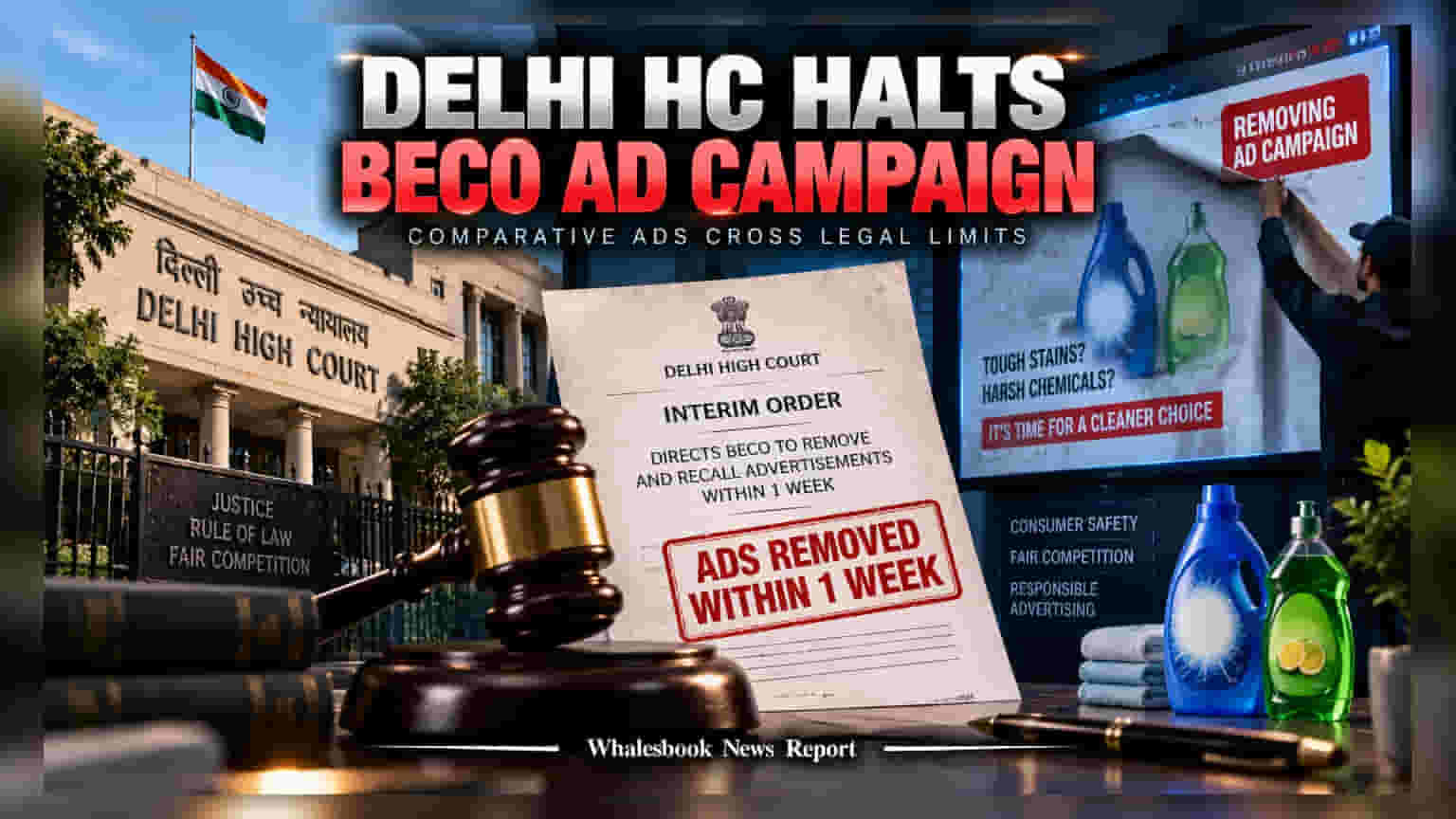
The Delhi High Court has directed Kwick Living, the owner of the Beco brand, to stop its '#WarOnWhatsHidden' campaign targeting Hindustan Unilever Limited’s Surf Excel and Vim. The court ruled that the ads unfairly linked HUL products to skin irritation, crossing the boundaries of permissible comparative advertising. Beco must remove all campaign materials within one week.
The Delhi High Court has passed an interim order against Kwick Living (I) Private Limited, the company behind the Beco brand, directing it to immediately cease and recall its #WarOnWhatsHidden advertising campaign. This campaign, which had been active across various media, specifically targeted two of Hindustan Unilever Limited’s (HUL) flagship household brands, Surf Excel and Vim.
In its order, the court observed that the campaign appeared to exceed the legal limits of comparative advertising. Justice Anup J. Bhambhani noted that the messaging, viewed as a whole, went beyond simply promoting Beco’s own products. Instead, the court found that the campaign conveyed to the average consumer that using HUL’s products could lead to skin irritation, itching, or eczema due to specific chemical ingredients. The court held this position as prima facie disparaging, meaning it effectively belittled the competing product without adequate scientific proof.
Impact on Marketing and Compliance
The court has given Beco a strict timeline of one week to remove and recall the advertisements across all formats. Furthermore, the company is required to file an affidavit within another week confirming that it has complied with these directions. For Beco, a private D2C (direct-to-consumer) brand, this order serves as a significant setback for its aggressive marketing strategy, which aimed to position its products as a cleaner alternative to established household names.
Hindustan Unilever, one of India’s largest consumer goods companies, had argued that the ingredients highlighted in the advertisements, such as Benzisothiazolinone and Linear Alkylbenzene Sulfonate, were safe for consumer use within the concentrations present in their products. The company maintained that its products undergo rigorous safety testing and comply with all regulatory standards. HUL’s legal action highlights the ongoing battle between legacy FMCG giants and emerging D2C brands, where marketing tactics often focus on highlighting the alleged drawbacks of older products to gain consumer trust.
Broader Context for Investors
While Beco is a private entity, this case provides a broader perspective for investors in the FMCG sector. Marketing is a primary tool for D2C brands to disrupt market share held by established players like HUL. However, this legal outcome demonstrates that there are clear boundaries regarding how brands can frame their comparisons. For companies like HUL, protecting brand equity and consumer perception is a critical operational priority, as even temporary negative publicity can influence purchasing decisions.
The court has not yet delivered a final verdict on all claims, and the broader legal dispute between the two companies remains ongoing. Investors may monitor whether this order influences the marketing strategies of other emerging consumer brands that rely on similar comparative advertising techniques. The immediate monitorable for the market and stakeholders is Beco’s compliance with the court’s timeline and any subsequent management commentary regarding their future marketing approach.