 Whalesbook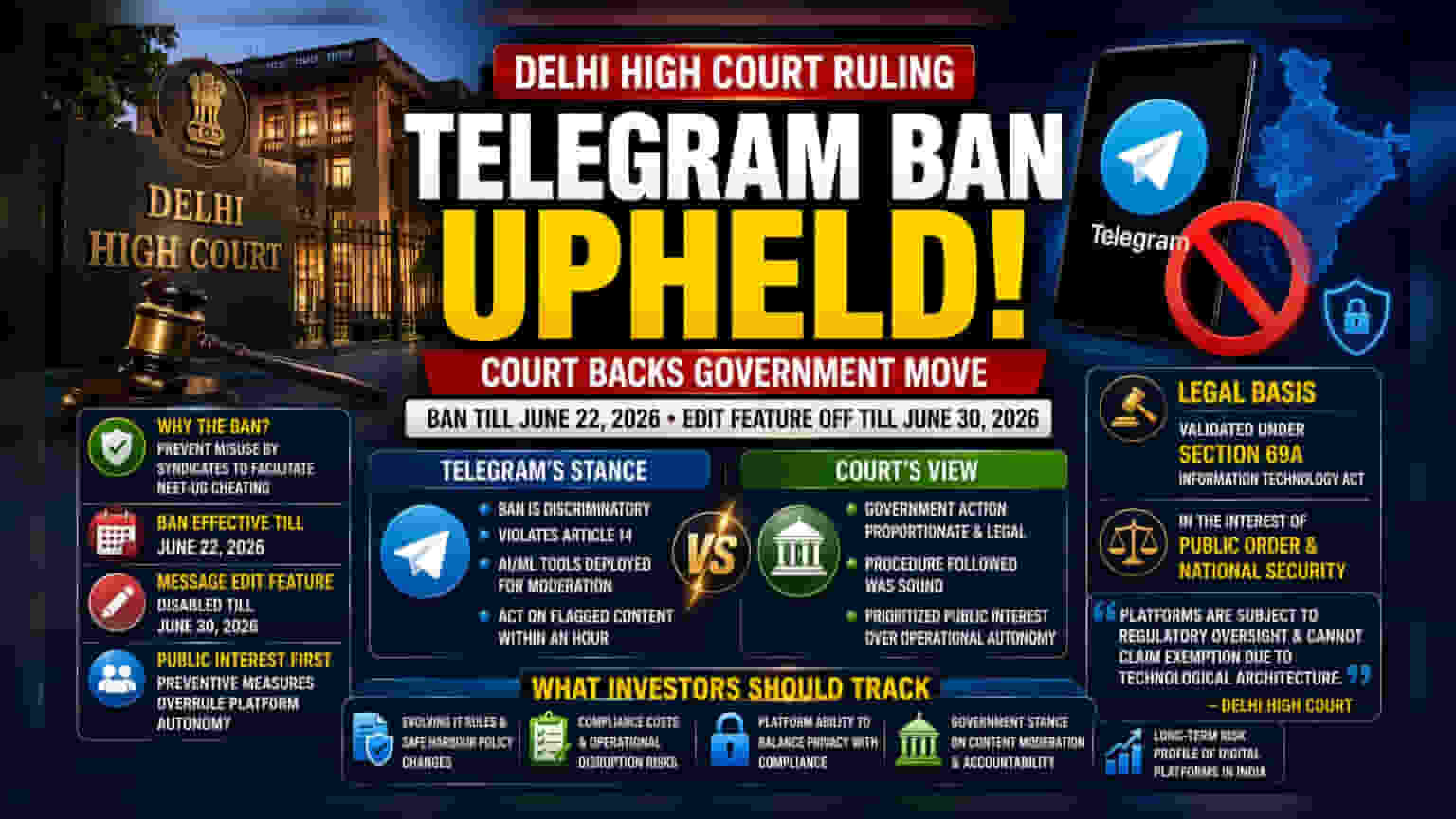
The Delhi High Court has upheld the government's temporary ban on Telegram to curb cheating in NEET-UG exams. This decision highlights the increasing regulatory scrutiny on digital communication platforms in India. Investors should note the strong application of Section 69A of the IT Act, which underscores the operational risks for digital platforms in navigating compliance and content moderation requirements within the country.
What Happened
The Delhi High Court has ruled in favor of the Indian government's decision to temporarily block access to the messaging application Telegram. The ban was implemented by the Ministry of Electronics and Information Technology (MEITY) in the lead-up to the NEET-UG re-examinations to prevent the platform from being used by organized syndicates to facilitate cheating. The court order remains effective until June 22, 2026. Additionally, the court has mandated that Telegram's message-editing feature be disabled until June 30, 2026, as part of the regulatory measures to curb irregularities.
The Legal Context
Justice Tejas Karia presided over the matter and validated the government's actions under Section 69A of the Information Technology Act. This section empowers the government to issue directions for blocking public access to any information through a computer resource if it is deemed necessary in the interest of public order or national security. The court concluded that the government’s response was proportionate and that the procedure followed was legally sound. A key takeaway from the judgment is the court's view that platforms like Telegram are subject to regulatory oversight and cannot remain exempt from local laws under the guise of technological architecture.
How Investors May Read This
For investors monitoring the digital and tech sector in India, this development serves as a significant case study on regulatory friction. The ruling highlights that the government is increasingly willing to exercise its powers under the IT Act to hold digital platforms accountable for misuse, especially when it impacts public infrastructure or national exams. While Telegram is a private entity, the regulatory stance here sends a clear message to all digital platforms, social media apps, and messaging services operating in India.
Operational risk is a critical factor here. Platforms that cannot demonstrate effective, localized compliance, or those whose architecture makes it difficult to adhere to local takedown or moderation requests, may face increased scrutiny. This suggests that future investment in digital ventures in India will likely need to account for higher compliance costs and the potential for temporary service disruptions during periods of regulatory tension.
Telegram’s Stance and the Court’s View
Telegram had challenged the government's directive, arguing that the ban was discriminatory and violated Article 14 of the Constitution, noting that other social media platforms continued to operate. The company emphasized that it had already deployed AI and machine learning tools for moderation and claimed to act on flagged content within an hour. However, the court did not find these arguments persuasive in the face of the larger public interest. The government’s legal representatives had characterized the platform's architecture as a challenge to regulatory control, prompting the court to prioritize preventive measures over the platform’s operational autonomy in this instance.
What Investors Should Track
Investors should keep a close watch on future updates to the IT Rules and how digital platforms adjust their moderation policies to align with evolving Indian regulations. Key monitorables include any shifts in government policy regarding the 'safe harbour' status of digital intermediaries, which protects them from liability for user-generated content. Furthermore, the ability of platforms to balance user privacy with the growing demand for compliance and state-led moderation will be a primary indicator of their sustainability and long-term risk profile in the Indian market.

