

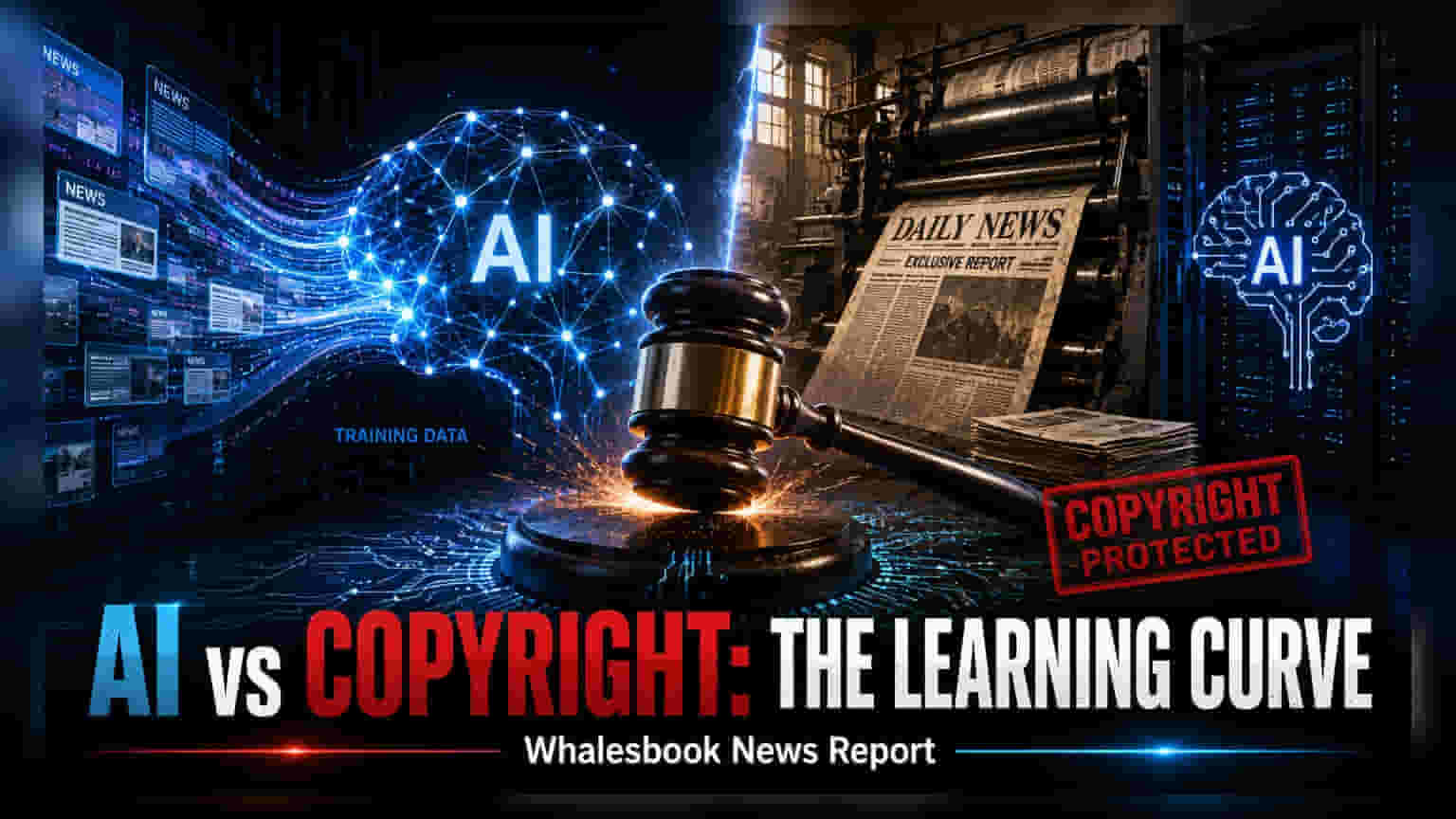
The Delhi High Court has denied an interim injunction against OpenAI in a copyright lawsuit filed by ANI Media. The July 24, 2026, ruling suggests that using copyrighted news content to train AI models may qualify as 'fair dealing' under Indian law. This significant interim decision sets a major precedent for how AI companies and content creators will interact in India.
The Delhi High Court has issued a landmark interim ruling in the copyright dispute between Indian news agency ANI Media and OpenAI, the developer of ChatGPT. On July 24, 2026, Justice Amit Bansal denied ANI Media’s request for an interim injunction, which sought to prevent OpenAI from using its copyrighted news articles to train its Large Language Models (LLMs).
At the center of the dispute was whether AI companies have the right to scrape and use proprietary news content without explicit permission or payment. In its interim decision, the Court held that, at this stage of the legal proceedings, OpenAI’s practice of using copyrighted material for training its models qualifies as 'fair dealing' under Section 52(1)(a)(i) of the Copyright Act, 1957. The Court reasoned that the training process takes place in a closed, private environment and that the AI's output does not necessarily function as a substantial reproduction of the original work.
Since both ANI Media and OpenAI are private entities, this legal development does not impact any stock prices. However, the ruling carries significant weight for the broader digital media, publishing, and artificial intelligence sectors in India. For news organizations, the decision presents a challenge to the ability to control or monetize their content when it is used to train generative AI systems. For tech companies, the ruling provides a temporary measure of legal clarity, allowing them to continue training models on publicly available data without immediate legal blockers.
The ruling is limited to an interim stage, meaning the final legal battle remains ongoing and the arguments will be subject to further trial. The court’s interpretation of 'fair dealing' in the context of AI training is an expansive one, and it remains possible that the final judgment could differ or that the current interpretation could be challenged in higher courts.
Beyond the courtroom, this case serves as a precursor to potential legislative changes. As AI technology evolves rapidly, existing copyright laws written decades ago may come under review by regulators and policymakers. The outcome of the full trial will be the next major indicator of how India intends to balance the rights of content creators with the needs of the fast-growing artificial intelligence industry. Investors and stakeholders in the media and technology sectors should track any future legislative updates to the Copyright Act, as well as the final verdict of this case, as these will define the rules for AI-based business models in the country.