

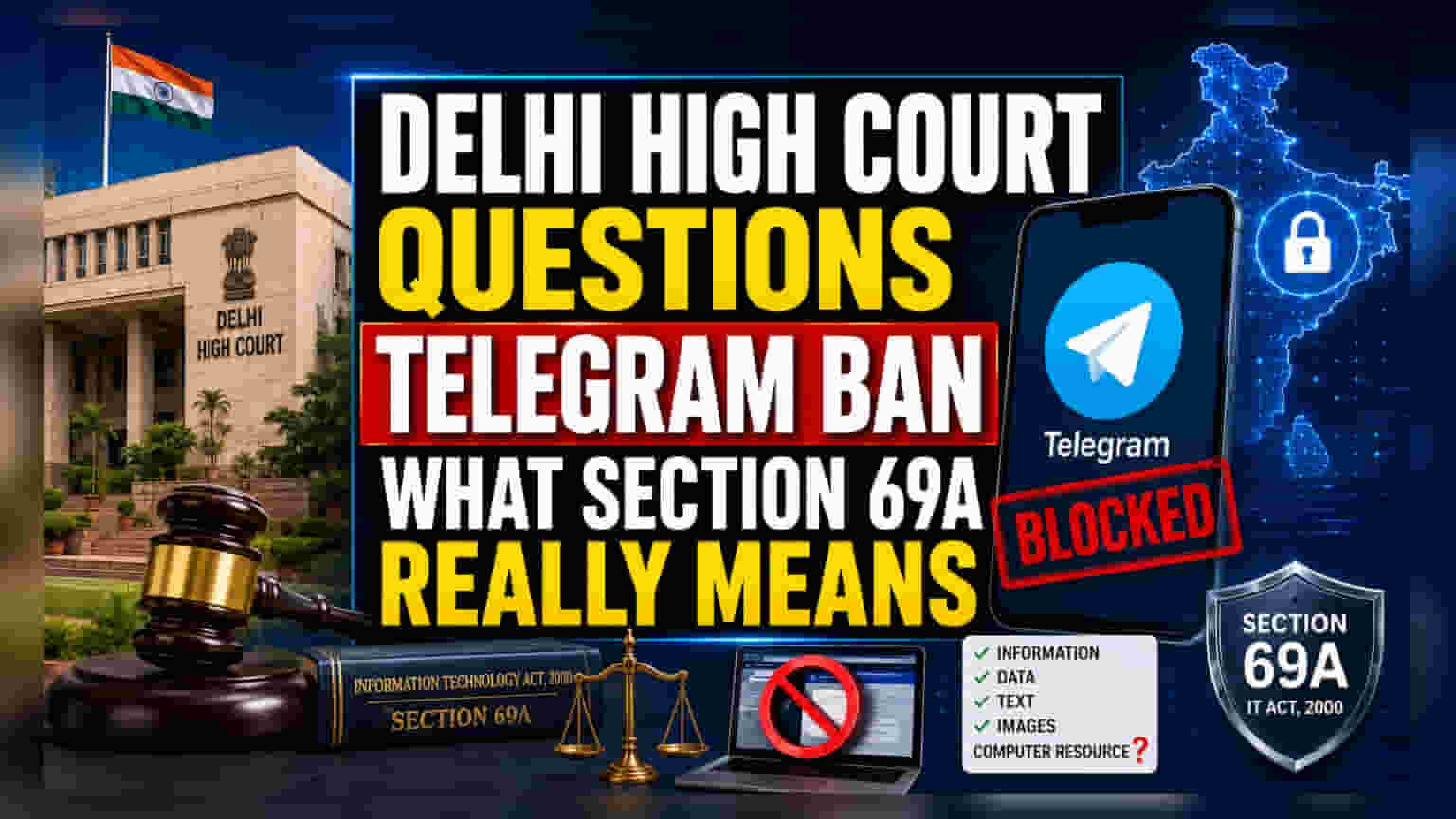
The Delhi High Court has challenged a government order to block Telegram, questioning if Section 69A of the IT Act permits banning an entire platform or just specific content. This ruling highlights a critical legal distinction between 'information' and 'computer resources', which carries implications for digital platform regulation and compliance in India.
What Happened
The Delhi High Court has raised significant legal questions regarding the government's order to temporarily block the Telegram platform across India. The court’s review centers on the interpretation of Section 69A of the Information Technology (IT) Act, 2000. This section grants the government power to block public access to specific information transmitted through a computer resource. However, the court has questioned whether this power extends to banning an entire digital platform, or 'computer resource,' rather than just the specific information or content that is allegedly violating the law.
The Information vs. Computer Resource Debate
A central point of the court’s analysis is the technical definition of terms used in the IT Act. The Act differentiates between 'information'—which includes data, text, images, or software—and a 'computer resource', which refers to the broader infrastructure like networks, databases, and operating systems. The government's previous order had directed internet service providers and app stores to block Telegram in its entirety, citing the need to prevent misuse. The court noted that Telegram functions as a complex ecosystem with cloud architecture and multiple features, distinguishing it from a single item of information that might be subject to takedown orders.
Why It Matters For Digital Platforms
For investors and companies in the Indian digital and technology sector, this ruling establishes a potentially important precedent. Digital platforms often navigate a complex regulatory environment where they must comply with government takedown orders while balancing user access. If the court’s interpretation holds that Section 69A is limited to blocking specific 'information' and not entire platforms, it could restrict the government's ability to issue blanket bans. This provides more regulatory clarity for platforms regarding how they handle compliance, data, and access requests from government authorities.
The NEET UG 2026 Context
The government's move to restrict Telegram was initially triggered by concerns over the misuse of the platform in connection with the NEET UG 2026 examinations. While Telegram had reportedly complied by disabling several specific URLs as identified by authorities, the subsequent directive went further, aiming for a broader blockade of the app's infrastructure and features, such as message editing. The court’s current stance suggests that while public order and exam integrity remain valid government priorities, the legal mechanism used to address these issues must strictly follow the statutory framework of the IT Act.
What Investors Should Track
Investors monitoring the Indian technology and digital platform sector should watch for further legislative developments. The court suggested that if the government intends to secure powers for temporary app disabling or architecture-level restrictions, such powers should be clearly defined through explicit new legislation. Any future amendments to the IT Act or new rules related to digital platform blocking will be significant. The key monitorable will be how the government adjusts its compliance and enforcement strategy to align with these judicial observations, and whether this leads to more transparent, rule-based interactions between tech platforms and regulators.