

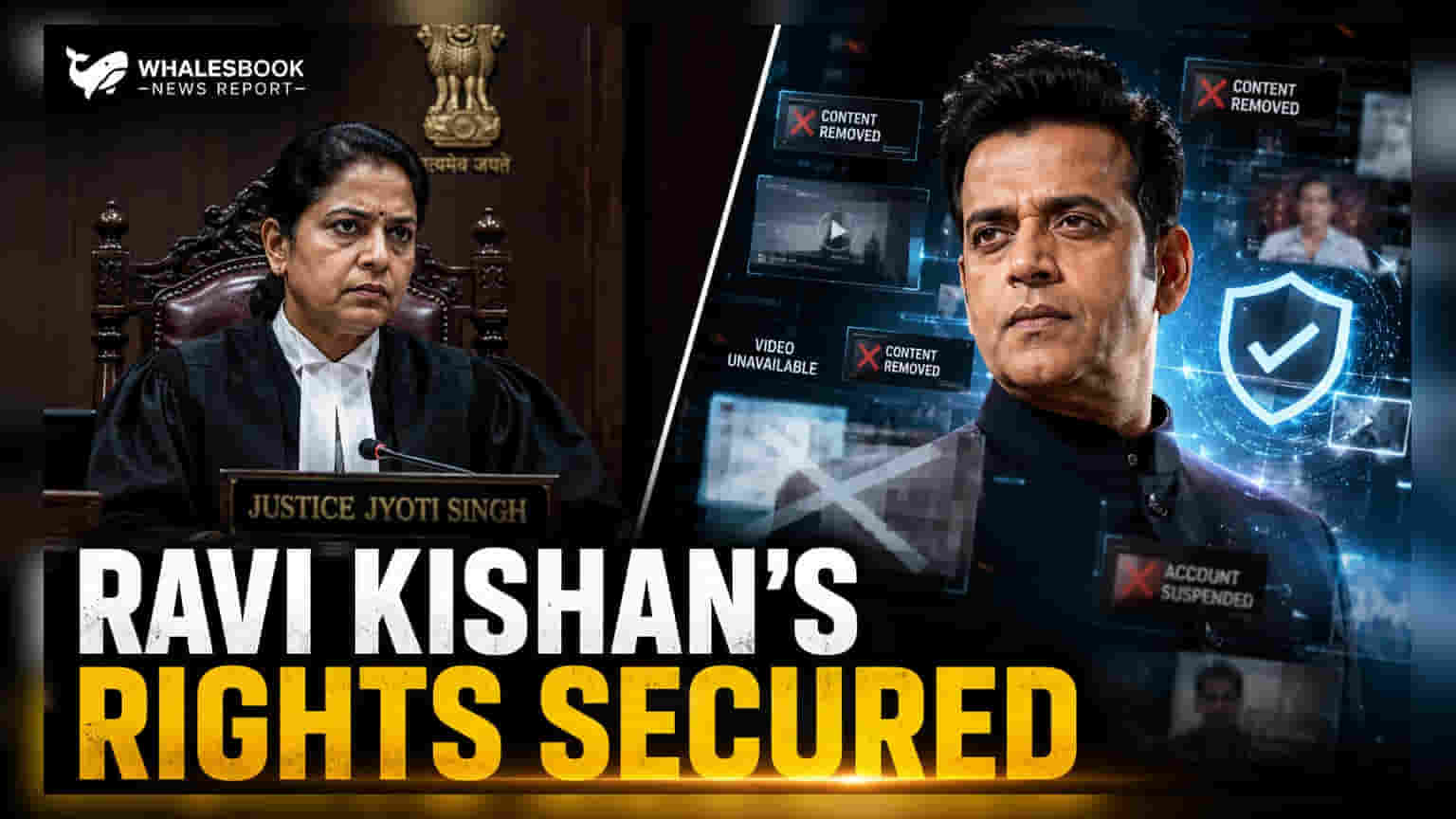
The Delhi High Court has ordered social media platforms to remove unauthorized content using actor-politician Ravi Kishan’s image and AI-generated likeness. This ruling mandates that Google, Meta, and X take down infringing material within 72 hours. The move highlights growing legal scrutiny over the misuse of personality rights and AI-generated content for commercial purposes.
The Delhi High Court has issued an interim order to protect the personality rights of actor and politician Ravi Kishan following a lawsuit against the unauthorized use of his likeness. Justice Jyoti Singh directed social media intermediaries, including Google, Meta, and X, to remove content that exploits Kishan’s personality without his consent within 72 hours of receiving a takedown notice.
Impact of the Court Order on Unauthorized Content
The court’s directive follows allegations regarding the use of AI-generated content and commercial material featuring Kishan without authorization. The legal action was initiated by Kishan to curb the spread of derogatory and obscene material. The court mandated that if the original uploaders or domain name registrars do not comply within three days of the July 2 order, social media platforms must step in to remove the infringing web links.
Injunction Against Ishq 104.8 FM and Anonymous Uploaders
The court order specifically named Creative Channel Advertising and Marketing Private Limited, which operates the radio station Ishq 104.8 FM, in connection with a segment titled 'What is Love with Kavi Kishan.' The injunction also covers unknown entities, often referred to as 'John Does,' who may have uploaded similar violating material. By restraining these parties, the court aims to prevent further commercial or derogatory exploitation of the actor's image.
This legal development underscores the increasing focus of the Indian judiciary on personality rights in the era of artificial intelligence. As AI technology makes it easier to replicate the likeness and voice of public figures, courts are increasingly being asked to define the boundaries of commercial usage and personal privacy. For stakeholders in the media, advertising, and technology sectors, the case highlights the rising risk of litigation related to unauthorized digital content. The court has scheduled the next hearing for October 15, where further legal arguments on the protection of these rights are expected.